
The family medicine shelf review feels messy because the clerkship itself is messy, with clinic days that change from one week to the next. The exam still has a clear shape, though, and this guide shows how to study for it with an encounter-first plan that fits a 4-, 6-, or 8-week rotation. If the schedule looks uneven, that's normal, the goal is a flexible system, not a perfect calendar.
What the Family Medicine Shelf Tests
A student finishing clinic and opening a shelf question often sees the same pattern. A brief outpatient note, a patient age that shifts the frame, and a task that asks what to do next. The NBME Family Medicine Subject Exam is a 110-question, computer-based shelf with 2 hours and 45 minutes of testing time, which works out to about 1.5 minutes per question (NBME Family Medicine Subject Exam overview). It is entirely ambulatory, so the exam expects primary care thinking rather than inpatient habits.
For a broader breakdown of how NBME subject exams are scored and timed, see this NBME shelf exam overview.
The encounter-first approach fits that setup better than a topic-by-topic memory list. A 4-week block, a 6-week hybrid, and an 8-week rotation all call for different pacing, but the task in each question is the same: identify the visit type, identify the physician task, then choose the next best step. That is how a student keeps the test organized even when the clerkship itself is not.
Why the rotation length matters
Family medicine clerkships have become shorter and more varied over time, and that shapes how students can review. A secondary analysis of annual Council of Academic Family Medicine Educational Research Alliance surveys from 2012 through 2023 found institutional requirement rates of 98% to 100%, traditional block rotations of four weeks or less rising from 37.7% to 52.2%, and longitudinal clerkships of four weeks or less rising from 31.8% to 45.8% (STFM study). It also reported that about 60% of students trained at regional campuses and 11.2% of respondents said family medicine landed in the second year.
That kind of spread makes a fixed study script brittle. A rural site with fewer but denser clinic days asks for a different weekly rhythm than an urban outpatient setting with more continuity. The better question is not how every student should study family medicine. It is how to build a plan that fits the clinic days, the patient mix, and the amount of repetition the rotation gives you.
Practical rule: Start with clinic reality, then fit questions and reading around it.
A good shelf review in this clerkship centers on outpatient thinking, prevention, chronic disease follow-up, and moving between age groups and visit types without losing the thread. That flexibility is the point, because the exam rewards the student who can treat each vignette like a real visit and decide what the clinician needs to do next.
The Blueprint Translated Into Review Priorities
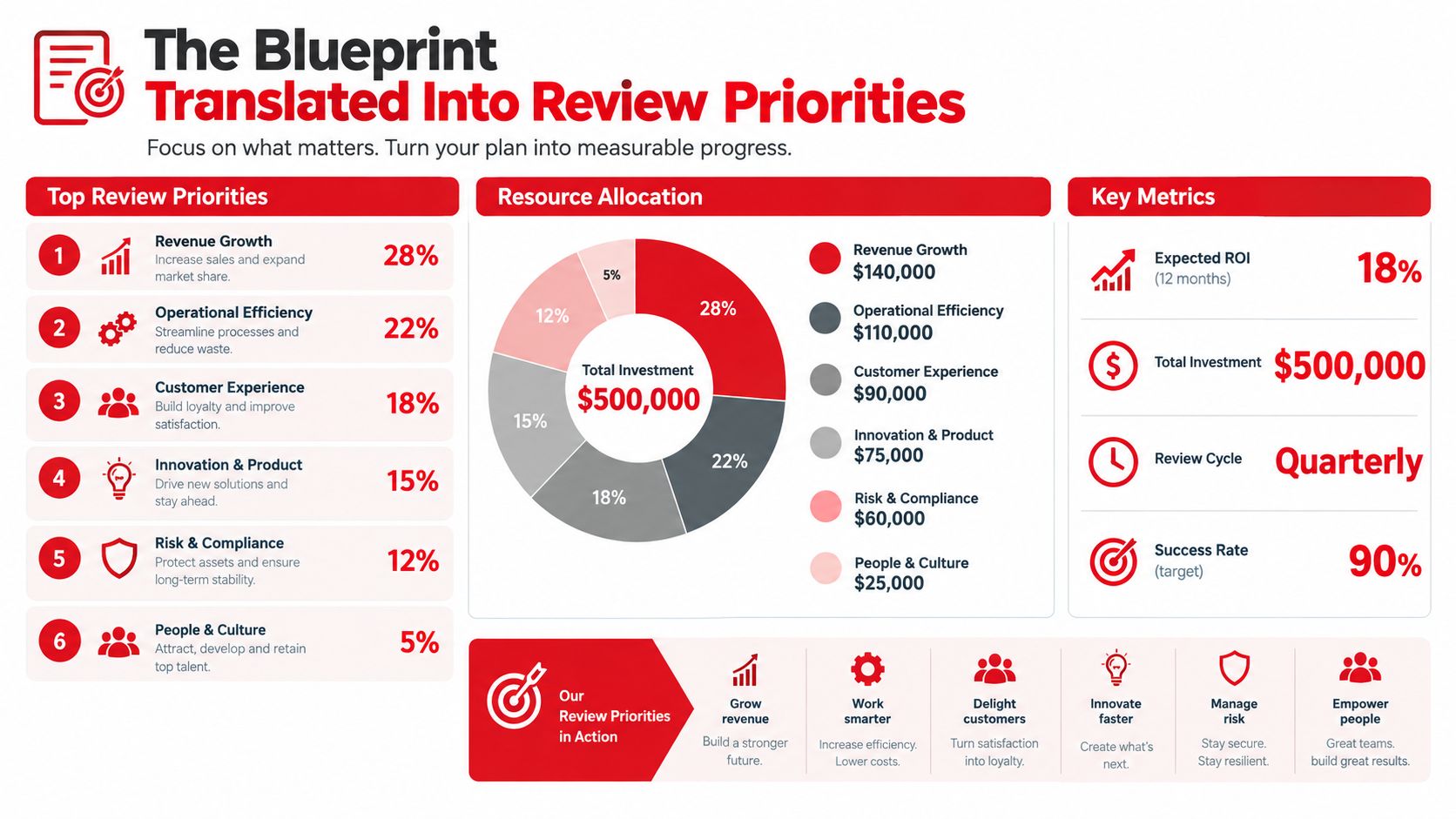
The NBME outline is easier to use once you read it as a set of physician tasks, not a shelf of body systems. It places 55% to 65% of tested encounters in adults 18 to 65, 15% to 20% in children from birth through age 17, and the rest in older adults and other populations. That spread is a reminder that this shelf is broad, but it still lives in outpatient medicine, where adult visits drive much of the work.
Task weight tells the story
The same outline assigns 15% to 20% to health maintenance, 5% to 10% to disease mechanisms, 30% to 35% to diagnosis, and 25% to 30% to management (Washington family medicine shelf review PDF). In plain terms, prevention is not a side note. It is about a quarter of the exam, and diagnosis plus management account for more than half.
That is why a review built only from diagnosis lists falls short. A student can know common outpatient conditions and still miss the question if the stem is really asking for a screening step, a vaccine decision, or the next move in a routine follow-up. The exam rewards the habit of identifying what kind of visit this is before naming the disease.
The same Washington review describes a 110-question exam in 2 hours and 45 minutes, which makes pacing part of the skill set. Around 37 questions per hour is a useful practice target, because it keeps you from spending too long on one vignette.
Its age mix also argues against overcommitting to pediatrics. Childhood is only 5% to 15%, adolescence 5% to 10%, adulthood 65% to 75%, and geriatrics 10% to 15% in that same review. Adult medicine and musculoskeletal content together take up a large share of the material, while chronic care and behavioral health run through many of the cases.
The safest habit is to check the current NBME outline before study time gets busy, because category names and percentages can change. Once that outline is clear, the encounter-first framework becomes easier to use. The student is no longer asking, “What organ system is this?” The better question is, “Is this a health-maintenance visit, a diagnosis question, or a management question?”
Reasoning Framework for Outpatient and Prevention
A family medicine shelf vignette often reads like a clinic note with the clutter removed. Start with age, sex, pregnancy status, risk factors, and prior screening history, then name the physician task. Is the stem asking for screening, diagnosis, treatment, or counseling? That sequence keeps the eye on the decision the question is really testing.
A health-maintenance visit
A 52-year-old patient comes in for a routine visit, feels well, and asks what should be done next. The instinct may be to hunt for a disease label, but the better move is to ask what prevention step is due based on age, sex, risk factors, and prior tests. If the stem gives a screening history, that detail usually carries more weight than the rest of the background.
Current USPSTF recommendations and the CDC immunization schedule matter here, especially because clerkship syllabi can lag behind updated guidance (FSU family medicine syllabus). A strong shelf answer begins with eligibility, then moves to the next preventive step.
Practical rule: For prevention questions, identify who the patient is, what age band applies, and what has already been done before choosing the next step.
A normal visit can still test layered reasoning. A well-child visit may focus on immunization timing, an adult health-maintenance visit may test screening intervals, and an older adult visit may ask about fall risk, medication review, and surveillance. Ordinary primary-care decisions show up again and again because those are the decisions family physicians make every day.
A chronic-care follow-up
Now compare that with a follow-up for blood pressure, asthma, or diabetes. The question usually shifts to the next management step. That means the student needs to think about adherence, first-line therapy, monitoring, and whether the current plan is safe and sufficient.
The distinction is subtle, but it changes the answer. A prevention question asks whether care is due, while a chronic-care question asks whether current care is working. Students who spot that difference early avoid many of the common wrong turns on family medicine shelves.
This visit-type-first habit is a form of structured clinical reasoning, explained in depth in this guide to clinical reasoning. It helps to state the visit type out loud before reading the answer choices. Zebras rarely appear on this shelf, ordinary outpatient encounters handled well are what earn points.
Flexible Week-by-Week Schedule for Any Rotation Length
A family medicine rotation rarely gives you the same kind of day twice. One week may be packed with clinic, another may be lighter, and the first few days often feel like learning how the office runs. A useful study plan has to survive that variability, so the core stays the same while the weekly emphasis shifts.
For a broader template to pair with this plan, see this study schedule for medical students.
Weekly cadence by rotation length
| Week | Focus | Daily Mix | Weekly Check-In |
|---|---|---|---|
| 4-week, Week 1 | Orientation, common visit types, preventive basics | Short timed question block, one guideline topic, one clinic note review | Can the student name the visit type and task for each missed question? |
| 4-week, Week 2 | Chronic disease follow-up and common ambulatory diagnoses | Timed questions, explanation review, one prevention topic, one outpatient case write-up | Are misses mostly screening, diagnosis, or management? |
| 4-week, Week 3 | Mixed outpatient practice under time pressure | Mixed timed blocks, targeted review of weak tasks, brief recall prompts | Is the student staying on pace without rereading everything? |
| 4-week, Week 4 | Consolidation and test rhythm | Short timed sets, error log review, light guideline refresh | Can the student answer fast without losing accuracy? |
| 6-week, Weeks 1-2 | Same as above, but with more breathing room | Moderate question volume, daily error review, one prevention topic, one clinical case | Is the student using clinic encounters to reinforce study topics? |
| 6-week, Weeks 3-4 | Add targeted weak-area work | Mixed blocks, focused recall, task-based review | Are the missed questions shrinking in the same domains? |
| 6-week, Weeks 5-6 | Pacing and retention | Timed blocks, revisit high-yield miss patterns, light refresh | Can the student explain why each wrong option is wrong? |
| 8-week, Weeks 1-2 | Slow start, solid foundation | Smaller question volume, more guideline reading, clinic-log review | Is orientation eating all the time, or is study starting to stick? |
| 8-week, Weeks 3-5 | Build steady retrieval | Timed questions, repeated error review, one outpatient case write-up | Is the student moving from recognition to recall? |
| 8-week, Weeks 6-8 | Tighten timing and weak spots | Mixed blocks, spaced recall, quick prevention review | Can the student finish blocks with enough mental room left? |
The first week should favor orientation and high-yield guidelines more than raw question count, especially for a student's first family medicine rotation. A learner who is still figuring out clinic flow gets more from a smaller set of well-reviewed questions than from rushed blocks that never get fully examined. That early structure helps the student start recognizing visit types before the shelf asks for the next step.
A simple daily mix works across rotation lengths.
- Timed questions: Use a short, timed set so pacing becomes normal.
- Error review: Write one line for each miss, focused on the wrong illness script or decision rule.
- Prevention topic: Review one screening or vaccine area each day.
- Outpatient case write-up: Summarize one patient in a task-based format, not a long narrative.
The point is steady repetition, not perfect study days.
Before week one, check the clerkship syllabus and the current NBME outline. Some schools expect written logs, some emphasize ambulatory presentations, and some place shelf prep alongside graded clinical work. A schedule that fits those local rules is easier to keep, and it works better when clinic time gets unpredictable. For students who want extra support while they build a routine, the shelf-exam tutoring page can be added without changing the structure of the plan.
Question-Bank Strategy and Progress Metrics
Question banks help most when they force retrieval, not when they turn into passive reading in disguise. A meta-analysis of 13 studies involving 21,415 learners found that spaced repetition outperformed standard study methods, with a standardized mean difference of 0.78 (meta-analysis). That supports a distributed routine, not a single giant cram session.
A simple workflow that changes scores
Start with a timed block of mixed ambulatory questions. Commit to an answer before opening explanations. Then write one line for every miss, focused on the illness script or decision rule that went wrong.
Use spaced recall only for the errors that keep returning or carry high stakes. A student does not need to turn every minor slip into a flashcard, but repeated misses on screening intervals, diagnostic test choice, or outpatient management deserve another pass. That keeps the review set small enough to use consistently.
The same meta-analysis showed that each additional 445 board-style practice questions was linked to about a one-point increase in Step 1 score after adjustment for other variables, while test anxiety was a significant negative predictor and flashcard count alone was not equivalent to better performance. That does not make question volume a guarantee, but it does show why structured practice matters more than passive exposure.
For a plain-English explanation of why retrieval helps memory, this testing effect explained simply is a useful companion after a question block. It fits best when a wrong answer has to become a lesson, not just another line in a notebook.
What to track besides the total percent
A single overall percentage can hide this problem. A student can look solid on paper and still miss the same kind of family medicine question again and again. A better dashboard tracks performance by physician task and by age group, not just by total score.
- Health maintenance misses: These often point to screening or vaccine gaps.
- Diagnosis misses: These may reflect weak pattern recognition or poor test selection.
- Management misses: These often show up in chronic care, medication choice, or follow-up plans.
- Age-group misses: These reveal whether pediatrics, adult medicine, or geriatrics needs more work.
Track anxiety and stamina too. If a timed block falls apart after a stressful day, the fix may be rest and better pacing, not more brute-force reading.
For students who want a clearer way to watch patterns in missed questions over time, the progress tracking dashboard can help organize the review. Ace Med Boards also offers one-on-one tutoring for shelf exams, which can help when self-study stalls. That support works best alongside official questions and independent review, not in place of them.
Test-Day Tactics, Common Pitfalls, and Readiness Check
The final push should feel like rehearsal, not panic. With 110 questions in 2 hours and 45 minutes, pacing at roughly 1.5 minutes per question is the right rhythm to practice ahead of time (NBME Family Medicine Subject Exam). Timed blocks should feel familiar by test day, not like a surprise.
A fast way to read each vignette
In the first 30 seconds, sort the stem by age, sex, task, and risk factors. That quick scan mirrors the encounter-first method used throughout this guide and stops the student from drifting into irrelevant details. If the answer depends on prevention, the screening history matters most. If it depends on management, the chronic problem list matters more.
The common traps are predictable. Students sometimes mistake exposure to material for mastery, ignore prevention and behavioral health, skip review of missed questions, or panic after one weak block. A single poor practice set does not define the shelf, but it does show where the plan needs adjustment.
Two-day readiness check
Two days before the exam, the student should be able to answer these questions without looking things up:
- Screening: Can the student name the major screening intervals that keep showing up in practice?
- Immunizations: Can the student identify the current vaccine landmarks that matter for common ages and risk groups?
- Chronic care: Can the student describe the most common management moves in the weakest outpatient topic area?
If those answers are shaky, the fix is targeted review, not panic reading. It also helps to tell a mentor or tutor early if practice scores are not moving, because hiding a low block usually makes the next week harder.
Support works best when it comes early, before the final days of the clerkship compress everything.
The exam-day preparation page can be useful for students who want a calmer routine before test day. One-on-one tutoring can complement official practice materials and independent study, but it can't replace them.
Key Takeaways and Practical Next Steps
The family medicine shelf review works best when it follows the exam's logic instead of a random topic list. The test stays centered on ambulatory care, prevention, and outpatient decision-making. An encounter-first approach helps you identify the task behind the question before you start hunting for an answer.
Key takeaways
- Think in visit types. Health maintenance, diagnosis, and management give the exam its shape.
- Study flexibly. A 4-, 6-, or 8-week clerkship needs a different weekly cadence.
- Use retrieval, not rereading. Spaced practice and structured question review beat passive exposure.
- Track the right metrics. Watch physician task and age group, not just total percent.
- Run a final readiness check. Screening, immunization, and chronic-care decisions should feel familiar before test day.
FAQs
How is the family medicine shelf different from the COMAT family medicine exam?
The NBME family medicine subject exam and the COMAT family medicine exam are different exams from different organizations, so students should verify the current format, scoring, and content outline on the official sites before studying.
How does this shelf relate to ABFM board certification?
It doesn't replace American Board of Family Medicine certification. The shelf is a clerkship assessment for students, while ABFM certification is a separate physician board process.
When should extra support be considered?
If practice blocks stay low despite a steady plan, or if the same prevention and management mistakes keep recurring, extra support can help the student break the pattern sooner rather than later.
For students who want a personalized plan, the shelf-exam tutoring page is a useful place to start.