In the NBOME 2025 annual report, 97.1% of 8,596 first-time examinees passed COMLEX-USA Level 3 in calendar 2025, the strongest first-attempt result in the three most recent reporting years. That figure is a national cohort benchmark, not an individual probability, and the distance between those two ideas is where most Level 3 preparation goes wrong.
A resident who reads 97.1% as a personal chance of passing will usually study less than the exam deserves. A resident who reads it as a wall will usually study in a panic. Neither reading matches what the number describes, so it's worth taking the figure apart before deciding anything about a test date.
First-Time COMLEX Level 3 Pass Rates
The figures come from the National Board of Osteopathic Medical Examiners (NBOME), the organization behind the Osteopathic Medical Licensing Examination of the United States (COMLEX-USA), the three-level licensure series osteopathic physicians complete in medical school and residency. The NBOME 2025 annual report records 8,596 first-time Level 3 candidates for January through December 2025 at a 97.1% first-time pass rate, with the two prior calendar years close behind.
| Calendar year | First-time examinees | First-time pass rate | Approximate unsuccessful first attempts |
|---|---|---|---|
| 2025 | 8,596 | 97.1% | 249 |
| 2024 | 7,985 | 96.8% | 256 |
| 2023 | 7,559 | 94.7% | 401 |
The last column is arithmetic rather than a published headcount. It comes from applying each reported percentage to the reported candidate count, and because the pass rates are rounded, the exact number of unsuccessful candidates can differ slightly from those approximations.
What moved between 2023 and 2025
Across those three calendar years the reported rate climbed 2.4 percentage points, from 94.7% to 97.1%, while the first-time pool grew by 1,037 examinees, about 13.7%. Both measures moved in the same direction, which is the part worth pausing on. A larger testing population that also passes at a higher rate is a strong result for osteopathic residency training.
Read the rows precisely, though. They describe first-time, calendar-year performance, not every administration and not repeat attempts. Somebody who tested in February and somebody who tested in November are folded into the same row, and a candidate retaking the exam doesn't appear in these numbers at all.
The several hundred who do not pass
The other side of the ledger matters just as much. Applying the published percentages to the reported counts leaves approximately 401 first-time candidates in 2023, 256 in 2024, and 249 in 2025 who did not pass on the first attempt. Those aren't abstractions. Each one is a resident with a program director, a rotation schedule, and a plan that has to change.
Key takeaways
- The latest first-time rate is 97.1%: 8,596 first-time candidates sat Level 3 from January through December 2025, and 97.1% passed on the first try.
- Hundreds still miss on the first attempt: roughly 249 first-time candidates in 2025 and 401 in 2023 did not pass, even in a strong national year.
- The rate is a cohort benchmark, not a probability: it describes a population of residents testing at different points in training with different preparation, and it can't be converted into your personal chance of passing.
- A high national rate never moves the bar: Level 3 is scored against a fixed competency standard, so a record national percentage doesn't lower the cutoff for any individual candidate.
All figures here are as of the NBOME 2025 annual report. NBOME can revise or restate performance data in later releases, so check the current report before quoting any number in an application or a program meeting.
Earlier Cycles and Why the Rate Moved
A short trend line can make pass rates look smoother than they are. The longer record is less tidy, and that is useful. It shows how much the first-time pass rate can move while the passing standard remains a fixed competency benchmark.
In the NBOME 2022 annual-report materials, the January to December 2020 cycle lists 6,111 first-time test takers and a 97.0% first-time pass rate. One later window named in the report runs June 2021 through May 2022 and lists 7,846 first-time examinees with a 95.6% first-time pass rate.
| Testing window as named | First-time examinees | First-time pass rate |
|---|---|---|
| January to December 2020 | 6,111 | 97.0% |
| June 2021 through May 2022 | 7,846 | 95.6% |
The movement between those named windows is 1.4 percentage points, from 97.0% to 95.6%. First-time volume rose by 1,735 examinees, about 28.4%.
That comparison works like looking at two intersections at different hours. More cars may pass through one hour than another, and the average speed may shift, but neither fact changes the posted speed limit. Candidate volume and candidate mix can move together. That does not mean the exam became easier or harder.
Reading rule: a pass rate quoted without its candidate count is half a fact. The percentage gives you the direction; the denominator tells you how many people that direction touched.
An annual change can reflect who sat for the exam, how far into residency they sat, and how they prepared. A school's rate or a single program's rate is not a national benchmark either. Comparing those groups as though they were interchangeable creates a misleading picture.
Before quoting any future NBOME release, run three checks.
- Identify the testing window. A calendar year and a June-to-May window aren't the same population, and mixing them creates fake trends.
- Confirm first-time or all takers. Repeat attempts and first attempts measure different things, and the labels aren't interchangeable.
- Read the denominator first. Decide how many candidates are behind the percentage before deciding what the percentage means.
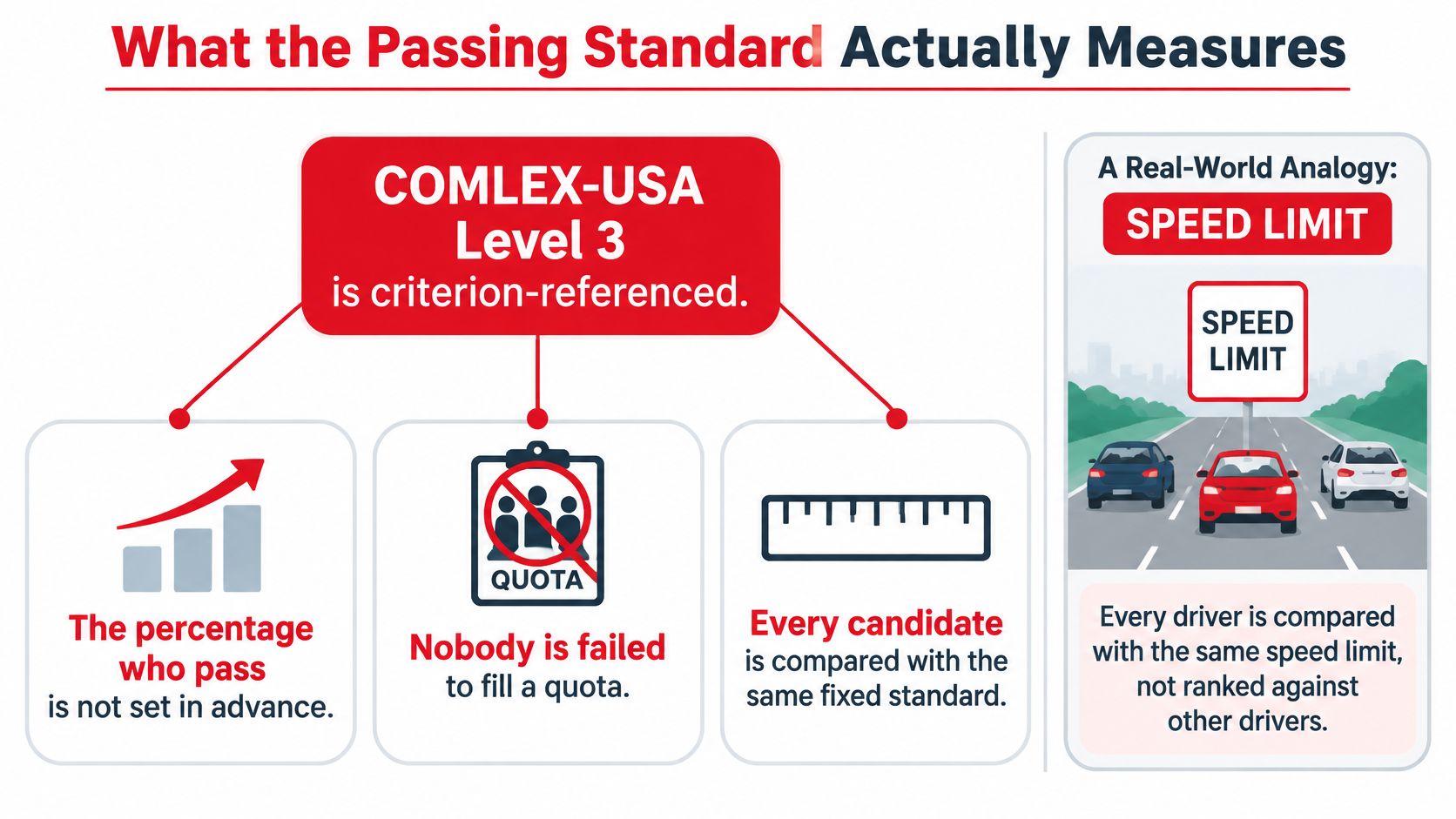
The exhibit below frames the scoring model that sits behind every one of these percentages.
What the Passing Standard Actually Measures
A reasonable worry on seeing a national first-attempt rate in the high nineties is that the exam must be graded on a generous curve, or that officials tune the difficulty to keep the number steady. Level 3 doesn't work that way.
The COMLEX-USA Bulletin of Information describes a criterion-referenced pass/fail model. The percentage passing is not predetermined. Performance is judged against a minimum-competency standard rather than a quota, so nobody is failed to keep a national figure where someone wants it.
Think about a speed limit sign on a highway. Every driver is measured against the same posted number, and the fact that most drivers stay under it doesn't change the limit for the next car. A driver isn't failed so the road can hit a target failure rate, and a good day for everyone else doesn't make a reckless driver safe. That's the structure of a criterion-referenced exam.
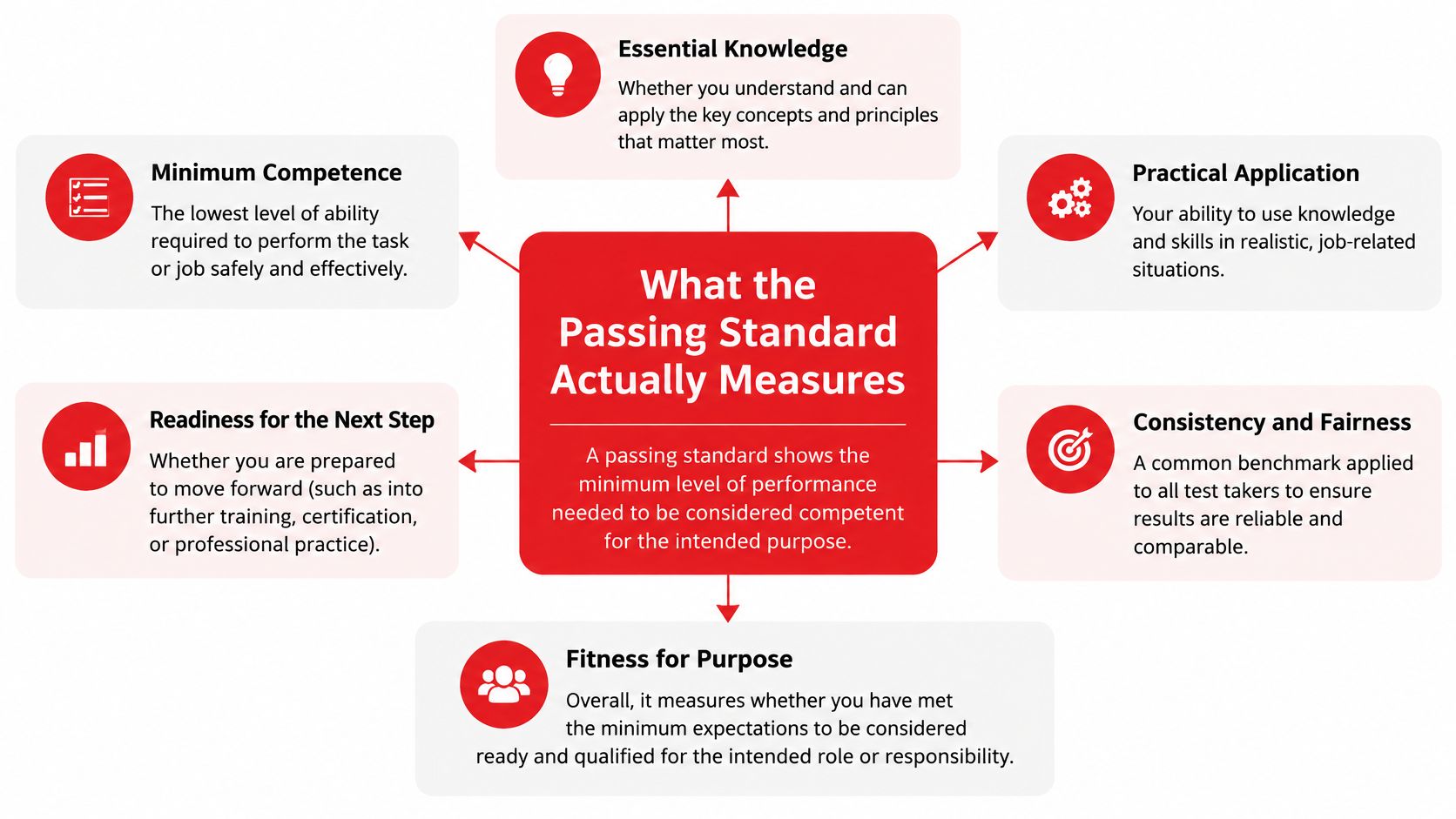
The mechanics are straightforward once you see them. NBOME converts the number of correctly answered items into a three-digit standard score, and the reported passing standard for Level 3 is 350. The final decision rests on total examination performance rather than requiring a pass in every individual content area.
That last detail shapes study design more than anything else in this article. Strength in one discipline doesn't safely cancel a large weakness in another, because the total carries the decision. The productive move is broad clinical coverage with deliberate priority on the high-impact deficiencies a performance profile or practice test reveals, not an even redistribution of hours across every subject.
Level 3 is a two-day examination asking whether an osteopathic resident can provide safe, effective care in relatively unsupervised clinical settings. The skills it rewards are longitudinal: diagnosis, initial management, escalation, prevention, and disposition. Isolated recall questions exist, but they aren't the center of gravity. The COMLEX Level 3 exam format walkthrough lays out how the two days and the clinical decision-making cases are organized.
Treat any practice score near a threshold cautiously. The official decision depends on total performance and how far a candidate sits from the competency standard, not on where the national percentage landed. And a COMLEX Level 3 rate can't be borrowed as a USMLE Step 3 probability. They're different assessments built by different boards, and a percentage from one tells you nothing about the other.
Eligibility and Attempt Limits
Eligibility works like a gate before the calendar. A test date may be open, but if the requirements are incomplete, that date cannot function as a real option.
The NBOME eligibility page lists the requirements plainly: passing COMLEX-USA Levels 1 and 2-CE, graduating from an accredited college of osteopathic medicine, and providing a good academic and professional standing attestation from a residency program director. NBOME also recommends completing six months of graduate medical education before sitting Level 3.
Attempt limits deserve the same careful treatment. The NBOME Bulletin of Information states that candidates get four scored attempts at each examination level and may not take the same level more than four times in a 12-month period, including incomplete or voided attempts. A licensing agency can request a one-time exception beyond four scored attempts when the candidate submits the required documentation and remains in good standing. State licensing authorities can add their own attempt or timing rules.
An unsuccessful attempt changes a schedule and a file. It does not end a career in medicine.
That distinction matters because a national first-time pass rate describes a group. It cannot show how many attempts a specific candidate has left, whether an incomplete attempt counts in that person's timeline, or how a state board's rules interact with NBOME rules.
The national tables have another limit: they report first-time rates. They do not publish a repeater pass rate, a demographic breakdown, or a school-by-school result, so a headline percentage cannot be converted into a subgroup probability or a repeat-test outcome.
Use a simple pre-registration check before choosing a date. Confirm the current bulletin requirements, review the relevant state board's rules, count prior incomplete or voided events, and confirm that the residency program director attestation is ready. The COMLEX Level 3 test dates reference helps with the scheduling side once eligibility is settled.
If an earlier attempt affected confidence or study structure, tutoring can address the practical pieces. COMLEX tutoring supports Level 1, Level 2-CE, and Level 3 preparation, including students returning after an unsuccessful attempt, with content review, clinical reasoning, question approach, and pacing. A free COMLEX consultation can cover the exam level, timeline, and what needs attention before the next date.
Level 3 Readiness Self-Audit
Readiness is a set of facts about one specific candidate, not a feeling about a question bank average. A national pass rate works like a weather report for a region. It helps describe the overall pattern, but it does not tell you whether your own route is clear today. Mark each item below yes, not yet, or unknown, and treat unknown as not yet until it is verified.
One scoring note first. The current published passing score for COMLEX-USA Level 3 is 350, and the NBOME examination scores page states that this threshold is not a percentile rank or a fixed percentage of questions answered correctly. NBOME reviews standard setting periodically, typically every three to five years, and that review can change the cut score. Practice percentages and self-assessment scores are readiness indicators, not exact conversions to an official score. Level 3 also differs from Level 1: it still reports a three-digit score alongside Pass or Fail, while Level 1's reporting structure no longer includes one.
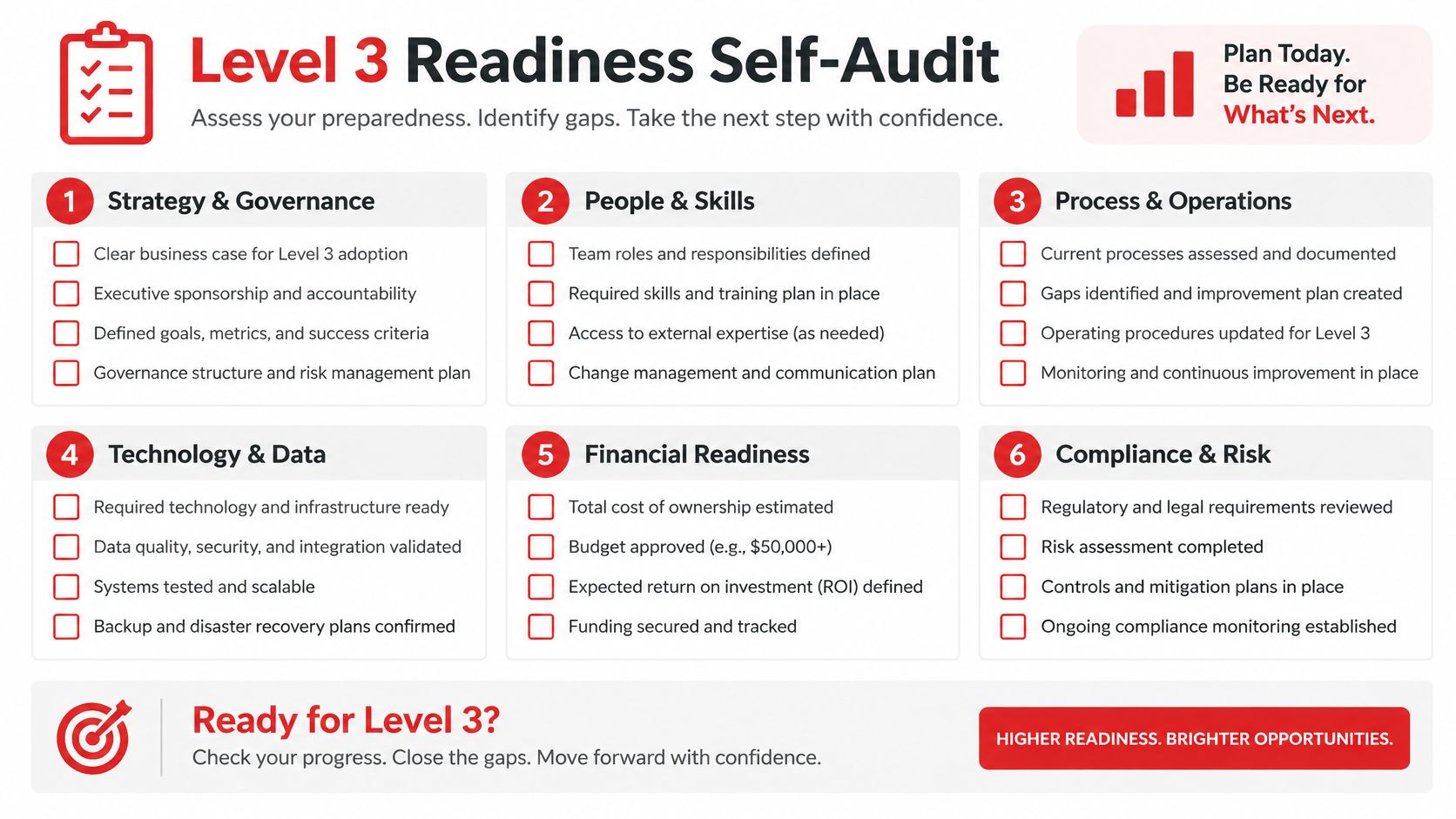
The nine audit items
- Eligibility is confirmed. Levels 1 and 2-CE are passed, and the residency program director can attest to good academic and professional standing.
- Graduate medical education timing is set. Six months of GME will be complete by the planned date, or the current bulletin has been checked before testing earlier than NBOME recommends.
- Attempts remain. Prior attempts, including incomplete or voided ones, still leave room under the four-attempt and 12-month limits.
- The state licensing timeline is checked. The relevant state board's rules and application timing have been reviewed, not assumed.
- A recent self-assessment has a date and a score. A COMSAE or comparable self-assessment is on file, and no third-party percentage has been treated as an official conversion.
- The practice result is read correctly. It shows distance from the published passing standard, not odds borrowed from the national first-time cohort rate.
- The error log has categories. Misses are separated into diagnosis, next step in management, pharmacotherapy, patient safety, and osteopathic principles.
- Two-day stamina has been rehearsed. Pacing has been practiced under timed conditions, including what happens when a block runs long.
- Any earlier unsuccessful attempt has a named cause. The specific reason is identified rather than summarized as needing to study more.
How to read a mixed result
A few not yet marks are normal and do not require delay. Several not yet or unknown marks on eligibility, attempts remaining, or error-log categories mean the schedule needs another look before test day. These items work like the preflight check on a flight plan. A smooth answer on practice questions cannot replace a correct filing window or an accurate attempt count.
The point of the audit is to separate two questions that often get blended together. The national first-time pass rate describes a cohort. Your readiness audit describes you. A high cohort rate leaves room for unsuccessful first attempts, and a low individual score on a practice assessment cannot be converted into a personal probability by applying that cohort percentage.
Use the audit to make the next decision smaller and clearer. If the self-assessment is old, get a dated score. If the error log is broad but shallow, add categories. If an earlier attempt ended without a clear explanation, name the likely cause before adding more questions. A COMLEX Level 3 practice test is useful here because it gives you a dated result and a set of errors to work through, not a borrowed estimate of your odds.
Study Moves That Create a Real Margin
Start with the audit result. A resident with two "not yet" marks in pharmacotherapy and next-step management needs a different week than one whose log is nearly empty. The national pass rate may be high, but it does not tell you which decision points break down under time pressure. That margin comes from repeated, specific practice.
A workable week for someone on a busy rotation looks like this.
- Three or four weekday sessions of 60 to 90 minutes. Pick the lightest rotation days in advance and protect those slots rather than hoping a gap appears.
- One longer weekend block of two to three hours. Use it for timed case sets under exam-like conditions, including the clinical decision-making format.
- One session that produces nothing new. Reserve it entirely for reviewing the error log and reworking old misses without adding questions.
The point is repetition with a purpose. Doing more questions helps only when each set produces a clearer rule for the next set. Otherwise, the same reasoning error gets more repetitions.
A five-step question workflow
- Answer a timed set before looking anything up, so the result reflects test conditions rather than open-book recall.
- For every miss and every lucky guess, write the clinical decision the item required.
- State why the best choice wins and why the two most attractive alternatives lose. Naming the losing options is where most of the learning sits.
- Tag the miss as diagnosis, management, pharmacotherapy, patient safety, pacing, or osteopathic principles.
- Reattempt similar reasoning within 48 hours, before the pattern fades.
This workflow works like a lab report for clinical reasoning. The first answer shows the result. The short explanation shows which step produced it. The repeat attempt shows whether the correction held.
Here's an educational vignette built for teaching, not drawn from any NBOME item. An adult presents with a new complaint, the item offers two plausible diagnoses and two actions, and it asks what to do next. The resident who spent the week memorizing the disease name still has to choose between ordering the confirmatory test and starting treatment now, and only the second kind of reasoning earns the point. Level 3 is mostly the second kind. That example is exam education, not guidance for a real patient; clinical decisions belong to the treating clinician and the current literature.
Practical rule: the error log, not the score report, decides what to study next. A score tells you that something is off. The log tells you what.
Use the current NBOME orientation materials, blueprint, and practice resources as the authority for format and content weighting. Third-party question banks can supply volume and repetition, and they vary in osteopathic coverage, so check that a bank includes osteopathic principles and practice rather than assuming it does. The COMLEX Level 3 preparation guide for advanced clinical practice can help organize that work around the decisions Level 3 expects you to make.
Structured one-on-one review of reasoning and pacing can complement those materials. It does not replace official material, and it cannot guarantee an outcome. It is most useful when the audit shows a repeatable pattern, such as a plateau, unresolved question approach, or pacing that collapses on longer blocks.
Above all, prioritize the single largest recurring error instead of rereading every subject equally. A resident who fixes one category that shows up in a third of misses gains more than one who skims six subjects. Treat the plan like a clinical quality improvement project: measure the error, change one process, and check whether the next cycle looks different.
Choose Your Next Step Before Test Day
The decision at the end of this comes down to the audit, not to another statistic.
If most items are yes and the error log is shrinking, keep going independently. Pair the current NBOME orientation, blueprint, and practice materials with timed cases, then recheck the planned date against eligibility and the relevant state board before confirming. A COMLEX Level 3 question bank comparison helps here, because the right bank is the one that matches the format and the osteopathic content.
If preparation has plateaued, if an earlier attempt was unsuccessful, or if the log keeps showing the same pacing or anxiety pattern, adding one-on-one review is a reasonable move rather than a drastic one. Ace Med Boards COMLEX tutoring covers Level 1, Level 2-CE, and Level 3, including content review, clinical reasoning, question approach, and pacing, and a free COMLEX consultation is available to discuss the exam level and timeline.
The source documents behind this article are the NBOME 2025 annual report, the NBOME 2022 annual-report materials, the COMLEX-USA Bulletin of Information, the NBOME eligibility page, and the NBOME examination scores page. All figures are as reported by NBOME and may be updated in later releases.
Ace Med Boards works with osteopathic residents on COMLEX Level 3 preparation that targets exactly the reasoning and pacing problems a readiness audit tends to surface, including work with residents returning after an unsuccessful attempt. Bring the completed audit to a free consultation and the conversation starts from your actual gaps rather than a national percentage. Visit Ace Med Boards to see the COMLEX tutoring options and arrange that first call.