You're starting your psychiatry block, opening the first question bank, and finding that every vignette seems to combine symptoms, timing, family history, medications, and social context. Psychiatry becomes much more manageable when you study it as both a clinical specialty and an exam reasoning system. The same core ideas return across USMLE, COMLEX-USA, and psychiatry Shelf questions: identify the syndrome, establish its time course, rule out medical or substance causes, and choose the treatment or next step that fits the patient's context.
What Psychiatry Actually Covers in Medical School
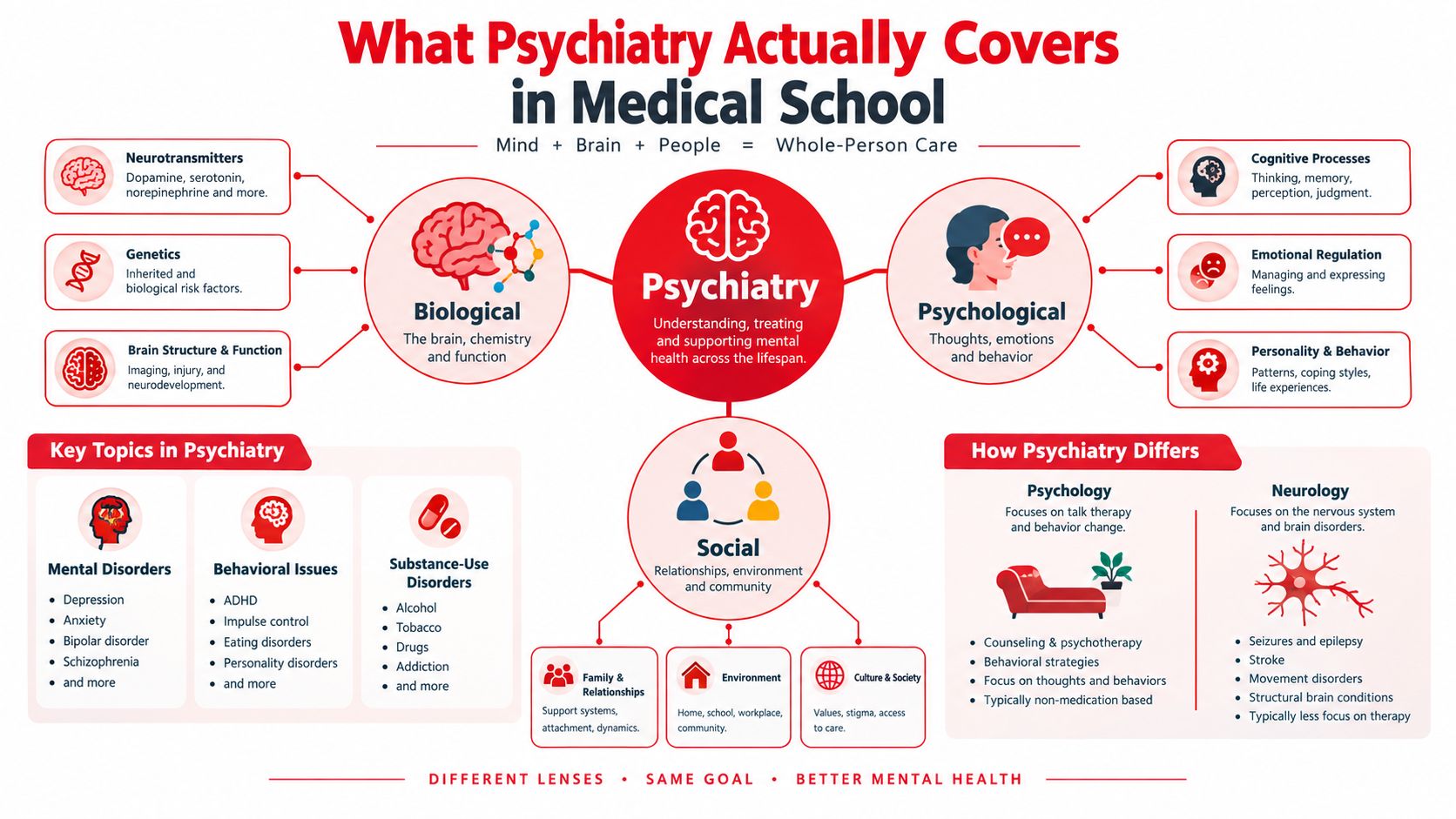
Psychiatry is the medical specialty focused on mental, behavioral, and substance-use disorders. It differs from psychology, which traditionally emphasizes behavioral science and psychotherapy, and from neurology, which centers on disorders of the nervous system with identifiable neurologic dysfunction. In practice, the boundaries overlap. A psychiatrist may prescribe medication, provide psychotherapy, evaluate cognition, manage substance withdrawal, and coordinate care with primary care, neurology, psychology, and social work.
Medical school usually introduces psychiatry through four connected lenses:
- Biological: Brain circuits, neurotransmitters, genetics, endocrine conditions, medications, and substances can influence behavior and mood.
- Psychological: Thoughts, emotions, coping patterns, developmental experiences, and interpersonal relationships shape symptoms.
- Social: Housing, family support, trauma, work, culture, legal circumstances, and access to care can affect both illness and recovery.
- Clinical observation: The psychiatric interview and mental status examination turn a conversation into structured medical data.
The mental status examination is especially important for boards. You'll assess appearance, behavior, speech, mood, affect, thought process, thought content, perception, cognition, insight, and judgment. The distinction between mood, the patient's sustained internal emotional state, and affect, the observed emotional expression, appears often in vignettes.
Where psychiatry appears during training
The clerkship may include inpatient psychiatry, consult-liaison work in medical and surgical hospitals, outpatient clinics, emergency evaluations, and substance-use treatment. The exam emphasis typically follows the conditions you'll encounter repeatedly: mood disorders, anxiety disorders, psychotic disorders, substance-use disorders, personality disorders, child psychiatry, and ethics.
Psychiatry also belongs to primary care. Primary care clinicians frequently identify depression, anxiety, insomnia, substance use, and medication adverse effects before a psychiatrist becomes involved. That overlap explains why psychiatric diagnosis and treatment appear throughout what you learn in medical school, not only during the psychiatry rotation.
For USMLE Step 1, the emphasis often falls on neurobiology, pharmacology, and mechanisms. Step 2 Clinical Knowledge and COMLEX Level 2 emphasize diagnosis, safety, communication, and management. COMLEX Level 1 and Level 2 may also test the biopsychosocial perspective and professional decision-making. Shelf questions reward the same habit across every format: read the timeline before naming the disorder.
A Short History That Explains Modern Psychiatry
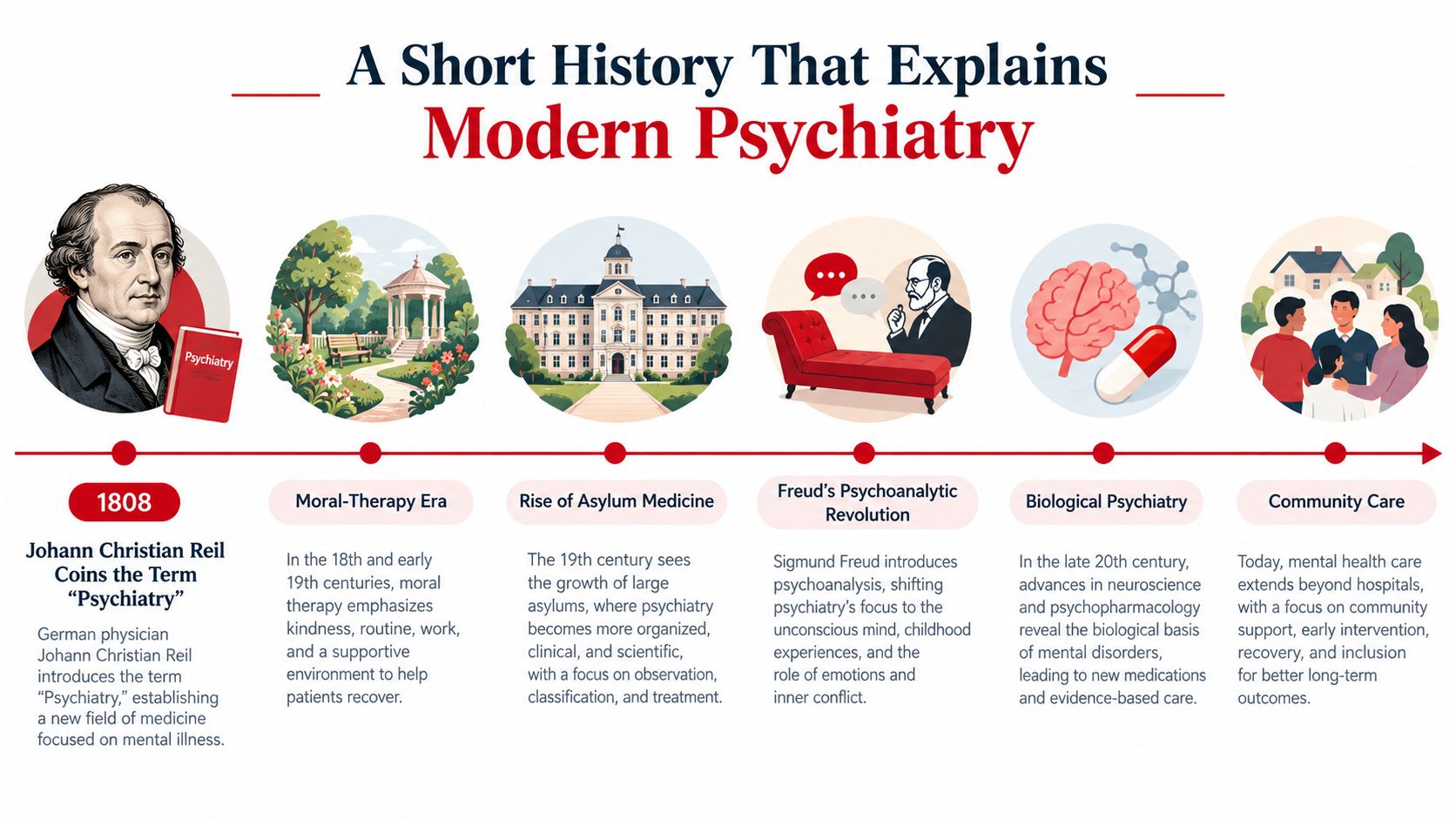
A patient with hallucinations may once have been treated through religious interpretation, confinement, or social control. Modern psychiatry developed by gradually bringing disorders of thought, emotion, and behavior into medical assessment. In 1808, German physician Johann Christian Reil coined the term “psychiatry.” Moral therapy later promoted humane treatment, structure, and dignity. Asylum medicine created institutions for people with severe mental illness, while also revealing the harms and limits of institutional care.
During the nineteenth and early twentieth centuries, competing models shaped the field. Psychoanalytic theory emphasized unconscious conflict and early relationships. Biological psychiatry examined the brain, heredity, physiology, and medication effects. Older terms such as neurosis and hysteria still appear in historical material, but they do not correspond neatly to current diagnostic categories. On an exam, treat them as historical clues rather than diagnoses you should assign today.
A major classification milestone came in 1952, when the American Psychiatric Association published DSM-I, the first Diagnostic and Statistical Manual of Mental Disorders. It contained 106 diagnoses and was intended for clinical use, marking a move toward standardized classification. The timeline of psychiatry shows how this shift influenced diagnosis, research, and treatment across countries.
Why history still appears in exam questions
Modern diagnostic manuals use operational criteria, duration, functional impairment, exclusions, specifiers, cultural formulation, and dimensional assessment. That history explains a recurring board task: separate an isolated symptom from a syndrome, then decide whether the syndrome meets criteria for a disorder.
Psychiatry now combines biological findings with psychological and social assessment. The scale of mental illness also explains why psychiatric knowledge belongs throughout medicine. The World Health Organization reported that about 14% of the global population, or more than 1.1 billion people, were living with a mental disorder in 2021. The report also identified anxiety in 359 million people and depression in 280 million people in 2019. These figures appear in the World Health Organization mental health report.
For USMLE, COMLEX, and Shelf questions, the practical lesson is straightforward: psychiatric terminology changes as evidence and care systems change, but the test still rewards precise definitions, timelines, and diagnostic criteria.
High-Yield Disorders You Will See on Every Exam
Psychiatry questions become easier when you separate symptom pattern, duration, functional impact, and exclusions. A depressed mood alone isn't major depressive disorder. A hallucination alone doesn't establish schizophrenia. The board-style diagnosis depends on the complete pattern.
Mood and anxiety disorders
For major depressive disorder, remember SIGECAPS: sleep changes, interest loss, guilt or worthlessness, energy loss, concentration difficulty, appetite or psychomotor changes, and suicidal thoughts. The symptoms must form a clinically significant episode, and you must consider substances, medical illness, mania, hypomania, and normal grief. Persistent depressive disorder describes a longer-lasting depressive pattern with chronic symptoms.
Anxiety questions hinge on the trigger. Generalized anxiety disorder involves excessive worry across multiple domains. Panic disorder involves recurrent unexpected panic attacks and concern or behavioral change related to future attacks. Social anxiety disorder centers on fear of scrutiny or embarrassment, while a performance-only pattern is narrower. For a patient-facing supplement that uses accessible language, you can review these social anxiety self-help strategies, while keeping your exam preparation focused on diagnostic criteria and differential diagnosis. A structured review of anxiety disorders classification can help organize those distinctions.
Bipolar and psychotic disorders
Bipolar I requires at least one manic episode. Bipolar II requires hypomania and major depression, without a history of mania. Look for decreased need for sleep, grandiosity, pressured speech, increased goal-directed activity, flight of ideas, distractibility, and risky behavior. Questions may test mixed features, psychosis, hospitalization, or increased suicide risk during transitions between mood states.
For schizophrenia, the classic framework includes at least two core symptoms, with at least one being delusions, hallucinations, or disorganized speech, plus functional decline and a prolonged illness course. Always compare schizophrenia with schizophreniform disorder, brief psychotic disorder, schizoaffective disorder, mood disorders with psychotic features, delirium, and substance-induced psychosis.
Substance-use disorders and toxidromes
DSM-5-TR substance-use disorder criteria cover impaired control, social impairment, risky use, and pharmacologic effects. Two or more criteria indicate a mild disorder, while six or more indicate a severe disorder. On exams, the clinical setting often provides the fastest clue:
- Opioids: Miosis, respiratory depression, sedation, and reduced bowel motility.
- Sympathomimetics: Hypertension, tachycardia, agitation, diaphoresis, and dilated pupils.
- Alcohol withdrawal: Tremor, autonomic activation, anxiety, seizures, and potentially delirium as withdrawal progresses.
- Benzodiazepines: Abrupt discontinuation can produce withdrawal, so tapering and context matter.
| Disorder | Key Criteria | Red Flags and Classic Buzzwords |
|---|---|---|
| Major depressive disorder | Depressive syndrome with impairment, while excluding mania, substances, and medical causes | Anhedonia, guilt, suicidality, sleep or appetite change |
| Generalized anxiety disorder | Excessive worry across multiple areas with associated anxiety symptoms | Chronic uncontrollable worry, muscle tension, insomnia |
| Bipolar I disorder | At least one manic episode | Grandiosity, decreased need for sleep, risky behavior, psychosis |
| Schizophrenia | Psychosis with functional decline and a prolonged course | Delusions, hallucinations, disorganized speech, negative symptoms |
| Substance-use disorder | Clinically significant impaired control, impairment, risky use, or pharmacologic effects | Withdrawal, tolerance, intoxication toxidrome, functional decline |
Psychopharmacology Made Memorable
Psychiatric medications are easier to retain when you organize them by the clinical problem they solve and the toxicity the boards want you to recognize. Don't memorize an isolated adverse effect without connecting it to mechanism, monitoring, and the vignette's timing.
Four medication buckets
Antidepressants increase serotonergic, noradrenergic, or related signaling. Selective serotonin reuptake inhibitors and serotonin-norepinephrine reuptake inhibitors are common first-line concepts, while tricyclic antidepressants and monoamine oxidase inhibitors carry more distinctive toxicity questions. Test writers like serotonin syndrome, tricyclic cardiotoxicity, hypertensive reactions involving tyramine, sexual adverse effects, and interactions involving cytochrome P450 enzymes. A simple memory aid for SSRI sexual effects is “S-S-S”, decreased sexual desire, delayed orgasm, and erectile difficulty.
Mood stabilizers have different monitoring profiles. Lithium is associated with nephrogenic diabetes insipidus, thyroid effects, tremor, and toxicity influenced by renal function and fluid balance. Valproate raises concerns about hepatic injury, pancreatitis, and pregnancy-related risks. Carbamazepine can cause blood dyscrasias and drug interactions, while lamotrigine is linked to serious rash and requires careful titration.
Antipsychotics primarily reduce positive psychotic symptoms through dopamine D2 signaling. Typical agents more strongly raise extrapyramidal and prolactin concerns, while atypical agents vary in metabolic, movement, and cardiac effects. Clozapine is the classic drug associated with agranulocytosis and requires blood-count monitoring. Metabolic monitoring should include baseline A1c and lipid assessment when clinically appropriate.
Stimulants and anxiolytics bring questions about misuse, appetite, sleep, cardiovascular effects, dependence, and withdrawal. Benzodiazepines enhance GABA-A activity and can cause sedation, respiratory depression, cognitive impairment, and withdrawal. Depot antipsychotics appear in chronic-care vignettes because adherence, relapse prevention, and patient preference influence treatment planning.
| Drug Class | Mechanism | Prototype | Key Side Effect | Classic Toxicity |
|---|---|---|---|---|
| SSRIs | Reduce serotonin reuptake | Sertraline | Sexual dysfunction, gastrointestinal effects | Serotonin syndrome |
| TCAs | Reduce norepinephrine and serotonin reuptake | Amitriptyline | Anticholinergic effects, sedation | Cardiotoxicity |
| Mood stabilizers | Diverse neuronal and intracellular effects | Lithium | Tremor, thyroid and renal effects | Nephrogenic diabetes insipidus |
| Antipsychotics | D2 blockade or modulation | Haloperidol or clozapine | Movement or metabolic effects | Agranulocytosis with clozapine |
| Benzodiazepines | Enhance GABA-A signaling | Lorazepam | Sedation, dependence | Withdrawal and respiratory depression |
For an additional plain-language overview of medication categories, common anxiety medications for adults can supplement, but not replace, your board resources. Review high-yield pharmacology for USMLE alongside mechanism, adverse effects, contraindications, and washout periods. Drugs alone rarely resolve the full biopsychosocial picture.
Psychotherapy and Brain Stimulation Options
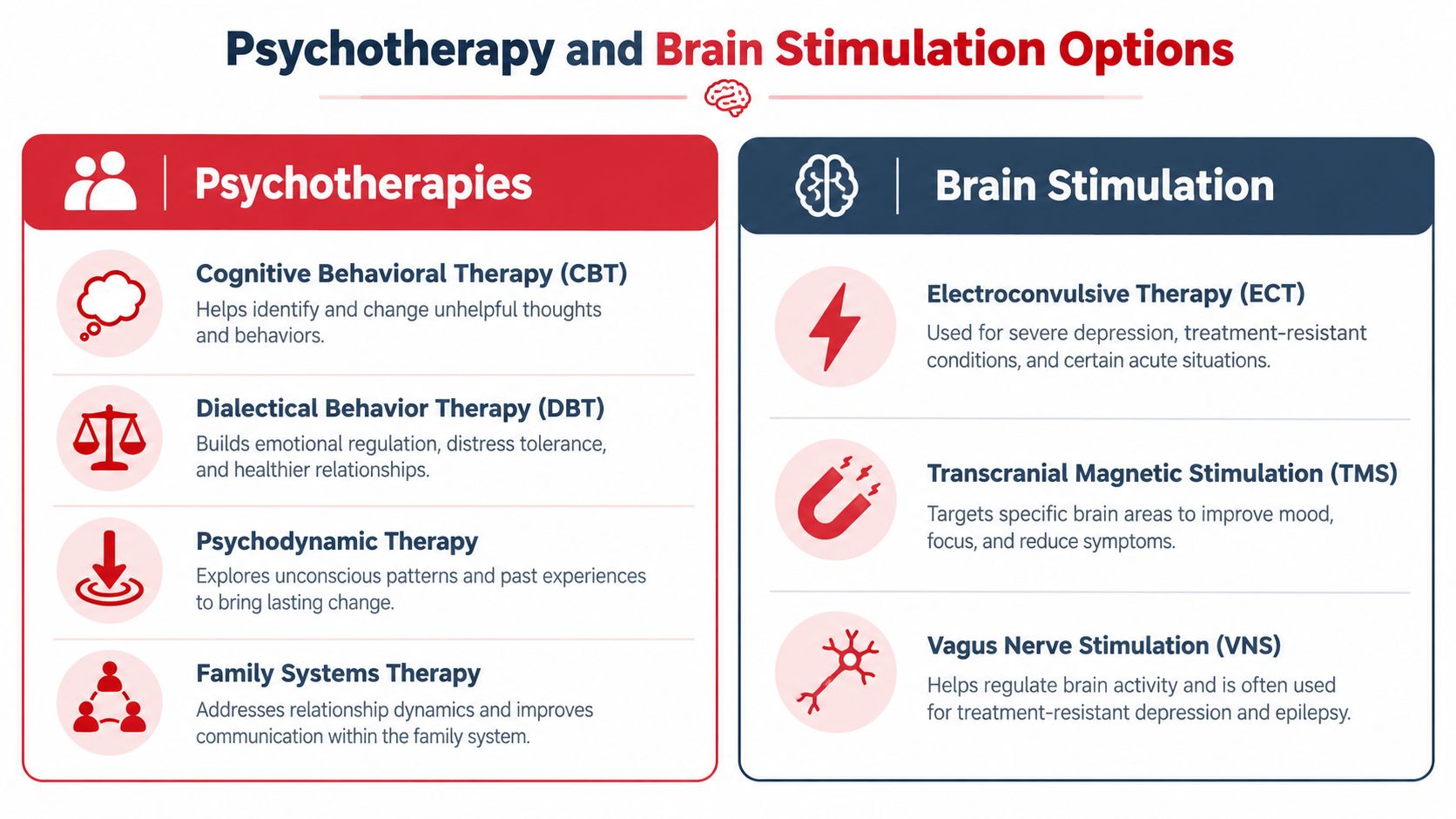
Board questions often give you a treatment clue through the patient's behavior rather than a laboratory result. Cognitive behavioral therapy targets maladaptive thoughts and behaviors in depression and anxiety. Dialectical behavior therapy is strongly associated with borderline personality disorder, especially emotional dysregulation, self-harm, and unstable relationships. Interpersonal therapy focuses on role transitions, grief, and relationship difficulties. Supportive therapy is a broad, practical option when the vignette doesn't point to a specialized modality.
Motivational interviewing is particularly useful in substance-use care because it explores ambivalence rather than confronting the patient aggressively. The core communication style is collaborative, empathic, and autonomy-supportive.
Recognizing somatic treatments
Electroconvulsive therapy is a high-yield choice for severe or treatment-resistant depression, catatonia, and situations where a rapid response is needed. It may also be considered when medication risks make standard pharmacotherapy difficult, including some pregnancy-related scenarios. Transcranial magnetic stimulation is a noninvasive brain-stimulation approach used for depression. Ketamine and esketamine are associated with rapid reduction of suicidal ideation in selected clinical contexts, but board questions still expect attention to monitoring, setting, and follow-up.
A vignette about autism requires a different approach. Treatment should address communication, adaptive function, behavior, education, and family needs rather than imply that one intervention fits every patient. A general overview of evidence-based autism intervention options can help you distinguish supportive developmental care from interventions that are not standard answers to a psychiatry question.
Exam rule: Match the therapy to the target problem, not merely to the diagnosis.
How to Study Psychiatry for USMLE, COMLEX, and Shelf
A productive psychiatry study plan alternates content acquisition, question practice, and error analysis. Reading criteria once won't prepare you for a vignette that asks whether symptoms are caused by delirium, a medication, substance withdrawal, or a primary psychiatric disorder.
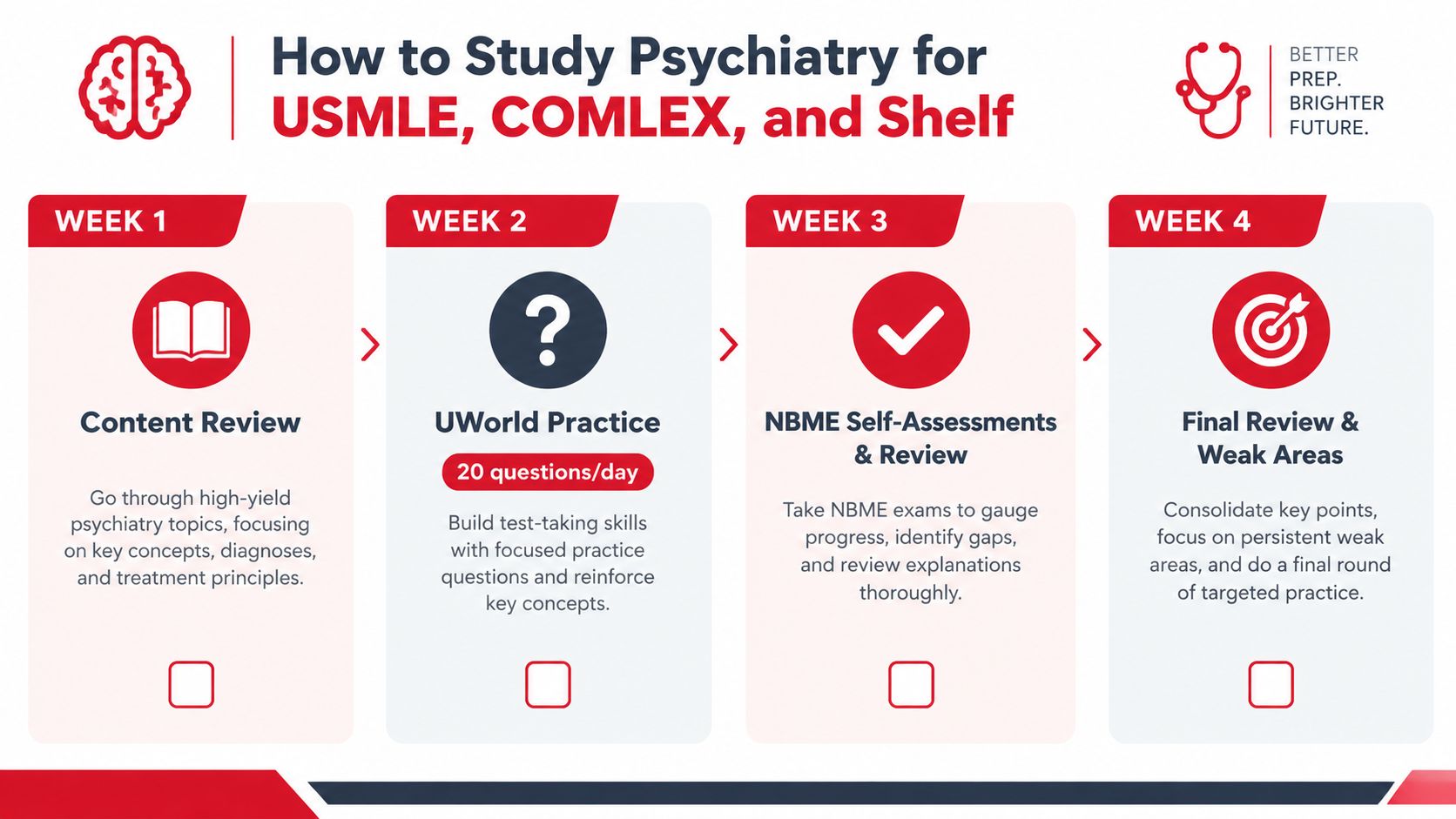
A practical four-week workflow
Week 1 should build the map. Review mood, anxiety, psychotic, substance-use, personality, child, and geriatric psychiatry. Pair a First Aid psychiatry chapter or OnlineMedEd videos with concise notes. Write diagnostic criteria in your own words, then add one differentiating feature for the closest competing diagnosis.
Week 2 should expose weak reasoning. Complete timed UWorld psychiatry questions at roughly 20 questions per day, as part of a broader plan that fits your total exam schedule. Review every option, including the wrong answers, and record whether your error came from diagnosis, timing, treatment, adverse effects, or ethics.
Week 3 should consolidate comparisons. Take an NBME or COMSAE assessment at the end of week 2 or during the following review period, depending on your exam calendar and the assessment's current policies. Build differential tables for mania versus hypomania, schizophrenia versus schizoaffective disorder, and delirium versus dementia.
Week 4 should be selective. Complete a final self-assessment approximately 72 hours before the Shelf if that timing fits your school's schedule. Use the result to choose weak areas, not to trigger a complete restart. Your final review list should include drug toxicities, emergency management, withdrawal syndromes, psychotherapy pairings, and capacity or safety questions.
How to review a missed question
- Name the tested task: Diagnosis, mechanism, treatment, adverse effect, or communication.
- Underline the timeline: Onset, duration, postpartum status, medication exposure, or withdrawal interval.
- State the decisive clue: Write one sentence explaining why the correct answer fits.
- Repair the gap: Add a flashcard using DSM wording, a comparison table, or a drug-toxicity pair.
- Retest deliberately: Return to the concept later without memorizing the original question.
COMLEX examinees should add osteopathic principles, whole-person assessment, ethics, and biopsychosocial integration to the same workflow. The exam may reward recognition that a patient's medical, behavioral, family, and community factors affect the plan. For additional practice, use psychiatry Shelf exam practice questions as one component of a broader study system.
Career Pathways and Residency Match Reality
Psychiatry residency requires four years of training. The first is a full PGY-1 year, followed by three additional full years in psychiatry. For American Board of Psychiatry and Neurology certification, the PGY-1 year must come first and must include at least four months in internal medicine, family medicine, or pediatrics. Confirm current program and board requirements directly before applying, since individual residency curricula and eligibility rules can change.
Common fellowship directions include child and adolescent psychiatry, addiction psychiatry, forensic psychiatry, geriatric psychiatry, and consultation-liaison psychiatry. Interventional psychiatry is another developing area involving treatments such as brain stimulation and other advanced approaches. Practice settings range from academic hospitals and community mental health centers to telepsychiatry and private practice.
What the match data actually says
Psychiatry was highly competitive in the 2026 Main Residency Match. Programs offered 2,516 positions, filled 2,451, and recorded a 97.4% fill rate, leaving 65 positions unfilled. The National Resident Matching Program reported that this represented an increase of 30 programs and 128 positions compared with 2025. These figures come from the NRMP 2026 Main Residency Match results.
| Metric | Psychiatry recent cycle | Notes for applicants |
|---|---|---|
| Positions offered | 2,516 | Review program fit, mission, and training structure |
| Positions filled | 2,451 | A strong application still requires individualized planning |
| Fill rate | 97.4% | Competitiveness varies by program and applicant profile |
| Positions unfilled | 65 | Unfilled positions don't make every program accessible |
| Change from prior cycle | 30 more programs and 128 more positions | Compare current official data each year |
International medical graduates can qualify for ABPN psychiatry certification if they hold a standard ECFMG certificate, meet ACGME entry requirements, complete qualifying training, and maintain an active, full, unrestricted U.S. or Canadian medical license. The ABPN general requirements should be checked directly by international and foreign medical graduates.
The access problem remains substantial. HRSA's 2025 behavioral health workforce brief documents continuing shortages, while coverage citing U.S. projections reports that 51% of U.S. counties have no practicing psychiatrist and projects an adult-psychiatrist shortfall of roughly 36,780 by 2038. Globally, WHO reporting in 2025 described a workforce of only 13 mental health workers per 100,000 people. Psychiatry offers meaningful career variety, but demand doesn't eliminate geographic inequity or application pressure.
For a structured overview of training requirements, review the steps to becoming a psychiatrist.
Planning Your Next Step in Psychiatry
Interest becomes useful when it produces observable work. During electives, sample several settings, including consultation-liaison psychiatry, addiction treatment, crisis stabilization, and juvenile justice. Compare the pace and responsibilities of acute care with longitudinal outpatient relationships, hospital consultation, systems work, and research. That comparison can clarify what kind of psychiatrist you want to become.
A training-year plan
MS1: Attend psychiatry grand rounds, join your school's psychiatry interest group, and practice the mental status examination. Keep a short list of faculty whose clinical or research interests overlap with yours. For the Shelf and boards, learn to describe appearance, behavior, speech, mood, affect, thought process, thought content, perception, cognition, insight, and judgment.
MS2: Choose a focused project with a defined endpoint. A retrospective chart review or quality-improvement project involving suicide screening may be more useful than a broad topic without a dataset or mentor. A finished project gives you a concrete experience to discuss in applications and interviews.
MS3: Use the clerkship to identify mentors and request feedback early. Ask to participate in consult-liaison, addiction, child, or emergency evaluations when available. Record specific clinical questions that could later become personal-statement material. For exam preparation, connect each case to a decision point, such as distinguishing delirium from dementia or mania from primary psychosis.
MS4: Confirm letters, finalize your application narrative, and compare programs by training quality, supervision, patient population, location, and resident support. Review the NRMP Charting Outcomes report each year instead of relying on outdated forum advice. Match strategy should reflect your transcript, letters, clinical performance, and personal priorities.
Students can join the PsychSIGN podcast community, attend the American Psychiatric Association annual meeting as student members, and stay in contact with department leaders or academy district branches. These activities do not replace clinical performance. They can help you understand the field and build professional relationships that develop naturally over time.
A cold email works best when it is brief and specific. Introduce yourself, name the faculty member's project or clinical interest, explain the skill you can contribute, and ask whether a short meeting would be possible. Do not promise a publication or claim expertise you do not yet have. You might ask whether the project has a defined role for a medical student and offer to begin with literature review, data organization, or a small quality-improvement task.
Application principle: A modest, completed project usually tells a stronger story than an ambitious project you cannot finish.
Students preparing for a psychiatry Shelf, USMLE, or COMLEX exam can consider Ace Med Boards for psychiatry-focused question review and study planning. A free consultation can help determine whether its format fits your exam timeline and goals.
Sources
- American Psychiatric Association practice guideline for major depressive disorder
- Psychosis and dopamine review
- HRSA 2025 behavioral health workforce brief
- ABPN psychiatry certification requirements
This article is for examination education and professional orientation, not individualized medical advice. Clinical decisions should follow current guidelines, supervision, and the patient's full evaluation.