You're staring at a drug question, the answer choices all look familiar, and still nothing clicks. That's the pharmacology problem on board exams, it's rarely about recognizing a list, it's about tracing a drug from target to physiologic effect to clinical use to predictable adverse effect. If you can do that consistently, pharmacology stops feeling like trivia and starts feeling like a system.
Key Takeaways
- Learn drugs by mechanism first, then anchor each class to use, adverse effects, and interactions.
- Pharmacokinetics tells you what the body does to the drug, and pharmacodynamics tells you what the drug does to the body.
- A receptor-by-organ grid helps you retrieve answers before you recognize them.
- A safe vignette method reduces trap answers by forcing you to explain why each distractor fails.
- For board prep, the goal is transferable reasoning, not fragile memorization.
Why Pharmacology Feels Overwhelming on Board Exams
A lot of students hit pharmacology the same way they hit a giant drug list, line by line, hoping repetition will eventually turn into understanding. Then a vignette changes one detail, and the whole memory chain falls apart. That frustration is common, especially because learners often feel overloaded by the volume of drugs and struggle to apply pharmacology in practice, not just recite it from memory (medical education review).
The deeper issue is that board exams don't reward isolated recall for long. They reward pattern recognition plus reasoning, which means you have to connect mechanism, contraindication, interaction, and patient context in one pass. That's exactly where many learners get stuck, because a list of beta-blockers, ACE inhibitors, or calcium channel blockers doesn't tell you what happens when the patient has asthma, hepatic impairment, or another interacting drug.
Practical rule: If you can't explain why a wrong answer is wrong, you probably haven't learned the concept yet.
A better approach is to learn pharmacology the way exam writers think about it. Start with the receptor or enzyme target, then ask what changes physiologically, then ask why that change helps, and finally ask what adverse effect would be expected from the same mechanism. That sequence is the difference between memorizing “metoprolol” and understanding why a beta-1 blocker lowers heart rate, helps certain cardiovascular conditions, and can still cause predictable side effects.
For students who freeze when the clock starts, test anxiety can make all of this feel worse than it is. A focused plan matters more than panic-driven rereading, and a structured review workflow helps you turn a scary topic into a repeatable process. If test nerves are part of the problem, this test-anxiety resource can help you build a calmer study routine.
Core Principles of Pharmacokinetics and Pharmacodynamics
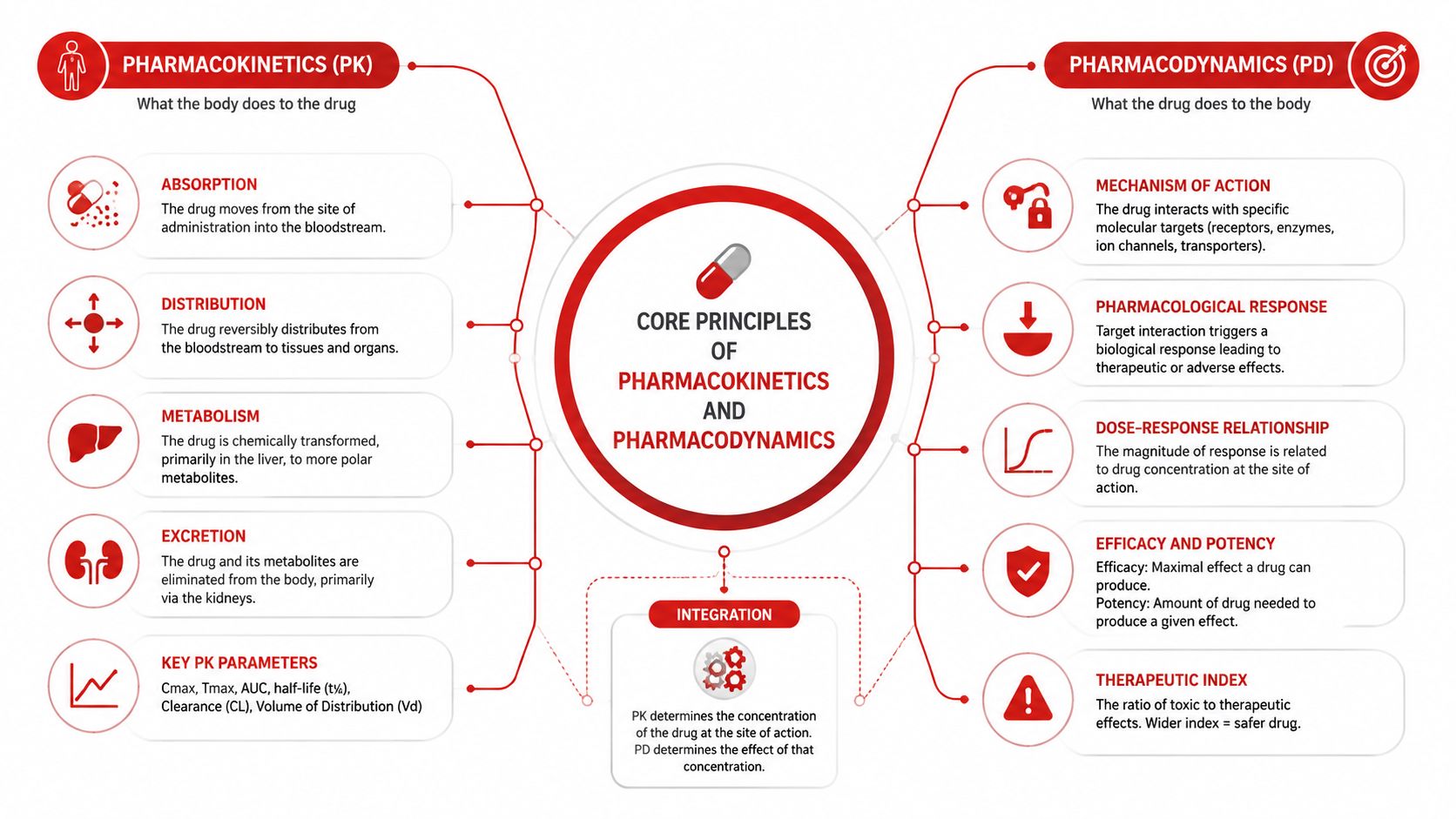
Pharmacokinetics and pharmacodynamics describe two sides of drug behavior. One follows what the body does to the drug, the other follows what the drug does to the body. Keeping that split clear makes exam questions much easier to sort.
Pharmacokinetics as the trip the drug takes
Board writers expect you to know the basic kinetic terms in context, not as isolated vocabulary. FDA labeling guidance uses clearance, volume of distribution, and half-life to describe how a drug moves through the body (FDA labeling guidance). Clearance is the rate at which the body removes a drug, volume of distribution describes how widely it spreads into tissues, and half-life tells you how long it takes for the concentration to fall by half.
These terms fit together. Clearance is the exit rate, volume of distribution reflects how far the drug leaves the bloodstream, and half-life is the time course you see on the way down. A large volume of distribution can contribute to a long terminal half-life, so a drug may linger after dosing stops even when the active phase feels over.
Hepatic impairment changes that picture. FDA guidance for altered liver function evaluates exposure and disposition with measures such as AUC, Cmax, apparent clearance, renal and nonrenal clearance, apparent volume of distribution, and terminal half-life (FDA hepatic impairment guidance). On exams, that means liver dysfunction is not just a caution label, it can change how much drug reaches the patient and how long it stays there.
Pharmacodynamics as the response when the drug arrives
Pharmacodynamics starts once the drug reaches its target. A receptor can be activated, blocked, or modulated, and the clinical effect depends on which tissue is involved and how strongly that target is affected. That is why dose-response thinking shows up so often on board exams.
The same logic helps with interactions. CYP450 inhibition can raise plasma concentrations by slowing clearance, and a review on CYP450 inhibition notes that a 50% decrease in clearance is associated with a doubling of average plasma concentrations of the affected drug (NIH review on CYP450 inhibition). If you want a cleaner overview of this pattern, this CYP interaction guide is a useful place to review the logic. Induction works differently, and timing depends on the inducer's half-life. A primary-care review reports lower concentrations of a CYP2C9 substrate within 24 hours after rifampin, but up to one week after phenobarbital (AAFP review on CYP interactions).
The test question usually is not asking whether you recognize the drug name. It is asking whether you can trace what the drug does to the system, and what the system does back.
The Receptor-by-Organ Grid and Mechanism-to-Effect Arrow Chain
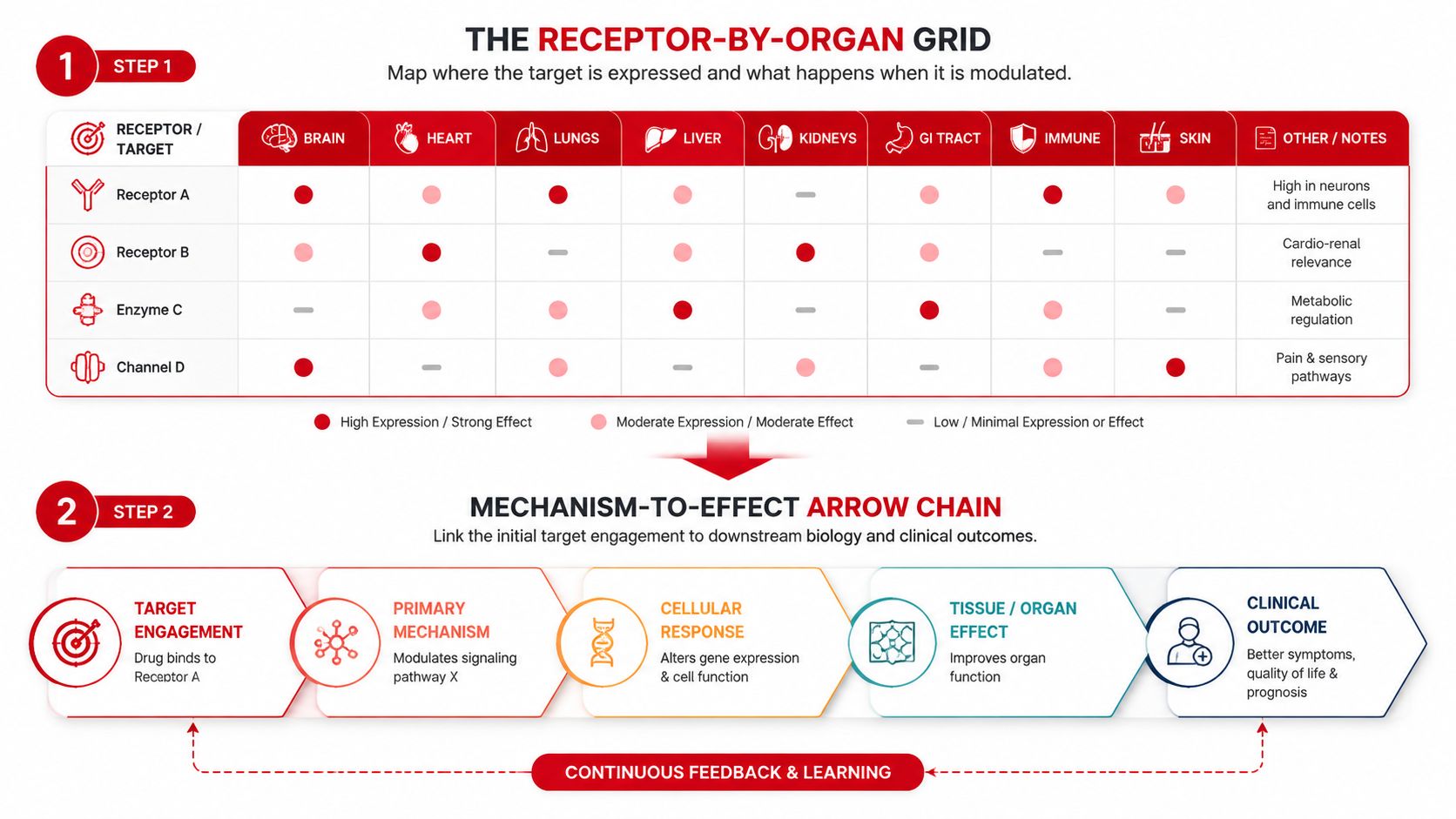
A lot of students know drug names, but not the chain that makes those names useful on test day. A receptor-by-organ grid fixes that by forcing you to connect the target to the organ response before you look at the answer choice. The answer stays concealed until you've retrieved it yourself.
The grid you can reuse
Use four columns:
| Receptor or enzyme target | Organ or tissue | Physiologic change | Clinical use or predictable effect |
|---|---|---|---|
| β1 blockade | Heart | Lower heart rate and contractility | Helpful in some cardiovascular conditions |
| β2 blockade | Lungs and peripheral tissues | Less bronchodilation, more peripheral effect | Explains why nonselective drugs can be harder to use in reactive airway disease |
| ACE inhibition | Vessels and kidney handling of peptides | Less vasoconstrictive signaling | Lowers blood pressure and changes expected adverse effects |
| CYP inhibition | Liver metabolism | Slower clearance | Higher drug exposure and higher toxicity risk |
That table isn't a memorization crutch, it's a retrieval prompt. You answer the first column from memory, then walk across the row until the logic feels obvious. If one cell feels uncertain, that's the exact spot to review.
One original hypothetical to show the chain
A learner sees a vignette about a patient with tachycardia and high blood pressure who improves on a beta-1 selective blocker. The receptor target is β1, the physiologic change is reduced cardiac stimulation, the clinical use is rate control or blood pressure reduction in appropriate settings, and the predictable adverse effect comes from the same mechanism, so too much blocking can lead to bradycardia or fatigue. That is the mechanism-to-adverse-effect arrow chain in action.
Now change one variable. Switch the drug from a beta-1 selective blocker to a nonselective beta-blocker. The mechanism still lowers cardiac activity, but the new drug also affects β2 signaling, which changes the adverse-effect profile and the reasoning around pulmonary disease. That tiny switch tests transfer, not recognition.
If you want an example of how this logic shows up in ischemic disease review, this acute coronary syndrome page fits the same style of thinking without turning pharmacology into a drug list.
Educational rule: Don't stop at “what receptor does this hit?” Keep going until you can say, “therefore this adverse effect makes sense.”
High-Yield Autonomic and Cardiovascular Drug Classes
A patient with hypertension, bradycardia, or cough often points to one of the high-yield autonomic or cardiovascular classes below. Board exams favor class-level pattern recognition over brand-name recall, because the same mechanism usually explains the use, the adverse effect, and the interaction.
| Drug Class | Mechanism | Key Indications | Adverse Effects | Contraindications | High-Yield Interactions |
|---|---|---|---|---|---|
| Beta-blockers | Block β receptors, some are β1 selective and some are nonselective | Blood pressure control, rate control, select cardiovascular uses | Bradycardia, fatigue, and with nonselective agents, more concern for bronchospasm | Use caution in asthma or other reactive airway disease for nonselective agents | Additive slowing with other rate-lowering drugs |
| ACE inhibitors | Reduce angiotensin-converting enzyme activity | Blood pressure control, kidney-related and cardiovascular uses | Cough and angioedema are classic exam adverse effects | Avoid in pregnancy | Potassium-raising combinations matter |
| ARBs | Block angiotensin II receptor signaling | Blood pressure control and ACE-inhibitor alternative use | Usually fewer cough-related issues than ACE inhibitors | Avoid in pregnancy | Potassium retention still matters |
| Calcium channel blockers | Reduce calcium entry, with different vascular and cardiac effects depending on subtype | Hypertension, angina, rhythm-related uses in selected settings | Edema, constipation with some agents, and bradycardia with others | Caution when cardiac conduction is already slow | Other rate-slowing agents can compound effects |
| Diuretics | Increase renal salt and water loss through different nephron targets | Blood pressure control, edema management, and condition-specific uses | Electrolyte disturbance is the big board theme | Choice depends on volume status and kidney function context | Interactions often follow electrolyte shifts |
| Alpha-agonists and alpha-antagonists | Modify sympathetic tone at α receptors | Blood pressure and autonomic symptom management in selected cases | Orthostatic symptoms or sedation patterns may appear depending on class | Use caution when blood pressure is already low | Other autonomic drugs can blur the picture |
Many examinees remember the indication but miss the pattern that drives the question. A beta-blocker lowers rate, so bradycardia and fatigue fit the mechanism. A nonselective agent also touches β2 signaling, which is why bronchospasm becomes a concern in reactive airway disease. ACE inhibitors lower angiotensin-converting activity, so cough and angioedema are the exam clues that should come to mind first. ARBs spare the ACE step, so cough is less of a feature, though pregnancy and potassium issues still matter.
The same reasoning helps with calcium channel blockers. Reduced calcium entry explains the split between vascular and cardiac effects, which is why edema, constipation, and bradycardia can all appear depending on the subtype. Diuretics follow a different path, but the board theme is similar, because the adverse effects often track with electrolyte shifts and the clinical context of volume status or kidney function.
Alpha drugs round out the table because they test sympathetic tone in a different way. Alpha-agonists and alpha-antagonists can produce orthostatic symptoms, sedation, or blood pressure changes depending on the class, so the key is to connect the receptor to the physiologic direction of change before choosing an answer.
Students who rely on isolated recall often miss the underlying class pattern. A safer habit is to read each row as a chain. Receptor or transporter. Then organ effect. Then use. Then adverse effect. That sequence keeps the table usable on exam day instead of turning it into six separate memorized lists.
For a broader review of interaction patterns, this cytochrome P450 guide pairs well with the class table above.
A Safe Question-Analysis Method for Pharmacology Vignettes
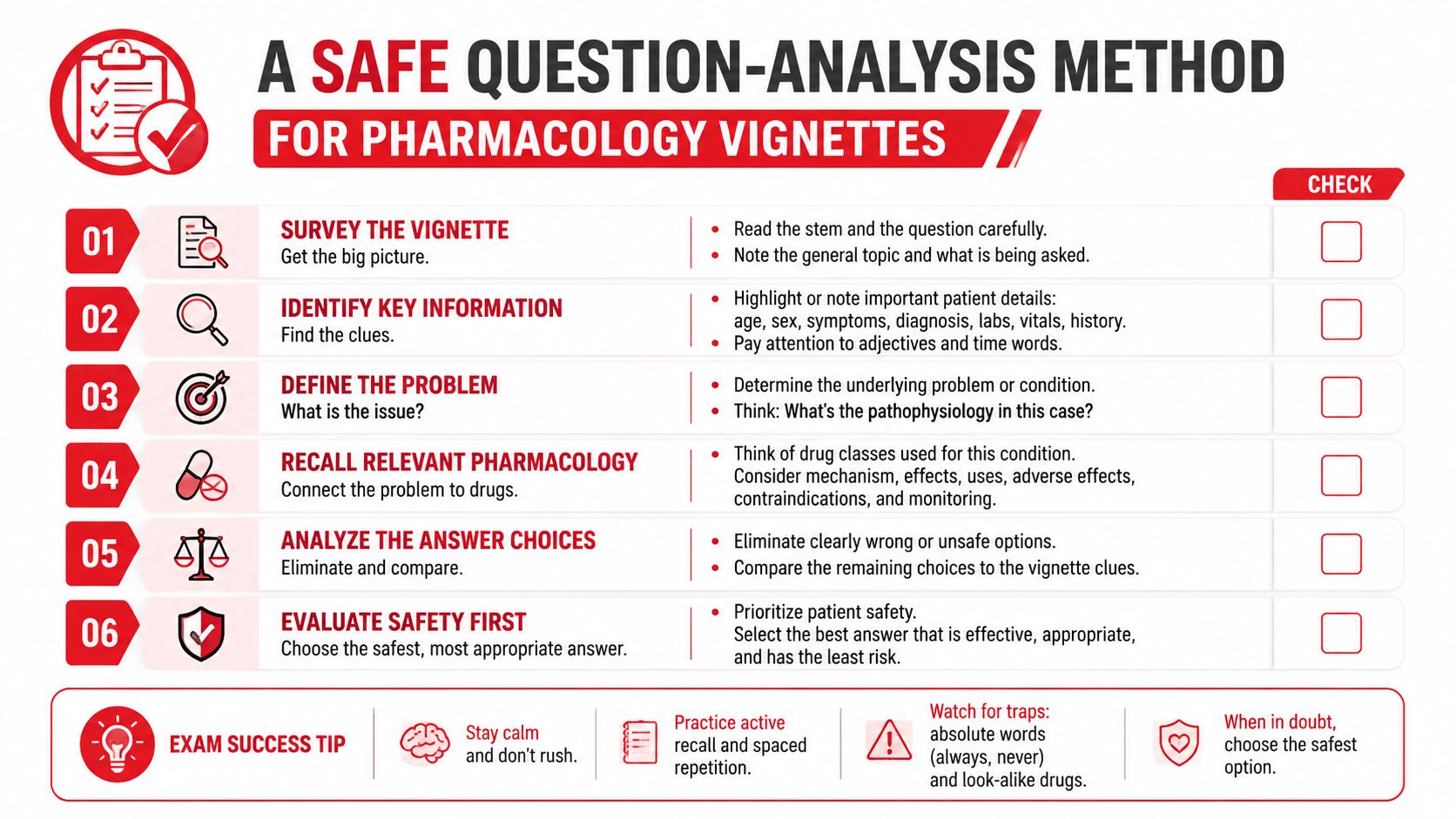
A vignette should never be treated like a name-recognition contest. The safest method is to slow the stem down, identify the decisive variable, and then force every answer choice to earn its place. That habit matters more than speed early on, because speed without reasoning just repeats the same mistake faster.
The four-step read
- Identify the clinical setup. What organ system, symptom cluster, or medication context is in front of you?
- Name the target. Receptor, enzyme, transporter, or channel.
- Predict the effect. Use the arrow chain, target to physiology to use to adverse effect.
- Kill the distractors. Explain why each wrong choice doesn't fit the mechanism.
A completely original hypothetical works better than a recalled question. Say the stem describes a patient with hypertension who develops cough after starting an ACE inhibitor. The target is ACE, the effect is reduced angiotensin-converting activity, and the cough clue points you to the mechanism rather than a random antihypertensive category. If the answer choices include an ARB, that's tempting because both classes affect the renin-angiotensin system, but the absence of the classic ACE-inhibitor cough pattern matters.
If you then change the case to a patient who develops high drug levels after another medication is added, the same logic points you back toward metabolism and clearance instead of receptor theory. That transfer is the whole point. The learner who can explain the wrong answer choices out loud usually retains the concept longer than the learner who just circles the correct letter.
For a structured way to practice that habit, this distractor-analysis page fits the same workflow.
Practical rule: If two answer choices look close, separate them by mechanism first, not by brand familiarity.
Board-Targeted Pharmacology Study Strategies
Students who spend hours rereading drug lists often discover they cannot apply that information inside a vignette. The fix is to study pharmacology as a chain, target to effect to adverse effect, then test whether you can use that chain under pressure. Retrieval beats passive review because boards reward recognition plus reasoning.
A simple weekly workflow keeps that habit alive:
- Monday: Review one drug class by receptor or enzyme target.
- Wednesday: Do a short question set and label each miss by error type, not just by topic.
- Friday: Revisit the same class through a different organ system or contraindication.
- Weekend: Return only to misses that involved reasoning, interaction logic, or adverse-effect prediction.
That pattern separates familiarity from mastery. It also shows whether you know a class from one cue or can still reason when the stem changes the context.
The receptor-by-organ grid works well here, because it lets you organize a class by where it acts and what that action does in the body. The mechanism-to-adverse-effect arrow chain adds the next step, so a side effect is tied to physiology instead of memorized as a stray fact. For a structured way to build that kind of weekly review, this pharmacology study guide fits the same approach.
Modern pharmacology also includes precision dosing, pharmacogenetics, AI-assisted discovery, and newer modalities such as biologics, gene-editing technologies, and RNA-based therapies, so memorizing names alone misses part of what boards can test (2024 to 2025 pharmacology review). On exam day, the safer habit is to ask which variable matters most for the patient in front of you.
One option for structured support is Ace Med Boards, which offers pharmacology-focused tutoring and study-plan support for board preparation. Whether you use tutoring or not, the best resource mix still includes official materials, question banks, and your own error log.
Key Takeaways and Next Steps for Your Pharmacology Prep
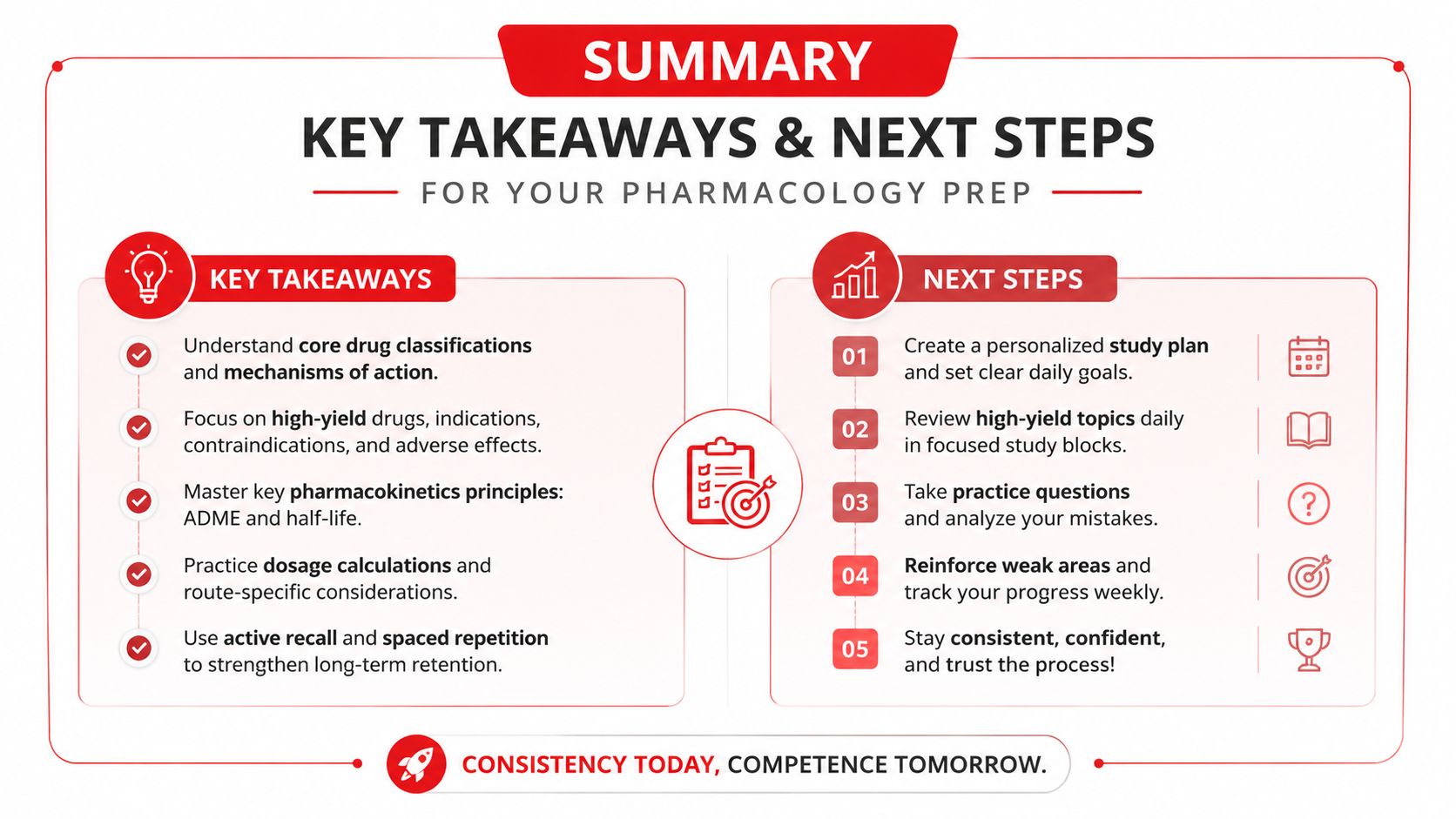
Pharmacology gets easier when you stop treating it like a giant vocabulary test. The exam usually wants a chain of reasoning, target, effect, use, and adverse effect, and the students who do best are the ones who can walk that chain without guessing.
The receptor-by-organ grid gives you a way to retrieve information before the answer choices help you. The mechanism-to-adverse-effect arrow chain keeps you honest, because it forces the side effect to make physiologic sense. Together, those tools turn isolated facts into a repeatable method.
FAQ
What if I don't recognize the drug name?
Start with the stem's physiology, not the label. If you can identify the receptor, enzyme, or organ system, you can often work backward to the class.
Should I prioritize pharmacokinetics or pharmacodynamics?
Both matter, but start with pharmacodynamics if you're building class understanding, then add pharmacokinetics for clearance, half-life, and interaction questions.
How do I connect pharmacology with physiology and pathology?
Tie every drug to the organ system it changes. If you know the disease state, the medication target becomes much easier to predict.
This content is for exam education, not patient care. If you want personalized diagnostic tutoring or a study-plan review, a free consultation or Board Score Audit can help you see whether your misses are from knowledge gaps, timing, or reasoning errors.
Ace Med Boards can help you build a pharmacology study plan around your actual weak spots, especially if mechanisms, interactions, and vignette reasoning are where you lose points. If you want targeted support, visit Ace Med Boards to explore diagnostic tutoring and personalized study-plan support for board preparation.