Most students don't fail physiology because they lack effort. They struggle because they memorize facts without building the cause-and-effect models board exams test. If you can predict what happens when pressure changes, resistance rises, or a feedback loop breaks, physiology starts to make sense fast.
Physiology is the study of how the body works in health, and for medical students it becomes much easier once you stop treating it like a list of isolated numbers. The main task is learning how the body keeps balance, then recognizing how disease changes that balance.
Why Memorizing Physiology Fails on Board Exams
Rote memorization feels efficient until the question writer changes the setup. Then a familiar fact suddenly looks unfamiliar because the exam is asking you to reason through a system, not recite a definition. That's why students can do well in class and still miss board-style questions that ask what happens when a variable shifts.
The biggest trap is confusing static knowledge with dynamic reasoning. Physiology is built on change, flow, and feedback, and board exams reward the learner who can trace those relationships rather than the one who can only repeat labels. A historical view of the field makes that clear, from Harvey's 1628 description of blood circulation, to Claude Bernard's experimental medicine, to the later formalization of physiology as a publication-driven science with the American Physiological Society and the American Journal of Physiology history of physiology.
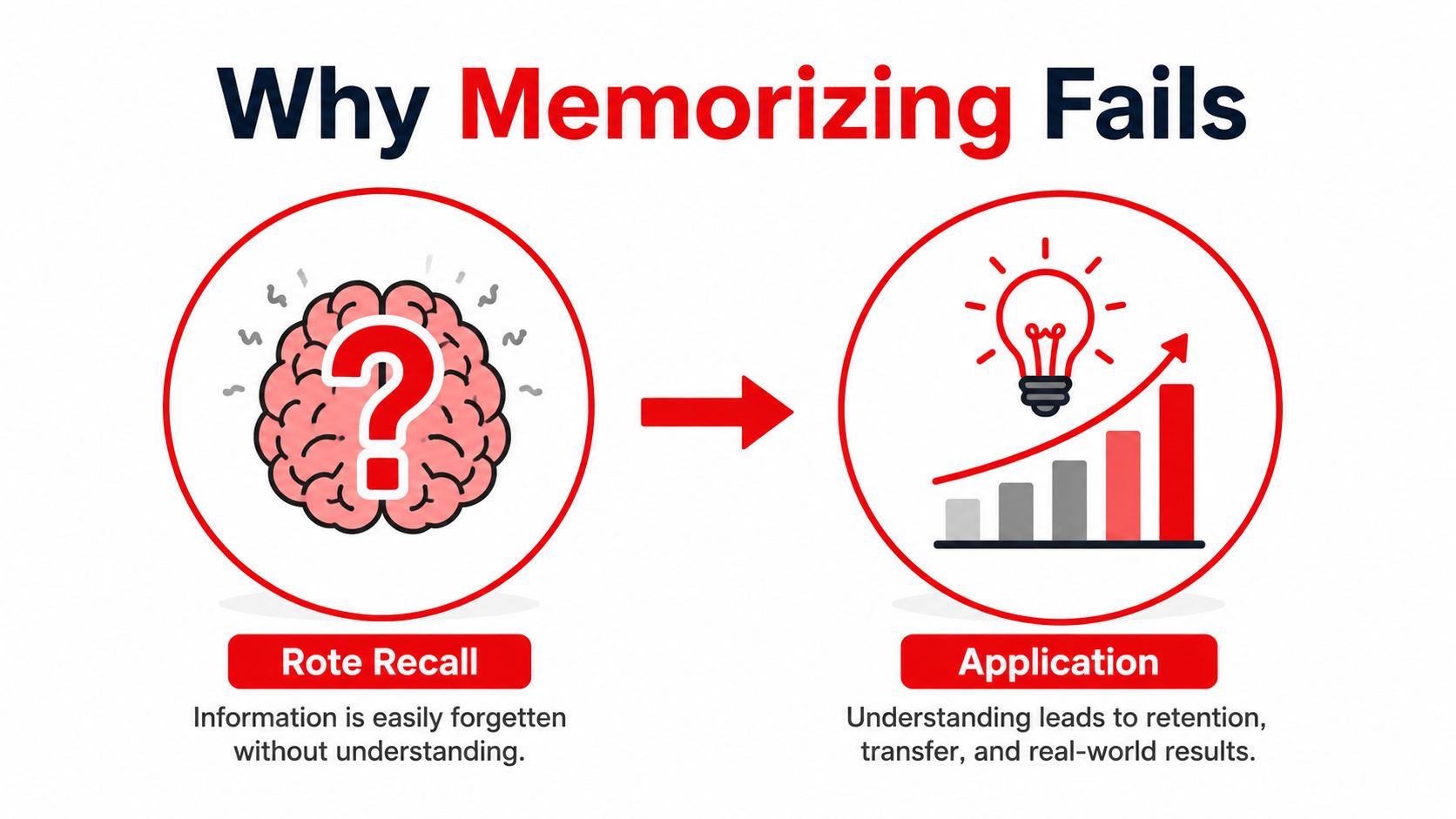
Practical rule: if you can't explain why a change happens, you probably don't yet own the concept.
Three misconceptions show up again and again in board prep. Students often blur left vs. right ventricular output, confuse pulse velocity with blood velocity, and miss how increased resistance affects flow. In respiratory physiology, they also carry naive ideas about tidal volume, alveolar gas exchange, and homeostasis as “everything stays constant,” even after standard teaching cardiovascular and respiratory misconceptions. The answer isn't more memorization. It's a better mental model.
If you use active recall to test yourself, you'll feel the difference immediately. A short review on active recall, which pairs well with physiology, is available in Ace Med Boards' guide to active recall study habits.
Core Principles Every Medical Student Must Master
Start with the cell, not the organ
A cell membrane is a selective border checkpoint, not a wall. Some substances cross easily, some need channels, and some need transporters. That simple idea explains why permeability matters so much in physiology and why a change in one ion can reshape electrical behavior across a tissue.
The resting membrane potential depends mainly on potassium permeability, because the membrane at rest is usually much more open to potassium than to sodium. That is why a change in extracellular potassium can alter excitability so quickly. A useful way to think about the Goldman-Hodgkin-Katz equation is that it weighs the relative contributions of ions across the membrane, rather than treating each ion as if it acts alone.
Second messenger systems add another layer. A signal at the membrane can amplify inside the cell, which is why a small hormone concentration can trigger a much larger response. That's the physiologic logic behind many endocrine and neural pathways, and it's also why learners who memorize receptor names without tracing the signaling cascade often get lost.
Homeostasis is a control system
Homeostasis works like a thermostat with multiple sensors, not a single switch. The body detects a change, compares it with a target range, and then pushes back until the variable moves toward balance. Negative feedback is the dominant pattern, because it stabilizes the system.
Positive feedback is different. During labor, oxytocin helps intensify uterine contractions, which leads to more oxytocin release. The loop accelerates until its job is done. By contrast, the baroreceptor reflex is a classic negative feedback loop, because it resists sudden changes in blood pressure.
Board-day shortcut: when a question gives you a loop, ask whether the body is trying to restore balance or amplify a process that has a built-in endpoint.
For a systems-based map of these ideas, Ace Med Boards' cardiovascular physiology review is a practical place to anchor the concepts.
The same logic helps with graphs. When you read a curve, don't ask only what the line says. Ask what variable moved, what sensed it, and what the body did in response. That habit turns physiology from memorization into interpretation.
Organ Systems and Their High-Yield Mechanisms
Pressure flow beats isolated numbers
Cardiovascular physiology becomes manageable once you start with cardiac output as the product of heart rate and stroke volume. From there, preload, afterload, and contractility determine where the heart sits on the curve. Learners often memorize the terms but miss the direction of change, which is why they miss questions about shifting performance under stress or disease.
Respiratory physiology is the same kind of reasoning. You need to follow ventilation, perfusion, and gas exchange, not just label structures. The alveolar side of the system becomes more intuitive when you keep asking what changes oxygen delivery, what changes carbon dioxide removal, and where mismatch creates inefficiency.
Renal physiology demands the same discipline. Glomerular filtration starts with Starling forces, then tubular handling decides what gets reabsorbed or excreted. Students often confuse transport location with transport purpose, especially when a question asks how sodium handling changes volume status. Endocrine physiology adds another layer of control because hormone axes use checkpoints and feedback inhibition, which is why a disruption upstream can distort every downstream signal.
The fastest way to get lost is to memorize each system as if it were separate. It isn't. Transport, signaling, and feedback are repeated themes across organ systems. For a useful bridge into electrophysiology, the cardiac electrophysiology guide offers a clean overview of how electrical activity supports the mechanical work of the heart.
High-yield mechanisms by system
| System | Core mechanism | Common confusion |
|---|---|---|
| Cardiovascular | Pressure, flow, resistance, and pumping performance | Mixing up pressure with flow |
| Respiratory | Ventilation, perfusion, diffusion, and gas exchange | Treating oxygenation and ventilation as the same thing |
| Renal | Filtration, reabsorption, secretion, and volume control | Forgetting where each transport process occurs |
| Endocrine | Hormone release, receptor response, and feedback inhibition | Confusing upstream control with downstream effect |
| Gastrointestinal | Lumen-to-blood nutrient movement | Mixing absorption with digestion |
| Nervous system | Action potentials and synaptic transmission | Losing track of propagation versus neurotransmission |
| Musculoskeletal | Excitation-contraction coupling and force generation | Separating electrical signaling from mechanical output |
For endocrine review, Ace Med Boards has a focused endocrine system study guide that fits well with this feedback-loop approach.
Connecting Normal Physiology to Disease States
Normal physiology becomes clinically useful when you can explain what breaks first. In heart failure with reduced ejection fraction, the heart's pumping ability falls, so the body tries to preserve perfusion through compensatory responses. Those responses help briefly, but they also create secondary stress, which is why students need to separate the primary problem from the body's reaction.
Diabetic ketoacidosis is another classic example. The body cannot use glucose normally, so metabolism shifts in a way that changes acid-base balance. The compensation is real, but it doesn't fix the root disturbance, and board questions often test whether you can identify the initiating defect versus the respiratory or renal response.
Acute kidney injury forces the same kind of reasoning. When filtration and tubular handling change, volume status, electrolytes, and acid-base balance can all move together. The question writer often hides the core issue inside a lab pattern, so the student who recognizes the broken control system usually wins the question.
Here's the habit to build. First identify the normal loop. Then ask what part is disrupted. After that, decide whether the body's response is helping, masking, or worsening the original problem. That sequence works especially well in acid-base questions and endocrine feedback loops, where students often mistake compensation for the main disorder.
The wrong answer usually looks attractive because it names a true physiologic response. The correct answer names the first broken link.
For a clinically framed review of physiologic disruption and disease, Ace Med Boards' respiratory failure treatment page can help connect physiology to pathology without losing the underlying mechanism.
Working Through a Board-Style Physiology Question
A renal question often looks like a clinical case, but it's really testing one relationship: how the kidney handles sodium and volume. Suppose a patient develops increased urine output after a medication that acts on a sodium transport site in the nephron. The answer choices compare sodium excretion, calcium handling, and volume status.
Start by identifying the system. This is renal physiology, so the key question is where sodium is normally reabsorbed and what happens when that step is blocked. Then ask whether the drug affects the ascending limb or the distal convoluted tubule, because that distinction changes how calcium is handled and how much sodium reaches downstream segments.
Next, eliminate distractors that confuse transport location with overall volume effect. A loop-targeting drug and a thiazide-targeting drug both change sodium handling, but they do not do so in the same place, and they do not produce the same calcium pattern. If you see an answer that mixes up those two regions, it's probably built to catch memorized but unstable knowledge.
The final step is to predict the direction of change before you look for the answer. If sodium reabsorption falls, more sodium stays in the tubule, water follows, and effective volume tends to fall. That alone often reveals the best choice. The exam writer is not asking whether you know a drug name. The exam writer is asking whether you understand the governing renal relationship.
Transferable framework: identify the system, recall the governing relationship, predict the direction of change, then verify the answer choices against that prediction.
That same method works for nearly any physiology item. Start with the mechanism, not the vignette.
Study Resources and Strategies That Actually Work
Resource choice should match your stage of learning. Costanzo and Guyton are strong when you need conceptual depth, while BRS Physiology is better when you want a tighter review pass. Boards and Beyond and Physeo can help when a video explanation is easier to absorb than a dense chapter. An Anki deck is useful only if you already understand what each card means.
| Resource | Best For | Time Investment | Board Alignment | Limitations |
|---|---|---|---|---|
| Costanzo | Building core physiologic reasoning | Moderate | Strong | Can feel dense if you're just starting |
| BRS Physiology | Fast review and reinforcement | Lower | Strong | Less detailed than a full text |
| Guyton | Deep conceptual study | High | Moderate to strong | Too long for last-pass review |
| Boards and Beyond | Visual first-pass learning | Moderate | Strong | Needs active recall to stick |
| Physeo | Structured visual explanation | Moderate | Strong | Easy to over-watch without testing yourself |
| Anki decks | Spaced repetition and retention | Low per session, high consistency needed | Strong when cards are well made | Weak if cards are memorized mechanically |
The best evidence-backed habit is still active recall plus spaced repetition, because physiology rewards retrieval and pattern recognition more than passive rereading. A study review video intervention in physiology found small but measurable score differences on course exams, shelf exams, and first-attempt Step 1 performance for students who watched the videos physiology review videos study. That doesn't replace question banks, but it does show that structured review can support performance when it's used deliberately.
Ace Med Boards also offers spaced repetition guidance that fits a physiology-heavy schedule.
Building Your Personalized Physiology Study Plan
A practical plan works best when it alternates learning and testing. In the early phase, use a core text or video set to understand the model, then test yourself with short retrieval sessions and question blocks. In the review phase, shift the weight toward questions, error logs, and repeated recall of the same high-yield relationships.
A simple weekly structure can look like this:
- Day 1 to 2: build one system map, then close the notes and redraw it from memory.
- Day 3: do a focused question set and mark every miss by concept, not by page number.
- Day 4: review only the concepts you missed, then teach them out loud.
- Day 5: mix systems so you practice distinguishing similar patterns.
- Day 6 to 7: repeat the weakest material with spaced recall.
The biggest scheduling mistake is overloading the “interesting” systems and pushing aside the ones that feel dry. Renal acid-base, pressure-flow relationships, and feedback loops deserve equal attention because board exams love to test them through unfamiliar wording. If you keep missing questions, don't call it a motivation problem first. Check whether the issue is a broken model, a weak retrieval habit, or a resource that's too passive for your stage.
Physiology sticks when you revisit it often enough to make the logic feel automatic. The students who improve are usually the ones who keep tightening the same mental model until it works under pressure.
Ace Med Boards helps students turn physiology from scattered memorization into clear, testable reasoning with diagnostic tutoring and personalized study-plan support. If you want help identifying the exact concepts that are costing you points, visit Ace Med Boards to explore a focused consult and build a plan around your current stage.