Does another question-bank subscription help a student who still struggles to perform a neurologic examination? A useful set of neurology clerkship resources covers different jobs: bedside examination technique, lesion localization, quick reference, and clerkship-style self-assessment. Most students need a small selection that covers those jobs, not every resource on this list.
Start with four jobs, not ten logins. A demonstration helps with reflex technique. A worked case helps connect findings to anatomy. A searchable reference answers a focused clinical question, while assessment practice checks whether knowledge can be applied independently.
These resources are compared by their educational role, strengths, limitations, access considerations, and ideal use case, rather than ranked by popularity. The order isn't a claim that paid tutoring should come before free clinical-skills materials.
Key Takeaways
- For bedside skills, Stanford Medicine 25 or the University of Utah NeuroLogic Exam can support preparation before supervised practice.
- For localization, active case work is more useful than repeatedly reading a diagnosis summary.
- For assessment, a teaching question bank and an official self-assessment serve different purposes.
- For spending decisions, school-provided access should be checked before purchasing overlapping subscriptions.
Prices, subscription features, and access terms can change. The access notes below distinguish free resources from paid options without treating unconfirmed prices as current offers. Each publisher's current terms should be checked before purchase.
By Ace Med Boards Editorial Team
1. Shelf Exam – Neurology
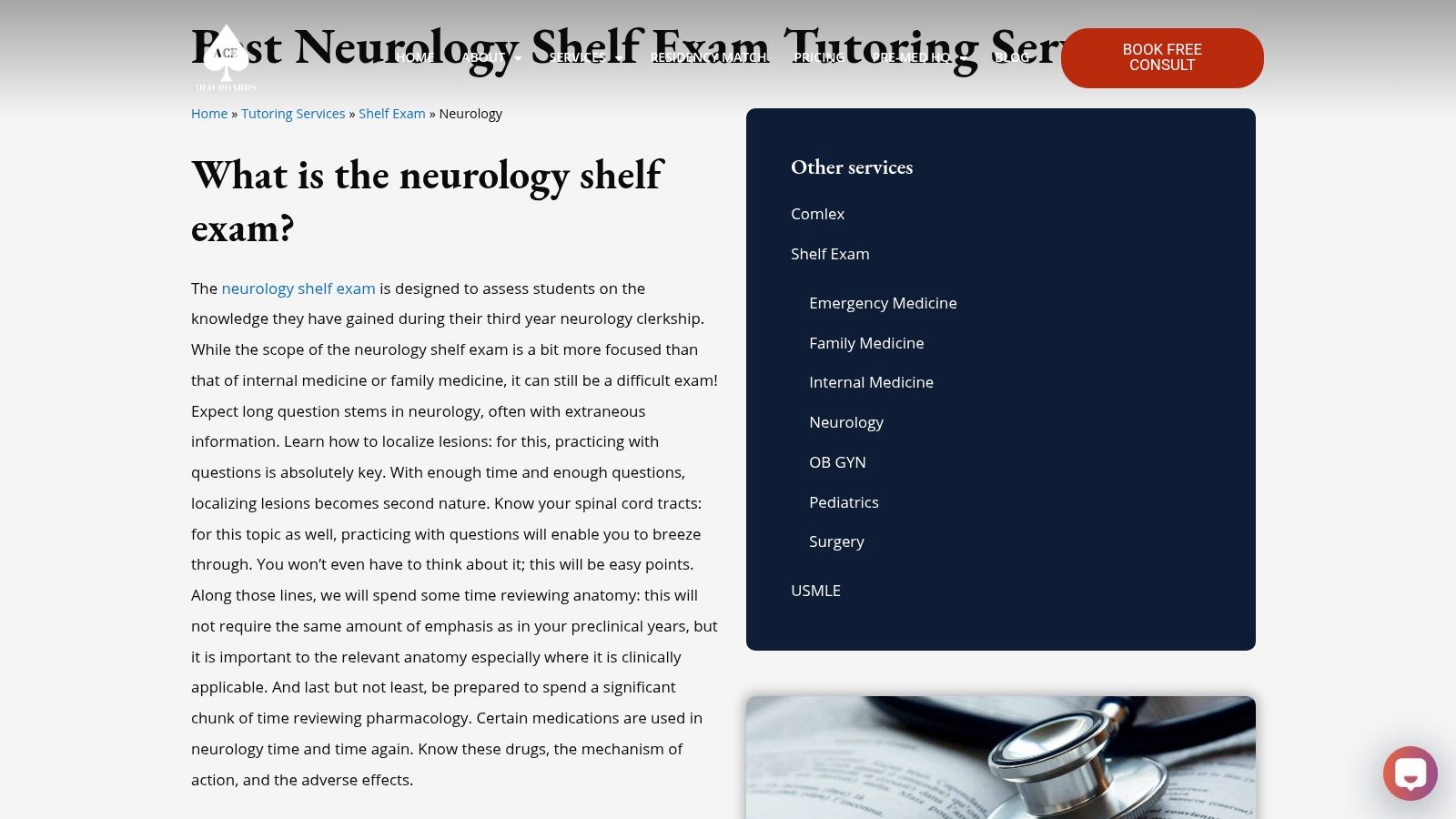
Primary job: individualized assessment practice and study planning. Ace Med Boards offers personalized online Neurology Shelf Exam tutoring, with sessions addressing clinical reasoning, question analysis, pacing, and topics requiring additional attention. Its hourly packages provide a paid option for students who need help organizing preparation rather than another independent-study library.
The Neurology Shelf Exam service page describes the relevant service. A free consultation can help students discuss preparation goals and package options; it shouldn't be interpreted as a promise of a particular score.
When Individualized Support Fits
A student may understand an explanation after reading it yet struggle to identify the decisive finding independently. In that situation, the useful task is to explain the reasoning aloud, identify where it diverged, and practice a more consistent approach.
- Strength: Individualized discussion can address the reasoning process behind an answer, not just the missing fact.
- Limitation: Tutoring doesn't replace independent questions, official assessments, or supervised examination practice.
- Cost consideration: Package cost and expected use should be considered alongside existing school resources.
For question-practice depth, the existing neurology shelf practice questions guide is the more focused companion. A resource comparison should help students choose tools, rather than duplicate a question-review guide.
Practical rule: A tutoring session is most useful when the student brings an error pattern, not simply a list of unfamiliar topics.
For faculty organizing original practice exercises, tools that schedule opening and closing times for exams address administration rather than educational content. Such scheduling tools aren't evidence of examination readiness or substitutes for official assessment materials.
2. American Academy of Neurology Medical Student Resources
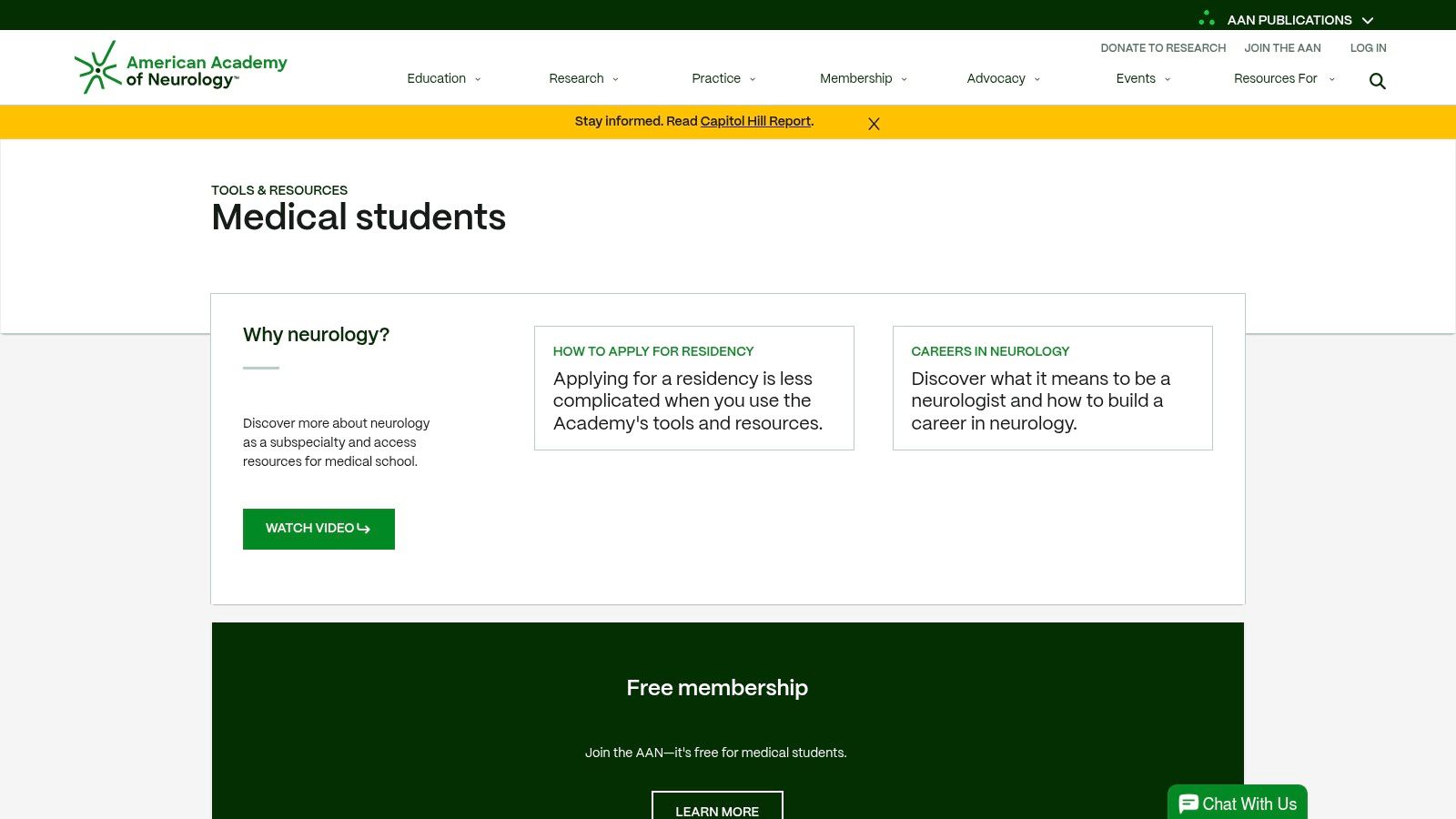
Primary job: specialty-oriented learning and curriculum guidance. The American Academy of Neurology medical student resource hub brings together educational and career materials. Its offerings include NeuroBytes videos, the Medical Student Self-Assessment Examination, and question-based learning resources.
The American Academy of Neurology, abbreviated AAN, is especially useful when a student needs direction about what belongs in a neurology learning plan. Its clerkship and course director collection identifies core curriculum guidance, example syllabi, evaluation materials, and competency-oriented resources.
Use the Hub Selectively
A resource hub can become another browsing task unless the student arrives with a purpose. A short video may fit a targeted review need, while a curriculum document helps identify a neglected clinical skill.
- Strength: Student-focused materials connect clerkship learning with broader specialty exploration.
- Limitation: Resources sit across different pages and platforms, so access isn't necessarily uniform.
- Access consideration: Student membership is free, but membership status shouldn't be assumed to include every assessment or learning product.
Students unfamiliar with rotation expectations can first review what a clerkship involves. That context helps separate required clinical competencies from optional enrichment.
The AAN hub works well as a starting map, not necessarily a single daily study platform. Students can select a relevant component, assign it a specific job, and avoid collecting materials that duplicate an existing resource.
3. UWorld Step 2 CK QBank
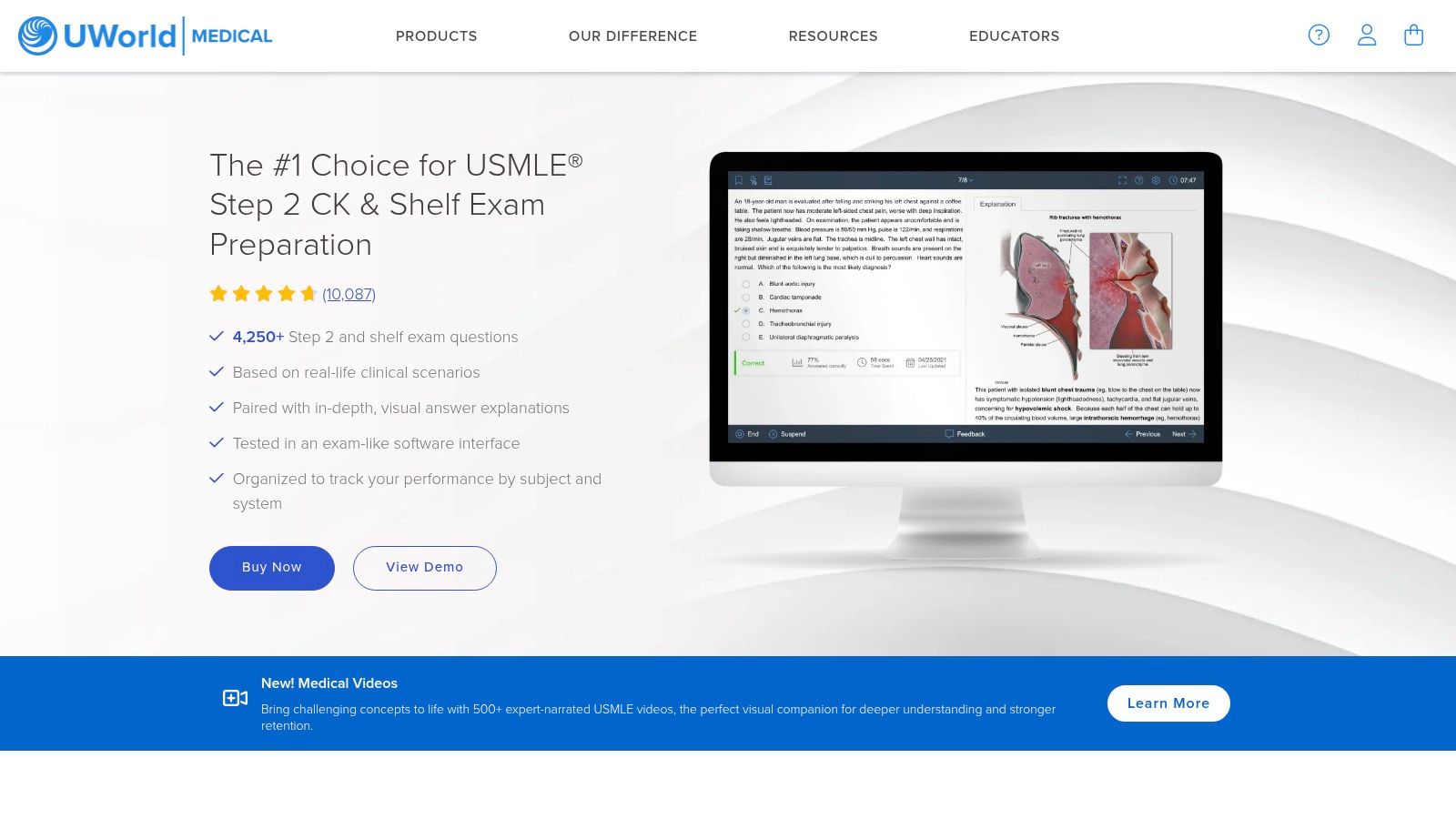
A student who recognizes a syndrome during rounds may still struggle when several answer choices appear plausible. UWorld's role is repeated application through clinical vignettes, rather than demonstration of examination technique.
The UWorld Step 2 Clinical Knowledge question bank includes Clinical Neurology content and a Shelf Review mode. Its explanations can support review of both the selected answer and the alternatives, with subscription features varying by package.
Make Review More Specific
After an incorrect response, the useful question is whether the difficulty came from localization, missing knowledge, interpretation of the task, or comparison of competing options. Recording that distinction makes subsequent study more focused.
For example, a student who understood the diagnosis but answered the wrong task needs a different correction from a student who couldn't identify the lesion location. Repeating the entire topic summary may not address either problem efficiently.
- Strength: A question bank can support both clerkship preparation and later United States Medical Licensing Examination Step 2 Clinical Knowledge study.
- Limitation: Written vignettes can't establish competence in performing a neurologic examination.
- Cost consideration: A paid subscription may be difficult to justify for neurology alone, particularly when institutional access or another suitable bank already exists.
A sensible stopping point for review is a clear explanation of the decisive finding and why the closest alternative doesn't fit. Copying an entire explanation into notes can create more material without producing a usable correction.
4. NBME Clinical Science Mastery Series Clinical Neurology
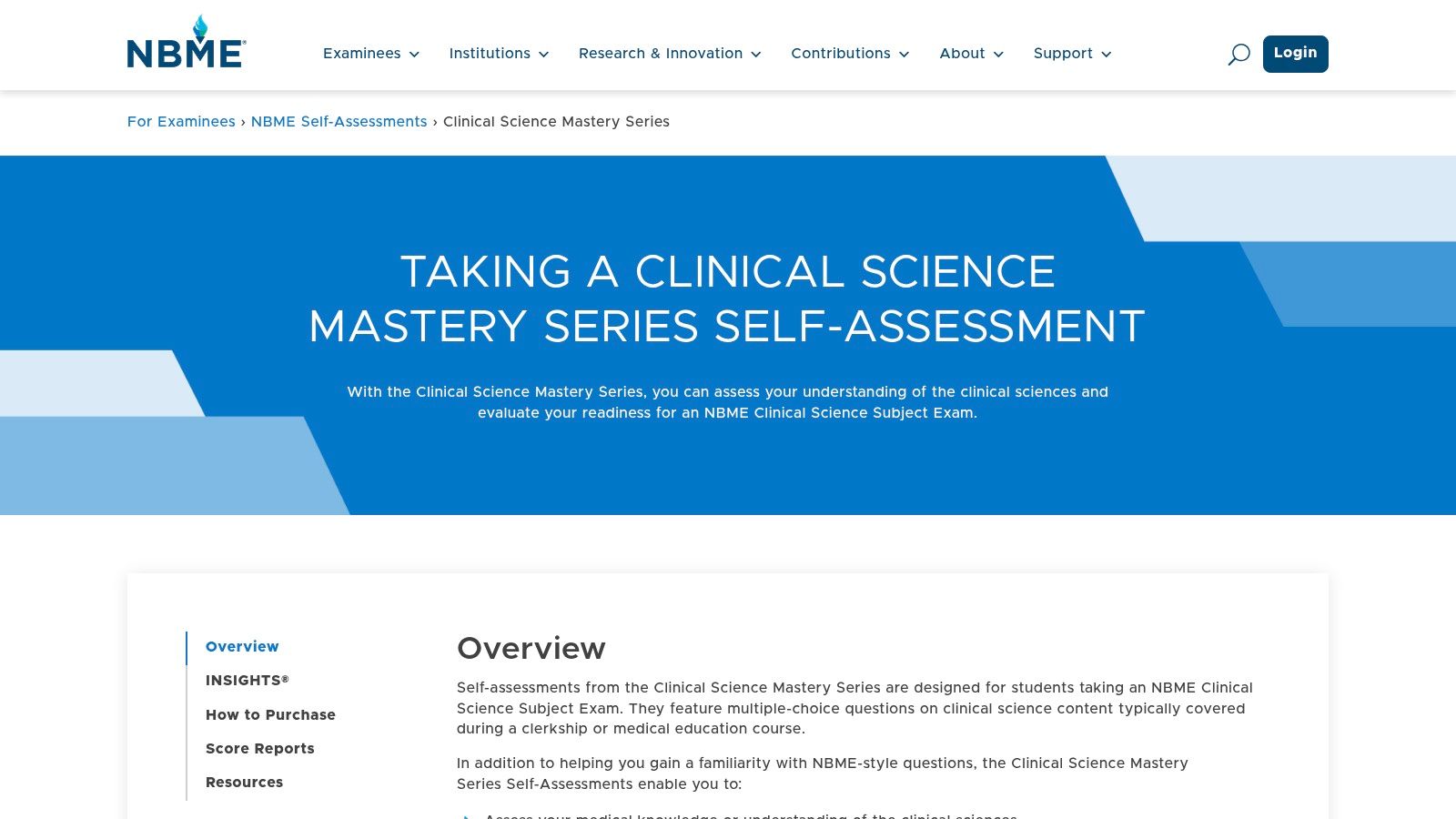
Primary job: a focused readiness checkpoint. The National Board of Medical Examiners Clinical Science Mastery Series offers Clinical Neurology self-assessment materials. This serves a different purpose from a large teaching bank: students use the result to decide what to review next.
The National Board of Medical Examiners, abbreviated NBME, publishes the subject-examination outline separately. Its Clinical Neurology content outline assigns 60%–65% of content to the nervous system and special senses, supporting substantial attention to that domain without ignoring the remaining content.
Treat Feedback as a Decision Tool
A self-assessment is most useful when enough study time remains to respond to its findings. Students can compare the feedback with recurring question-bank errors and identify whether the same weakness appears across both settings.
A readiness check should change the next study decision. Otherwise, it becomes a measurement without a response.
The main strength is alignment with the organization responsible for the subject examination. The main limitation is that a focused assessment isn't a complete teaching course and shouldn't be used as the entire study plan.
This is a paid resource, and current fees, access periods, available forms, and feedback details should be confirmed before purchase. The broader NBME shelf exam guide provides context for students still learning how subject examinations fit into clerkship assessment.
5. AMBOSS Neurology Clerkship Guide and Study Tools
Primary job: quick reference with optional integrated practice. The AMBOSS neurology clerkship guide fits students who want topic review and practical rotation guidance close together. Its broader platform combines a searchable medical library with question-based study options.
During a rotation, the useful reference question is often narrow. A student may need to clarify an examination term, compare related syndromes, or prepare a focused discussion after rounds, rather than read an entire chapter.
Keep Reference Work Bounded
A workable sequence is identify the uncertainty, search the specific topic, and record the answer needed for the learning task. Related articles can remain unopened unless they address another identified gap.
- Strength: Reference material and question practice can sit within the same platform.
- Limitation: A large library can encourage extensive reading without checking recall or application.
- Cost consideration: Membership and question-bank access may involve different packages; library access shouldn't be assumed to include unlimited questions.
AMBOSS may fill the reference slot in a starter set even when a student already uses another assessment resource. Buying overlapping question access is a separate decision, not an automatic requirement.
School or library access should be checked first. Students comparing subscriptions should focus on the exact features they expect to use during the rotation, rather than the total number of features advertised.
6. Case Files Neurology, Fourth Edition
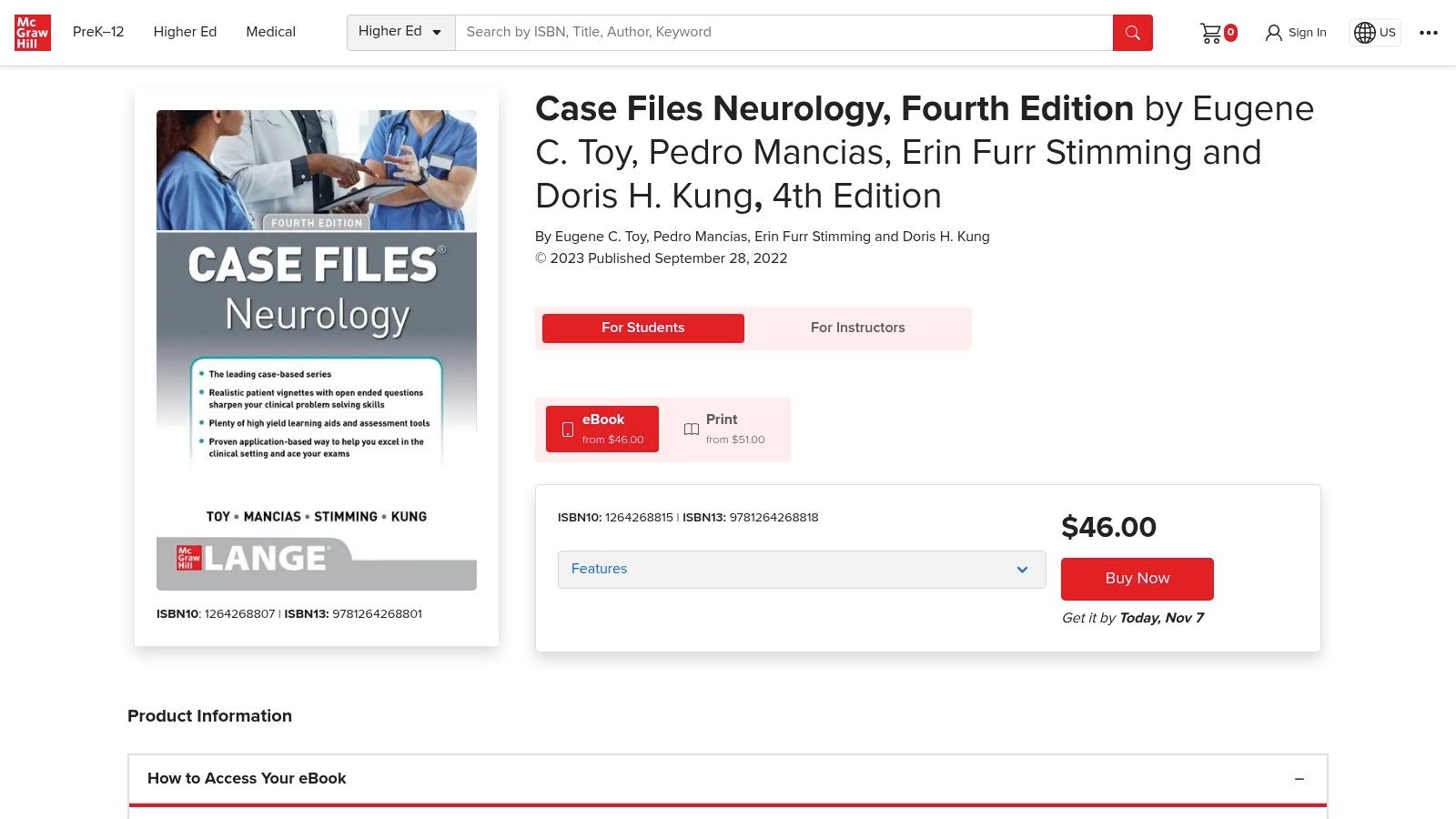
Primary job: case-based reasoning and organized topic review. McGraw Hill's Case Files Neurology, Fourth Edition connects clinical presentations with discussion, review questions, and clinical pearls. It suits students who prefer following a case through a structured explanation.
Unlike a searchable reference, a case book asks for sustained attention to a presentation. Unlike a question bank, its main value isn't performance tracking across repeated practice blocks.
Read the Case Before the Explanation
The active step comes before turning to the discussion. A student can summarize the clinical problem, state a likely localization, and identify the finding that most strongly supports that conclusion.
The explanation then becomes a comparison with the student's reasoning rather than a substitute for it. A brief written correction is usually more useful than highlighting most of the page.
- Strength: Cases connect findings, differential diagnosis, and exam-focused management reasoning.
- Limitation: A book doesn't provide the same performance tracking as a question-bank platform.
- Cost consideration: Print, electronic, and institutional-library access should be compared before purchasing.
Case Files can occupy the localization and reasoning slot, particularly when clinical exposure is uneven. It still needs a bedside examination resource and an assessment tool beside it; reading a complete case doesn't establish that a student can perform the examination or answer independently under time pressure.
7. Stanford Medicine 25 Neurologic Examination Videos
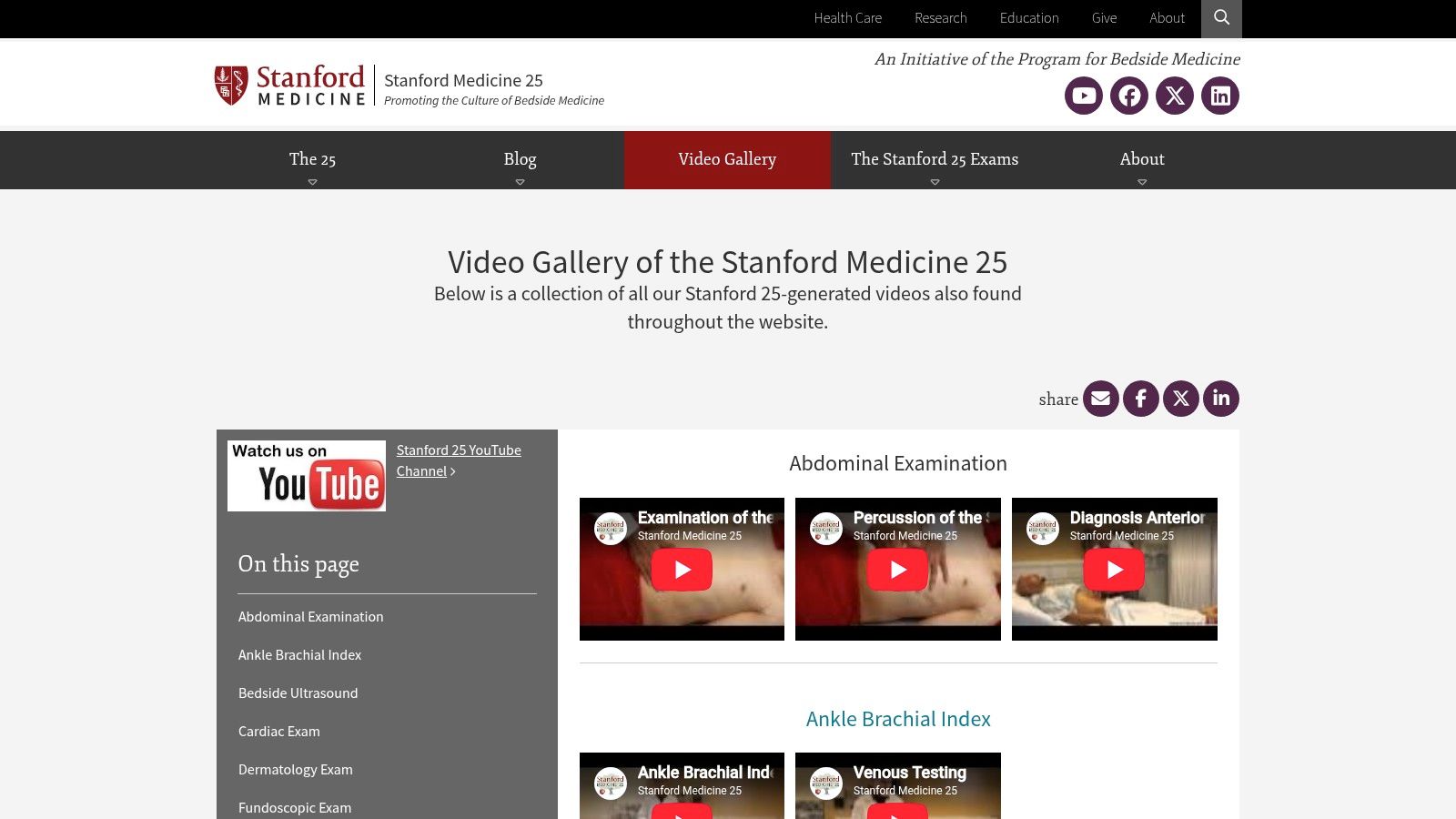
Primary job: seeing how selected examination maneuvers are performed. Stanford Medicine 25's video collection includes demonstrations relevant to gait, reflexes, cerebellar examination, tremor, and Parkinson's examination. Free online access makes it a practical supplement before a supervised clinical session.
A student who knows what a reflex represents may still be uncertain about positioning, relaxation, or technique. Video is useful for that visible, procedural part of learning, but watching alone doesn't demonstrate competence.
Use a Watch-Practice-Feedback Sequence
The student can choose the maneuver that needs work, observe the demonstration, and rehearse with an appropriate peer or supervised clinical opportunity. A clinician's feedback then identifies details the student may not notice independently.
Bedside priority: The useful outcome is a reproducible maneuver and an accurate description of the finding, not completion of a video playlist.
Strengths include visual demonstration and easy review of a specific skill. Limitations include uneven coverage of a complete screening examination and the absence of shelf-style assessment practice.
A student shouldn't expect this resource to fill the localization, reference, and assessment roles as well. It works best as a deliberately narrow bedside tool, supported by the planning principles in the clinical rotation study guide.
8. University of Utah NeuroLogic Exam
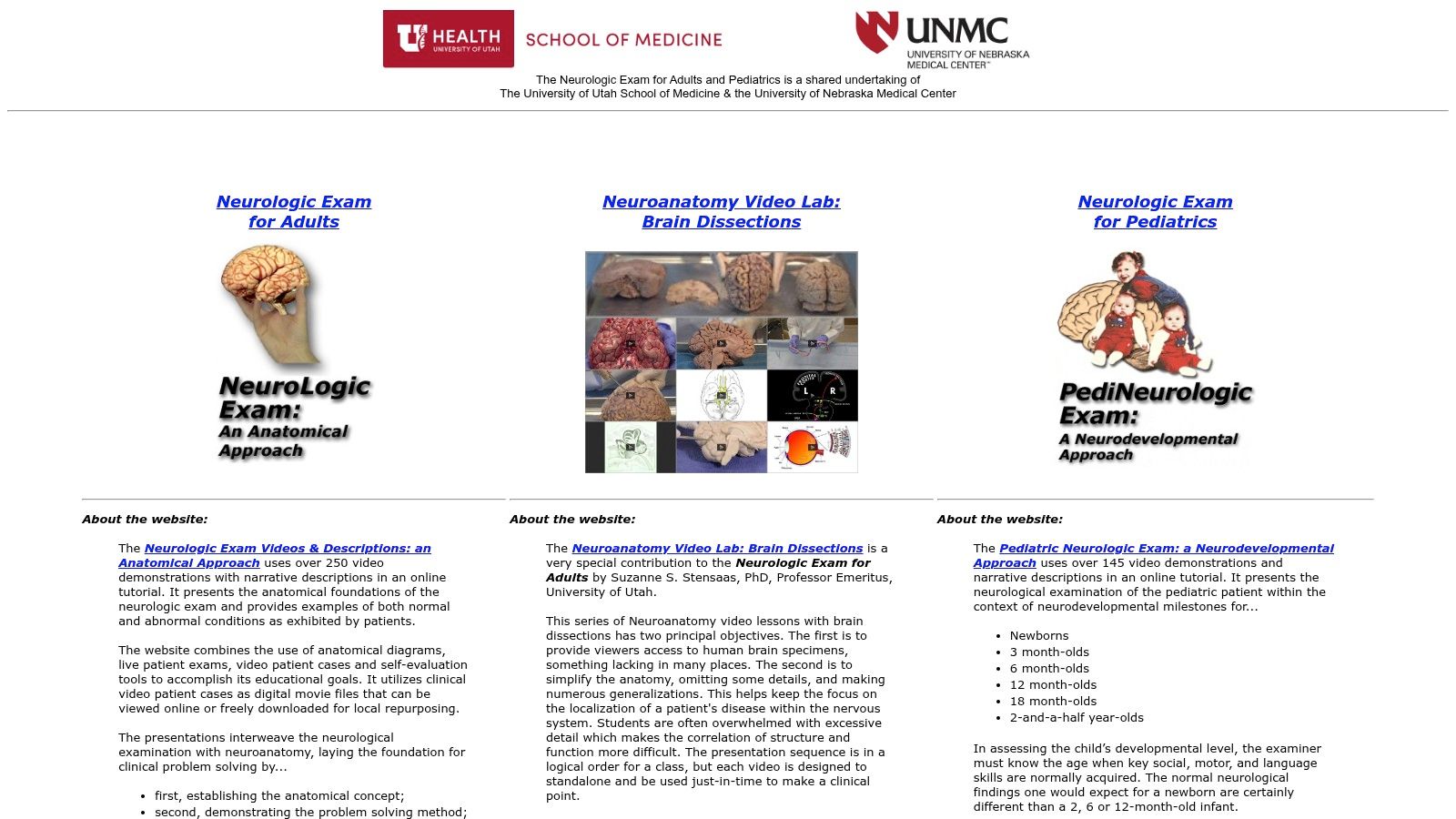
Primary job: structured examination review and recognition of findings. The University of Utah NeuroLogic Exam provides adult and pediatric neurologic examination materials. Its organization supports students who need more than an isolated demonstration of a maneuver.
The distinction from Stanford Medicine 25 is practical rather than competitive. Stanford can suit a targeted technique question, while Utah can help a student review examination components in a more structured sequence.
Choose One Main Bedside Resource
Students don't necessarily need to work through both collections. The better starting choice is the one that addresses the immediate difficulty, whether that's performing a maneuver or understanding where it fits within the examination.
- Strength: Adult and pediatric materials support broader examination review.
- Limitation: An online presentation can't evaluate the student's actual technique.
- Access consideration: Free online materials reduce the need for another paid subscription, though supervised practice remains necessary.
For a student without a dedicated neurology service, the resource can support rehearsal and preparation for feedback from an available qualified clinician. It can't replace an approved clinical experience or independently establish competence.
A useful study output is an organized verbal description of the examination and its findings. Recognition of an abnormality on a website should be treated as preparation for clinical learning, not proof that the student will reliably identify it at the bedside.
9. University of Washington Neurology Clerkship Cases
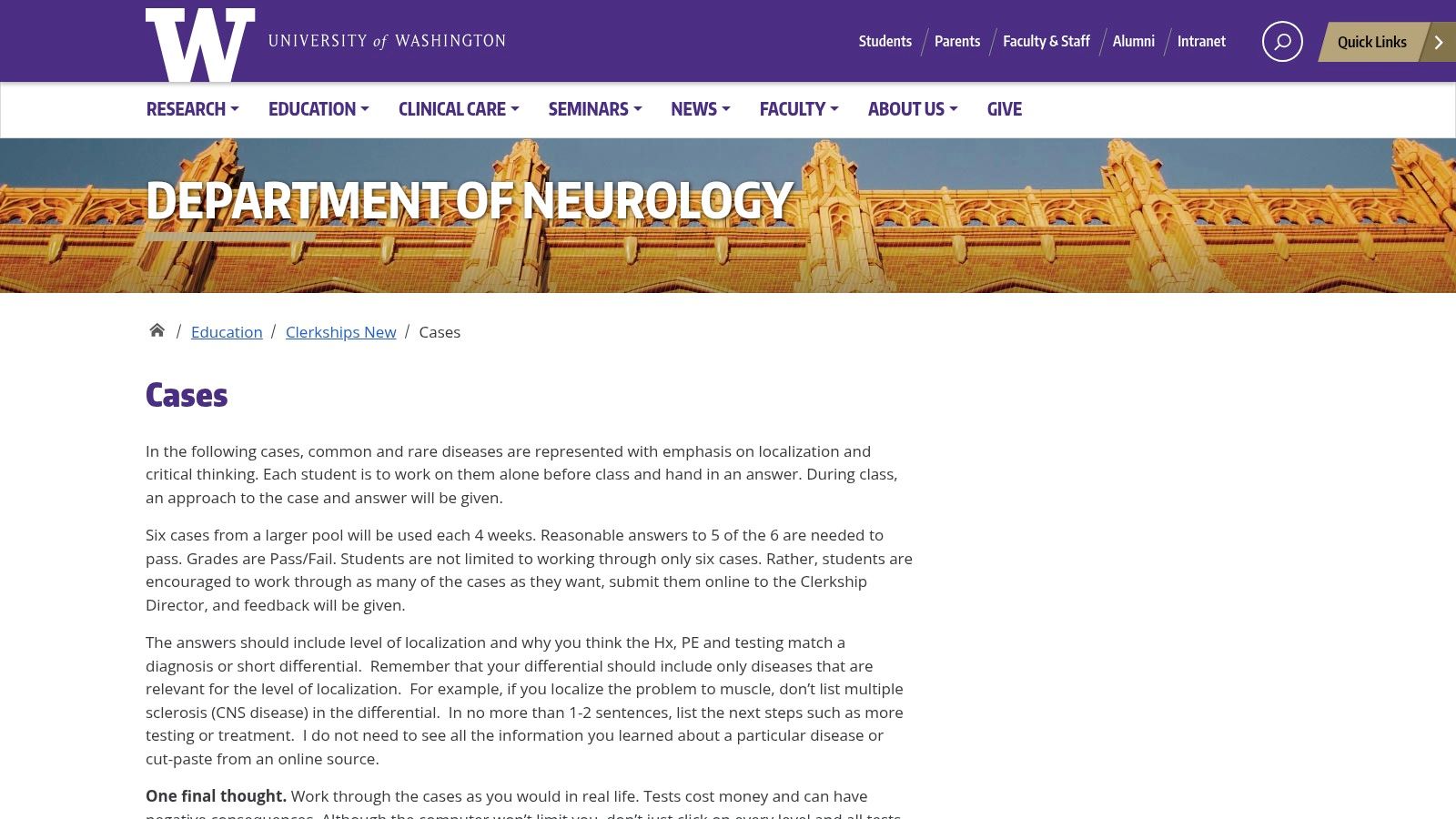
Primary job: localization before diagnosis. The University of Washington neurology clerkship cases encourage reasoning from the history and examination toward a differential and practical next steps. The freely accessible cases are useful when a student tends to jump straight to a disease name.
The discipline is to commit to an anatomical explanation before reading further. A diagnosis guessed correctly without a defensible localization still leaves an important learning gap.
A Localization-First Case Method
- Summarize: Reduce the presentation to the time course, main symptoms, and important findings.
- Localize: State the proposed anatomical site before naming a disease.
- Challenge: Identify a finding that would make that localization less convincing.
- Compare: Review the case discussion and revise the reasoning.
This method is a study process, not a clinical treatment protocol. Students should bring unresolved clinical questions to their supervising team rather than apply an educational case directly to patient care.
The strength is active reasoning with publicly available material. The limitation is that feedback described within a clerkship context may not be available to every independent visitor.
These cases fit the localization slot more naturally than the reference slot. Students comparing clinical learning opportunities can also consult the overview of medical student clerkships, without assuming that online cases substitute for an approved rotation.
10. OnlineMedEd Neurology Content
A student who can't organize an unfamiliar topic may benefit from a guided explanation before attempting more questions. OnlineMedEd's main role is structured overview, rather than bedside demonstration or an independent readiness judgment.
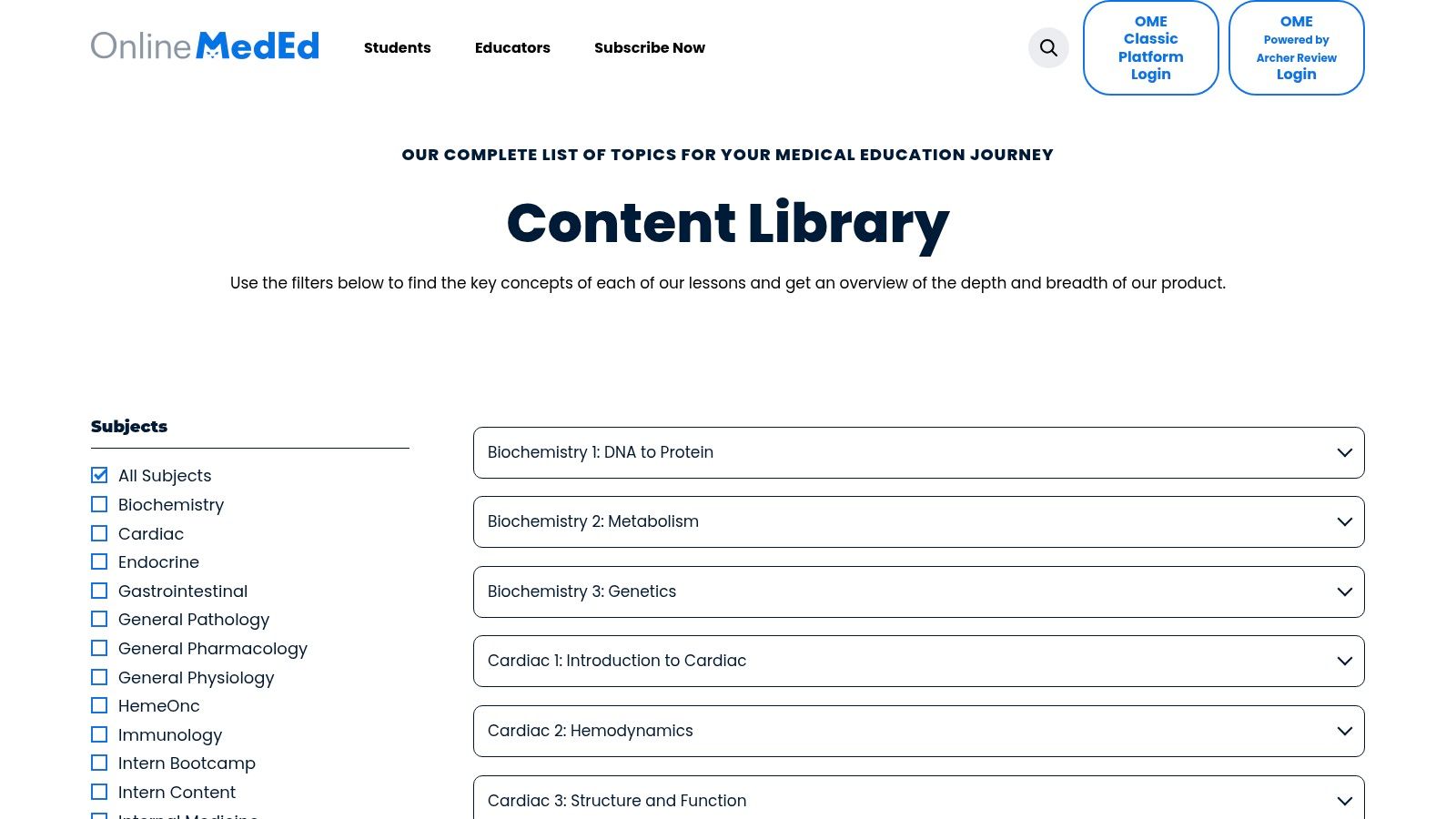
The OnlineMedEd content library includes neurology and neuroscience lessons, with accompanying notes and broader subscription offerings. Current topic coverage, question access, and checkout terms should be confirmed before purchase because product arrangements can change.
Use Video to Repair a Defined Gap
A student can select a lesson after identifying a recurring weakness, then close the notes and explain the concept without assistance. A related case or question provides the next check on whether the explanation became usable knowledge.
Watching an entire library before beginning active practice can delay that check. Video works better when tied to a specific unresolved question.
- Strength: Guided explanations provide an alternative to textbook-only review.
- Limitation: Familiarity during playback can be mistaken for independent recall.
- Cost consideration: A broad paid subscription may offer limited value when only a small portion will be used.
A NeuroBricks digital-curriculum evaluation found that 73.2% of participating students reported improved preparedness for patient encounters; that finding concerns NeuroBricks, not OnlineMedEd. Its practical relevance is the choice of evaluation question: students should judge a digital resource by what they can do afterward, not whether they enjoyed the presentation.
How the 10 neurology clerkship resources compare by use case
Use the tool that matches the task at hand: examining a patient, localizing a neurologic problem, answering a focused reference question, or checking readiness. This table compares the resources by their main job and cost type.
| Item | Main Use | Cost Type | Best For |
|---|---|---|---|
| Shelf Exam – Neurology | One-on-one neurology shelf tutoring | Paid hourly packages; larger packages have lower per-hour rates | Students seeking personalized exam support for the neurology shelf exam and USMLE Step 2 |
| American Academy of Neurology (AAN), Medical Student Resources | Student-focused neurology exam and career resources | Free student membership; some resources may cost extra | Students wanting exam materials plus specialty and career resources |
| UWorld Step 2 CK QBank | Step 2 CK and shelf-style question practice | Paid subscription | Students seeking question practice for shelf and Step 2 CK preparation |
| NBME Clinical Science Mastery Series, Clinical Neurology | Neurology self-assessment with score feedback | Paid per assessment | Students checking shelf readiness and identifying gaps |
| AMBOSS, Neurology Clerkship Guide and Study Tools | Clerkship guide, medical reference, and question practice | Paid subscription; some QBank access may require an additional package or bundle | Students wanting clinical reference and study tools in one platform |
| Case Files: Neurology, Fourth Edition, McGraw Hill | Case-based neurology review and clinical reasoning | Paid book | Students learning through clinical cases |
| Stanford Medicine 25, Neurologic Examination Videos | Demonstrations of neurologic examination techniques | Free | Students reviewing bedside examination skills |
| University of Utah NeuroLogic Exam | Interactive adult and pediatric neurologic examination resource | Free | Students practicing examination structure and finding recognition |
| University of Washington Neurology Clerkship Cases | Case-based clinical reasoning and localization | Free | Students developing neurologic differentials and practical next steps |
| OnlineMedEd, Neurology Content | Neurology videos and illustrated notes | Paid subscription | Students preferring video lessons or seeking a broader study library |
For a small start, pair one examination resource with one case-based localization resource, then add a reference and an assessment tool if they address a specific need. Shelf Exam – Neurology tutoring is a separate option for students who want individualized support. Choose by function first; overlapping tools can wait.
Build a Four-Tool Starter Set and Review It Weekly
A manageable set of neurology clerkship resources assigns a clear purpose to each tool. Bedside examination, localization, reference, and assessment should all be covered, but overlapping subscriptions aren't necessary.
A budget-conscious starting combination could use Utah or Stanford for examination technique, University of Washington cases for localization, a school-provided reference, and an assessment resource chosen for the required examination. A student who already has a suitable question bank generally doesn't need another just because a comparison list includes it.
Match the Resource to the Difficulty
- Technique feels uncertain: Open the bedside resource, then arrange appropriate supervised feedback.
- Findings don't form a coherent picture: Work through a localization case before reading its explanation.
- A focused factual question remains: Use the reference tool and stop when that question is answered.
- Independent performance is unclear: Use assessment practice and review the pattern of errors.
Consider a student who completes questions regularly but struggles to present the neurologic examination on rounds. More questions may still support examination preparation, but they don't directly address the presentation problem. The more useful addition is structured examination rehearsal followed by feedback.
Another student may perform the examination comfortably but select diagnoses before establishing localization. That student needs active case reasoning, not necessarily a longer video course.
Review Usefulness, Not Just Completion
At the weekly review, each resource should have an identifiable contribution. The bedside tool should support technique, the localization source should sharpen reasoning, the reference should resolve specific uncertainties, and assessment should guide subsequent study.
Before adding a resource, the student should be able to name the job that the current set isn't doing.
If a tool repeatedly goes unused, the answer may be to remove it rather than create a more elaborate schedule. Cost, accessibility, rotation workload, and existing institutional resources all deserve a place in that decision.
Individualized support can complement this approach, but it doesn't replace official practice materials, independent study, or supervised clinical learning. All clinical discussion here is intended for examination and clinical-skills education, not diagnosis or treatment of an individual patient.
Sources
The linked publisher pages describe the individual tools. Curriculum and assessment context comes from the AAN clerkship collection, the NBME Clinical Neurology outline, and the NeuroBricks educational evaluation; product access and pricing should always be checked against current publisher terms.
Ace Med Boards offers one-on-one online Neurology Shelf Exam tutoring for students seeking help with clinical reasoning, question analysis, and study planning. Students interested in discussing how that support could complement a small resource set can visit Ace Med Boards and schedule a free consultation.