Is the MCAT mainly a test of how much science a student can memorize? No. The Medical College Admission Test, or MCAT, is a standardized admissions exam that combines foundational science, behavioral science, passage interpretation, and scientific reasoning. A strong preparation plan therefore has to identify not only what a student doesn't know, but also why a familiar concept still produces a wrong answer.
The exam's structure, scoring, and scheduling rules come from the Association of American Medical Colleges, or AAMC. The framework below helps premedical students understand the four sections, distinguish content gaps from reasoning gaps, organize an error log, and build an adaptable study week without treating any single score or schedule as a guarantee.
What the MCAT Is and Why It Matters
The MCAT is a standardized, computer-based examination used in medical school admissions. It's one part of a broader application that can also include coursework, grades, experiences, recommendations, essays, and interviews. The exam can show how an applicant performs on a common assessment of scientific knowledge and reasoning, but it can't fully measure judgment, communication, persistence, professionalism, or readiness to care for patients.
The AAMC describes the exam as a gateway to medical education, and its current design is intended to reflect the competencies needed in modern medical training. That distinction matters for planning. A student who treats the MCAT as a large vocabulary list may spend too much time rereading notes and too little time interpreting experiments, connecting concepts, or defending an answer with evidence from a passage.
What the score can and cannot show
An MCAT score gives admissions committees a standardized academic signal. It doesn't explain every reason a student performed at a particular level, and it shouldn't be treated as a complete judgment of an applicant's potential. A low score can identify a preparation problem, a timing problem, an academic gap, test anxiety, or several issues at once. It doesn't by itself determine whether someone belongs in medicine.
AAMC states that scores are scaled and equated, so scores have the same meaning across administrations. The exam also gives the same score treatment to wrong answers and unanswered questions, which means leaving a question blank offers no scoring advantage. Students should therefore make a reasoned selection for every item before time expires. (AAMC score interpretation and percentile information)
Practical rule: The MCAT should be studied as a reasoning exam built on science content, not as a content survey with a few passages attached.
The sections that follow explain how the exam developed, what each section tests, how registration and score reporting work, and how a student can turn diagnostic results into a practical study plan.
A Brief History of the Exam
The MCAT's development reflects a gradual shift from measuring broad academic aptitude to testing how applicants use knowledge in medical contexts. Its earliest precursor appeared nationally in 1928 at premedical schools, where it was used to study medical aptitude and predict performance in medical school. A 1946 revision replaced the earlier eight-section format with four areas: verbal ability, quantitative ability, science achievement, and understanding modern society. In 1948, the exam adopted the name Medical College Admission Test and came under AAMC oversight. (AAMC history of the organization and examination)
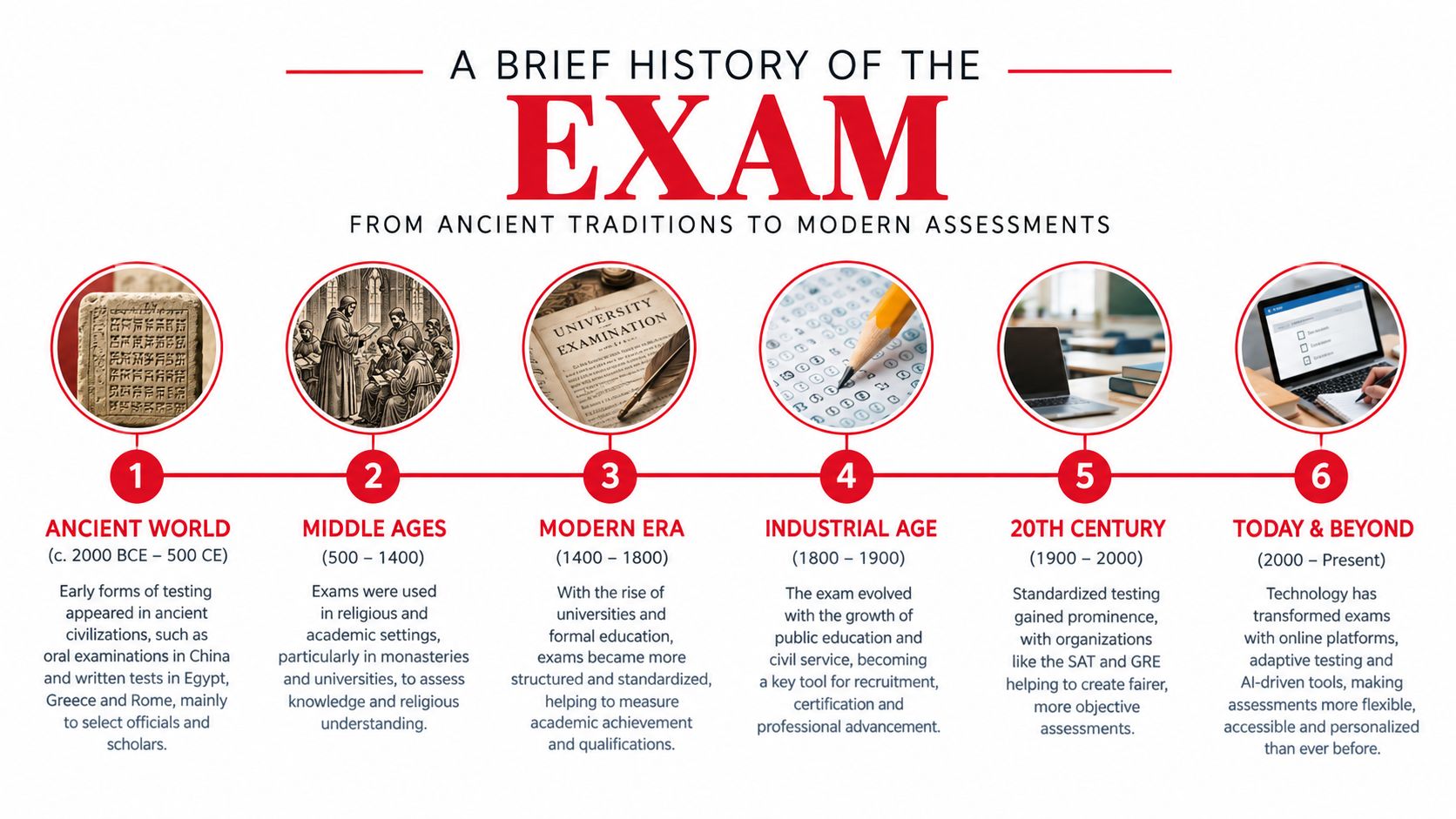
The change most relevant to current test takers arrived in spring 2015. The AAMC's fifth extensive review of the exam began in 2008, and the organization described the resulting redesign as the first major overhaul in more than two decades. As noted on the AAMC history page cited above, the revised exam reflected changes in medical education by combining scientific content with research-style reasoning, behavioral science, and competencies related to medical training.
Why the 2015 redesign still matters
The redesign established the four-section structure used today:
- Chemical and Physical Foundations of Biological Systems
- Critical Analysis and Reasoning Skills
- Biological and Biochemical Foundations of Living Systems
- Psychological, Social, and Biological Foundations of Behavior
These titles show why MCAT preparation requires two kinds of work. Students need enough content knowledge to recognize principles, but they must also reason from passages, interpret data, evaluate claims, and apply those principles to unfamiliar situations. A student who memorizes a pathway without practicing its use in an experiment is preparing only half the skill the exam measures. The inclusion of psychological and sociological concepts also places natural science within the broader context of health and behavior.
The modern scoring framework came with this redesign. Each section receives a scaled score from 118 to 132. The four section scores form a total from 472 to 528, with 500 as the midpoint. Percentile ranks offer a relative comparison with recent testing populations, while equating keeps score meaning consistent across test dates. (AAMC MCAT score scale)
The Four Sections and What They Actually Test
The MCAT has four scored multiple-choice sections. The science sections each contain 59 questions in 95 minutes, while CARS contains 53 questions in 90 minutes. The official AAMC outline shows that passage interpretation and scientific reasoning operate alongside foundational content knowledge, so students should practice both dimensions from the beginning. (AAMC overview of the MCAT exam)
MCAT Section Breakdown
| Section | Content Focus | Questions | Time | Primary Reasoning Skill |
|---|---|---|---|---|
| Chemical and Physical Foundations of Biological Systems | General chemistry, organic chemistry, physics, biology, and the physical principles underlying living systems | 59 | 95 minutes | Applying equations and concepts to biological systems and interpreting experimental data |
| Critical Analysis and Reasoning Skills | Humanities and social science passages without required science content | 53 | 90 minutes | Identifying the author's argument, evaluating evidence, and drawing text-supported conclusions |
| Biological and Biochemical Foundations of Living Systems | Biology, biochemistry, cellular processes, genetics, and systems-level relationships | 59 | 95 minutes | Connecting mechanisms, interpreting figures, and reasoning through biological experiments |
| Psychological, Social, and Biological Foundations of Behavior | Psychology, sociology, and biological influences on behavior and health | 59 | 95 minutes | Applying behavioral concepts and interpreting relationships among individuals, groups, and environments |
The Chemical and Physical Foundations section is more than a physics and chemistry quiz. A passage may place a chemical principle inside a physiological or laboratory setting. The student must recognize the relevant concept, determine what the passage provides, and decide which calculation or relationship applies.
Biological and Biochemical Foundations similarly rewards integration. A question may require a student to connect molecular mechanisms with cell function, genetics, or an experimental result. Familiar terminology isn't enough if the student can't explain how one observation follows from another.
CARS is different. It doesn't test a separate body of biology or chemistry knowledge. It tests whether the reader can follow an argument, distinguish the author's claim from supporting details, and reject an answer that sounds plausible but extends beyond the passage.
The Psychological, Social, and Biological Foundations of Behavior section adds another form of integration. Students need to know terms and theories, but they also need to apply them to social settings, health behavior, development, and interactions between biology and environment.
A student can review every topic and still miss questions because the passage changes the task. That's why preparation should alternate between content retrieval and timed passage work. A detailed MCAT test time breakdown can help a student see how quickly each section demands decisions.
Registration, Test Day, and Score Reporting
Registration starts with an AAMC account and the current MCAT scheduling system. Confirm that the legal name matches your identification, review the identification requirements, and check available test centers before selecting a date. AAMC offers the exam on multiple dates between January through September each year, according to its AAMC MCAT registration information.
A practical registration sequence
Review the current rules first. The AAMC's 2027 MCAT Essentials document covers registration procedures, identification, scheduling zones, zone changes, rescheduling, cancellation, permitted items, breaks, and test-day procedures. Use the document for your testing year rather than relying on an older version.
Compare locations and dates. A nearby center may reduce travel stress, but seats can change as candidates register. Check the current MCAT calendar and test-date information alongside AAMC's live registration system. Treat the calendar as a planning aid, then confirm availability in the registration system.
Read the deadline language carefully. AAMC states that scheduling deadlines occur at 11:59 p.m. local test-center time. U.S. testing centers generally use an 8:00 a.m. standard start time, and score releases are posted by 5:00 p.m. Eastern Time on the scheduled release date, per the AAMC registration page cited above.
Plan the testing morning. The MCAT Essentials document explains arrival, security procedures, the optional tutorial, scheduled and optional breaks, permitted items, and section-order choices. Read those instructions directly instead of depending on a study provider's summary.
Students who may qualify for financial assistance should review the AAMC Fee Assistance Program before registering. Eligibility and benefits can change, so use the current AAMC program page and testing-year Essentials document when deciding whether to apply.
AAMC's MCAT score reporting system is where candidates view, release, and retrieve scores. Electronic reports can be sent to participating programs or services without an additional charge. A score-sharing request cannot be canceled, and electronic reports include all scores from April 2003 onward.
Diagnosing Content Gaps Versus Reasoning Gaps
A missed question needs more than a right-answer review. The useful question is whether the student lacked a fact, misunderstood a relationship, misread the passage, or ran out of usable time.
A simple classification system has three categories:
- Factual recall failure: The student didn't know the definition, process, equation, or relationship required.
- Reasoning failure: The student knew the relevant material but applied it incorrectly or failed to connect the passage evidence to the answer.
- Pacing or attention error: The student understood the task but rushed, misread a figure, changed a supported answer, or left insufficient time.
A short CARS exercise
Consider this original practice passage:
A museum changes its exhibit labels from long descriptions to short questions. Attendance remains steady, but visitors spend more time discussing the exhibits with one another. The museum director argues that the questions improve learning because they encourage visitors to form interpretations rather than receive conclusions.
An inference question might ask which finding would most directly support the director's argument.
A strong reader would identify the central claim in one sentence: The questions may encourage active interpretation and discussion. The evidence includes longer discussions and the shift away from presenting conclusions. An answer claiming that the new labels permanently improve every visitor's knowledge would overstate the passage because the text doesn't establish lasting learning or a universal effect.
The exercise illustrates a useful CARS routine:
- Write the passage's central claim in one sentence.
- Identify the evidence that supports it.
- Explain why the tempting answer goes beyond that evidence.
The same discipline applies to science passages. A student should point to the relevant sentence, table, or figure, state the inference required, and then check whether the selected answer makes a stronger claim than the data support. A structured distractor analysis approach can help separate a reasoning mistake from a simple knowledge gap.
A Sample Error Log and Illustrative Weekly Plan
An error log becomes useful when it records the decision that failed, not merely the topic name. “Missed enzyme question” doesn't tell a student whether the problem was enzyme function, experimental interpretation, or hurried reading.
Sample MCAT Error Log Format
| Date | Question ID | Section | Topic | Reason for Error | Review Plan |
|---|---|---|---|---|---|
| Week 1, Monday | Practice 01 | C/P | Acid-base relationships | Knew the equation but selected a value without checking the passage conditions | Rework the relationship using a new biological context and explain each variable |
| Week 1, Tuesday | Practice 02 | CARS | Author's main claim | Chose an answer because it sounded reasonable, not because the passage supported it | Write the central claim and cite two supporting details |
| Week 1, Wednesday | Practice 03 | B/B | Experimental design | Confused the control group with the treatment group | Label the variables in a new experiment before viewing the answer choices |
| Week 1, Thursday | Practice 04 | P/S | Social behavior | Couldn't recall the term | Retrieve the definition, create an original example, and apply it to a new scenario |
| Week 1, Friday | Practice 05 | C/P | Passage timing | Spent too long on an early calculation | Set a passage checkpoint and practice moving after a reasoned attempt |
This table is an editorial example, not a validated Ace Med Boards protocol. A student should add a column for transfer when possible: can the same rule be used correctly on a new question?
An illustrative week
The following schedule assumes a student has completed two relevant prerequisites and has 12 weeks until the planned exam date. It's an editorial starting point, not a universal prescription.
| Day | Illustrative focus | Approximate study time |
|---|---|---|
| Monday | Retrieval practice, one timed science passage, and error-log review | 2 hours |
| Tuesday | Content review followed by targeted questions in the same topic | 3 hours |
| Wednesday | CARS passage exercise and behavioral-science retrieval | 2 hours |
| Thursday | Longer science block with mixed passages and figure interpretation | 3 hours |
| Friday | Content review, followed by review of both correct and incorrect answers | 2 hours |
| Saturday | Extended mixed practice or an AAMC full-length when enough review time is available | Variable |
| Sunday | Recovery period, light retrieval, and planning for the next week | 1 hour or less |
The schedule distributes retrieval across the week instead of placing all review in one block. Research on spacing supports delayed retention as a learning principle, but it doesn't establish a guaranteed MCAT score increase for any particular schedule. (Research on spaced learning and delayed retention)
A student with repeated factual misses should increase targeted content review. A student who knows the material but misses passage questions should preserve content maintenance while expanding timed reasoning practice. A student with strong untimed performance but weak timed results needs pacing drills and realistic test conditions. The MCAT study schedule framework can serve as a planning reference, but the diagnostic should determine the emphasis.
High-Yield Strategies, Common Mistakes, and Next Steps
The most productive preparation loop is simple: learn or retrieve a concept, apply it to a passage, review the reasoning behind every answer, and record the pattern behind the miss. Reviewing correct answers matters too. A correct choice based on a lucky guess can become a future error if the underlying reasoning remains unclear.
A student should use AAMC practice material strategically. An official sample test can establish a baseline, while later practice can show whether a change in method transfers to new questions. Full-length practice is most useful when the student has enough time afterward to review decisions, timing, endurance, and unanswered items rather than treating the raw result as the only information.
Common mistakes include:
- Postponing CARS: Reading skill develops through repeated analysis, not a final-week burst.
- Ignoring behavioral science: Psychology and sociology require both content retrieval and application.
- Overusing passive review: Rereading can create familiarity without proving recall.
- Skipping error analysis: The answer key identifies what was correct, but not always why the student chose incorrectly.
- Underweighting test conditions: Untimed practice can conceal pacing and attention problems.
No verified data identifies one MCAT section as the section students struggle with most. A diagnostic across all four sections is more reliable than assuming that a student's major predicts the problem. A biology major may still need physics reasoning, while a humanities major may already have strong passage analysis. The AAMC content outline and observed errors should guide the two-column map of content category and error type.
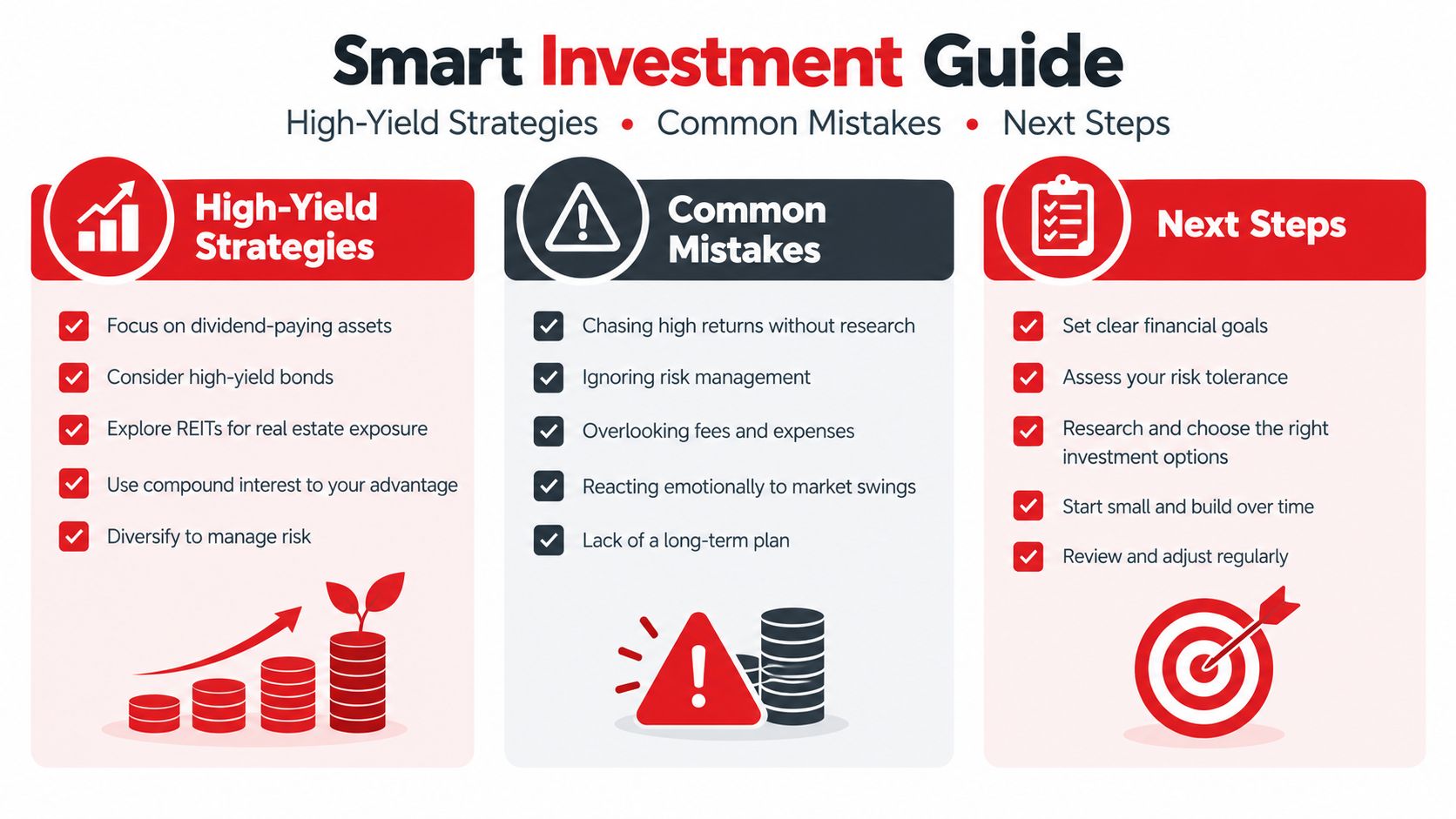
One-on-one tutoring may be worth considering when a student has plateaued despite consistent work, needs structured CARS reasoning practice, or is returning to material after a long academic gap. Ace Med Boards offers one-on-one online MCAT tutoring and customized study planning, but tutoring is optional. Many candidates can prepare independently with AAMC materials, careful review, and a schedule that fits their coursework and responsibilities. A guide to common MCAT mistakes can help a student audit the process before adding more resources.
A calm next sequence is to complete a diagnostic, classify the errors, build a timeline around the demonstrated gaps, and schedule the exam only when the baseline and preparation window make sense. A disappointing practice result is information, not a verdict on a medical career.
Sources
This guide draws primarily on the AAMC's official MCAT history, exam outline, score-scale, registration, percentile, and score-reporting resources linked above. Candidates should confirm current dates, deadlines, identification rules, fees, and procedures in the latest AAMC MCAT Essentials document before registering.
Ace Med Boards can help a candidate turn diagnostic results into a focused MCAT study plan and targeted reasoning practice. Candidates who want individualized guidance can visit Ace Med Boards to learn about the available consultation and tutoring options.