You're at the bedside at 6 a.m., the chart is open, the attending is already asking, “What changed overnight?” and you've got ten tabs, three lab trends, and a patient who looks a little worse than yesterday. That's exactly where a solid ICU Presentation Template earns its keep. It gives you a script that's fast, organized, and built for high-acuity decisions, not a wandering recap of everything in the chart.
A good ICU presentation does one thing extremely well, it tells the team what matters now. In intensive care, that means trend changes, active problems, and next steps. The structure commonly used is a one-line reason for ICU care, overnight events, vital-sign trends, lines/tubes/drains, labs and imaging, then a system-by-system assessment and plan, because ICU teams need a concise, problem-oriented format that highlights abnormal data and management changes rather than a full SOAP-style history (ICU presentation structure guide).
That difference matters because the ICU is not a clinic visit. The Society of Critical Care Medicine notes that more than 5 million patients are admitted annually to U.S. ICUs, and adult ICU mortality averages 10% to 29% depending on severity and comorbidity burden (SCCM critical care statistics). In that setting, a standardized presentation helps the team recognize changes quickly and communicate clearly, which is why memorizing a reliable format beats trying to improvise at the bedside.
If you use study tools to lock a structure into memory, the goal is the same as it is for any clinical skill. A practical way to boost retention with study tools is to turn the template into a repeatable script you can rehearse out loud, then tighten it after feedback. One useful framework for safe patient communication is also discussed in this patient safety guide, improving patient safety through communication.
What a Strong ICU Presentation Template Does
A strong ICU presentation template gives you a filter. It tells you what the team needs to hear in the next few minutes, not what could be copied into a chart review and read back line by line.
Think in problems, not paragraphs
Start with the one-line reason for ICU care. That first sentence should identify who the patient is and why the ICU still matters today. You might say, “This is a 67-year-old with septic shock from a urinary source, now on low-dose norepinephrine,” or, “This is a post-op CABG patient with new atrial flutter and ongoing hemodynamic monitoring.” That line sets the frame before you move into the details.
After that, keep the order steady, because the team is listening for change. Overnight events, vital-sign trends, lines/tubes/drains, labs/imaging, and then the system-by-system assessment and plan. ICU educators recommend this kind of system-based structure because it keeps the focus on abnormal trends and management decisions, not on reading normal values out loud, and this guide on improving patient safety through communication reinforces the value of clear, organized handoff language.
Practical rule: If a data point did not change the plan, it should not take up oxygen on rounds.
The audience changes the way you speak. You are talking to an ICU team, not delivering a clinic-style SOAP note. Critical care teaching guidance favors a system-based presentation that starts with the most relevant problem and includes only the information needed to understand it. A MICU guide also recommends keeping the whole presentation tight for efficiency (critical care presentation guidance).
For memory, keep the template as a checklist rather than a story. If you want a structured way to rehearse that sequence, boost retention with study tools can help you turn the script into something you can say out loud when the attending is at the foot of the bed.
The Core ICU Presentation Template, Slot by Slot
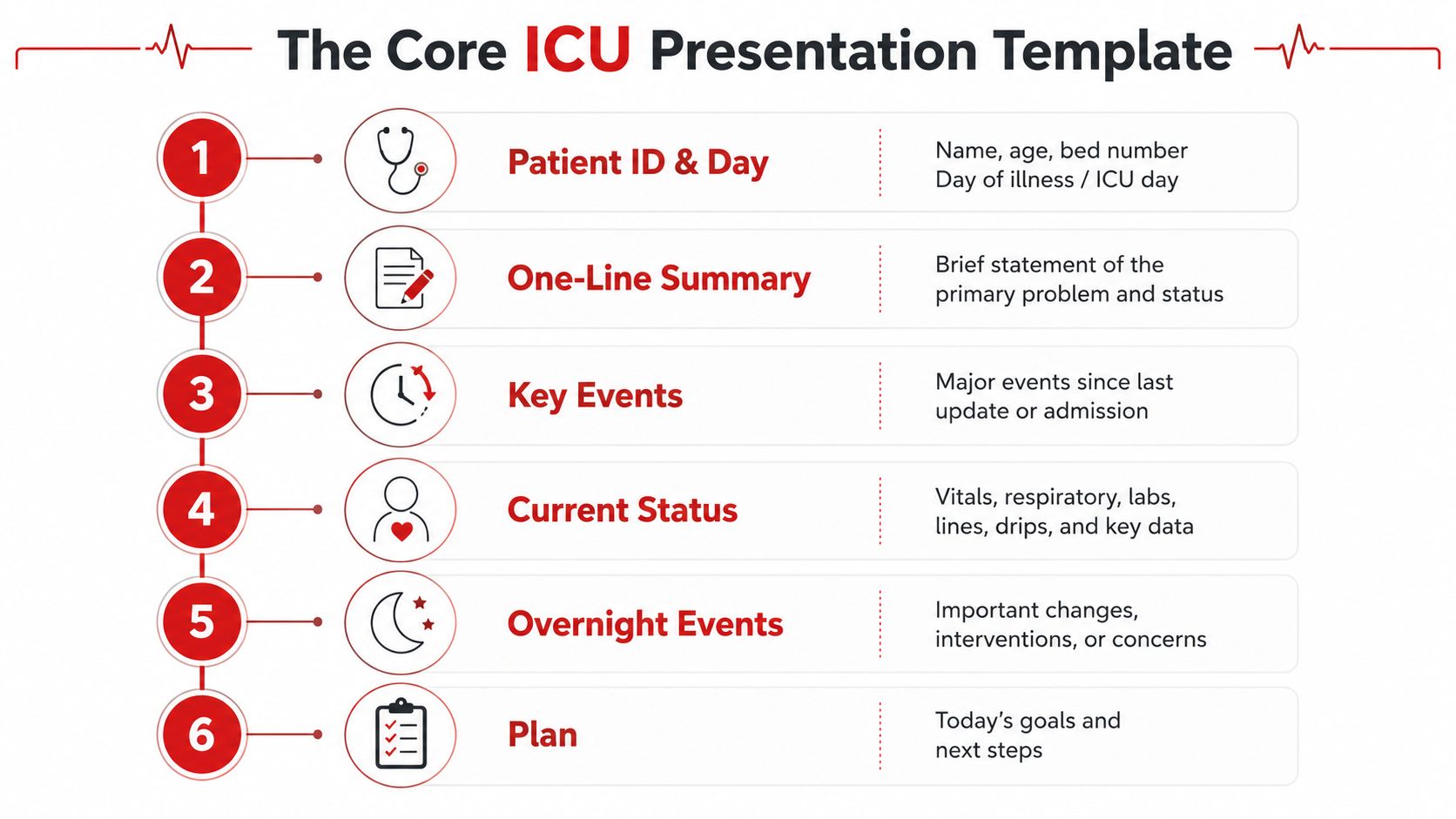
The easiest way to present an ICU patient is to keep the order fixed. When the order stays the same, your brain spends less effort hunting for the next section, and the team knows where to listen for the important change.
1. One-line reason for ICU care
Start with the patient's identity and the problem that put them in the unit. Say, “This is a 68-year-old admitted for septic shock from a urinary source.” If you can, add the current level of support, because that tells the team where the patient stands right now. The point is not to narrate the entire admission story. The point is to orient everyone immediately.
2. Overnight events
Then give the overnight course in one breath. A useful phrase is, “Overnight, no major events, pressor needs were stable, urine output was adequate, and we continued broad-spectrum antibiotics.” If something changed, name it plainly. “Overnight, the patient became more tachycardic and needed an additional fluid bolus” is much better than burying the change inside a long timeline.
3. Vital-sign trends
Vitals should be read as trends, not as isolated numbers. Say, “Hemodynamically, she's improving, MAPs have been steady, and the heart rate is down from overnight.” If the patient is worsening, say that too. ICU teams care about direction, not just the snapshot.
4. Lines, tubes, and drains
Give a fast inventory. “She has a right IJ central line, Foley catheter, and two peripheral IVs.” If a device matters to the plan, say why. If it doesn't, keep moving. This is one of the most common places trainees drift into a chart dump.
5. Labs and imaging
Only mention the studies that changed your thinking. “Creatinine is trending up slightly, lactate is clearing, and the chest X-ray shows no new infiltrate.” If everything is stable, you do not need to read every normal lab back to the team. For a quick refresher on speaking the language of blood gas data, this ABG interpretation guide fits neatly into the ICU workflow.
6. System-by-system assessment and plan
This is the part you do not cut. Start with the active system first. “Cardiovascular, still on norepinephrine, goal is to wean as tolerated.” Then move through respiratory, renal, infectious, neurologic, hematologic, GI, and skin or prophylaxis issues as needed. One practical bedside reference for lab interpretation is this nursing-oriented lab values cheat sheet, especially when you want to cross-check what matters before you speak.
The template works because it forces a hierarchy. A patient can have fifty data points, but only a few deserve airtime. A presentation that fits in about 5 minutes is usually a sign that you're prioritizing well, not rushing. If you feel yourself running long, trim the setup and keep the assessment and plan intact, because that is where the decision-making lives.
Two Sample Cases That Bring the Template to Life
A written outline is useful, but you only get fluent by hearing the cadence. The goal is to sound like someone who knows what matters, not someone reading a scavenger hunt from the chart.
Septic shock with a urinary source
A practical spoken version might sound like this, “This is a 68-year-old in the ICU for septic shock from a urinary source. Overnight, no major events, she remained on norepinephrine with stable pressor requirements. Her blood pressure has been improving, heart rate is still higher than desired but better than yesterday, and her urine output has picked up. She has a right IJ central line, Foley, and peripheral access. Labs show the creatinine is still high, lactate is down, and the urine culture is guiding antibiotics. Cardiovascular, we'll continue to wean pressors as tolerated. Renal, we're following urine output and creatinine closely. Infectious, continue antibiotics and narrow when cultures finalize.”
That version works because the hemodynamic story leads. Nothing sounds forced. The tone is calm, specific, and tied to action. If you've ever struggled to organize a shock presentation, a scientific presentation template can remind you how much easier complex information becomes when the structure stays fixed.
Post-op CABG patient with new atrial flutter
Now switch the leading problem. “This is a 62-year-old post-op CABG patient with new atrial flutter. Overnight, he converted out of sinus rhythm, had intermittent rate control issues, and remained otherwise stable. His blood pressure has held, oxygen needs are unchanged, and he's tolerating the postoperative course. He has a chest tube in place, Foley catheter, and IV access. Imaging is unchanged, labs are notable for a stable hemoglobin, and the ECG confirms flutter. Cardiovascular, our focus is rate control and rhythm management. Respiratory, no new issues. Post-op, we'll continue monitoring chest tube output and mobilization.”
This second case shows the template flexing without changing shape. The structure stays the same, but the lead system changes. That's the key skill. You are not memorizing sentences. You're learning how to decide which organ system deserves first attention.
The best presenters sound like they are already answering the attending's next question.
Pre-Rounds Checklist and the 60-Second Handoff Snapshot
Before rounds, the presentation starts in the chart and ends at the bedside. If you skip either one, you miss the context that turns data into decisions.
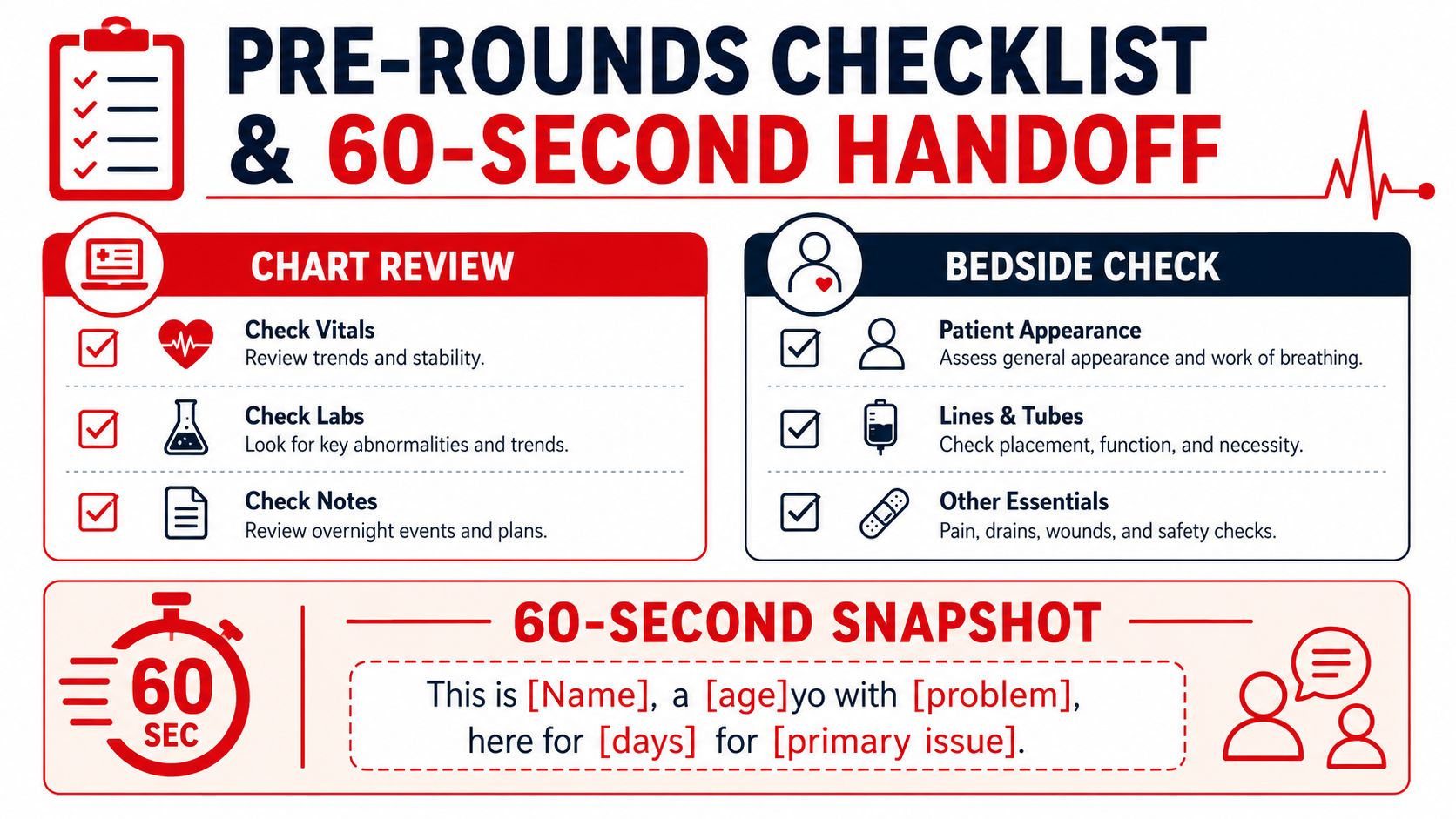
A clean routine saves time. Read the overnight note, check the latest vitals and labs, and look at the previous day's plan so you know what changed. Then go to the bedside and confirm the ventilator screen, drip sheet, drains, lines, and whether the patient looks better, worse, or unchanged. If you want a practical way to keep that workflow organized in the chart, using electronic health records efficiently is part of the same skill set.
The bedside routine that trainees forget
Talk to the nurse first if something seems off. Ask the respiratory therapist about vent changes if the patient is intubated. Check whether the night resident already handled a problem that still needs follow-up. Those conversations often save you from presenting stale data or missing an overnight event that never made it into the note.
Your one-line summary in the EMR should be short enough to read aloud. “This is [Name], a [age]yo with [problem], here for [days] for [primary issue].” That line becomes your anchor for both rounds and handoff. If you can't say it cleanly, the rest of the presentation usually follows that same confusion.
The 60-second snapshot
A rapid sign-out should compress the same logic, not replace it. Say who the patient is, what the active issue is, what changed, and what needs watching next. A useful format is, “This is a 64-year-old with respiratory failure, now improving on minimal support, overnight no new events, please watch oxygen needs and the new fever trend.”
You do not need the whole system review in a short handoff. You need the next-risk item, the overnight change, and the contingency. That's what keeps a handoff safe when time is tight.
Adapting the Template for Different Audiences
A single ICU presentation template does not fit every listener. The content changes depending on whether you're speaking to an attending, a bedside nurse, a consultant, or an examiner, and that shift matters more than most trainees realize.
Match the emphasis to the listener
For formal rounding with an attending, lead with the active problem, the trend, and your plan. For nursing handoff, lead with safety and the next 12 hours. For a consultant on the phone, lead with the reason for the call and the specific question you need answered. For an oral exam, keep the structure problem-based and crisp, because the examiner wants to see your clinical reasoning, not your documentation style.
The same principles show up in communication skills training for doctors, where the point is not just what you know, but how you frame it for the person in front of you. The audience decides what counts as signal.
| Audience | Opening Focus | What to Emphasize | What to Drop | Time Target |
|---|---|---|---|---|
| Attending on rounds | Active ICU problem | Trends, interpretation, plan | Normal values, long backstory | About 5 minutes |
| Bedside nurse | Safety and status | Drips, lines, alarms, next checks | Full academic detail | Brief and practical |
| Consultant by phone | Specific clinical question | Why you're calling, what you need | Full shift summary | As short as possible |
| Oral examiner | Problem-based reasoning | Priorities, differential, next step | Chart-style narration | Tight and structured |
Verbal phrases that fit each setting
For an attending, say, “The main issue today is that pressor requirement is improving, and I'd like to wean as tolerated.” For nursing, say, “The main things to watch tonight are blood pressure, urine output, and the central line site.” For a consultant, try, “I'm calling about new atrial flutter and need guidance on rate control.” For an examiner, say, “My priority is stabilizing hemodynamics, then reassessing the cause.”
That audience shift also matters in team-based settings like infection prevention and safety work. A resource on curriculum design for infection control is a good reminder that the same message has to be packaged differently depending on who needs to act on it.
The mistake is assuming one version of the template fits everyone. It doesn't. The structure can stay consistent, but the emphasis should change with the job you're trying to do. Attendings want judgment. Nurses want what to watch. Consultants want the question. Examiners want your reasoning.
Five Common Pitfalls and How to Redraft Them
Most ICU presentations fail in the same places. The fix is usually not more data. It's sharper editing.
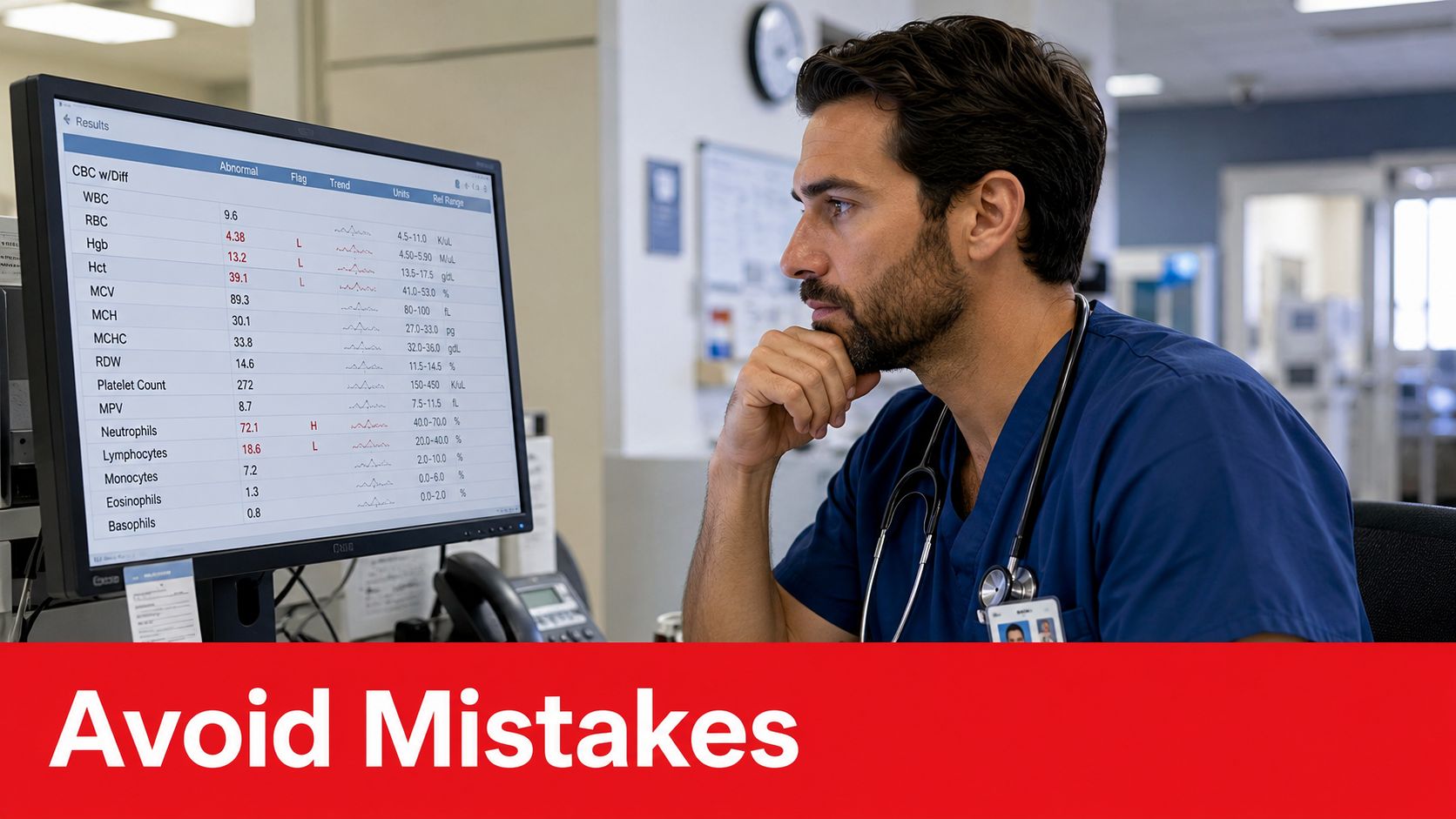
1. Reading normal labs out loud
Bad version, “Sodium 140, potassium 4.1, chloride 103, bicarbonate 24…”
Redraft, “Electrolytes are stable, no correction needed.”
If the numbers are normal and they do not affect the plan, the team does not need a recital. Save your air for the abnormal trend and the reason it matters.
2. Hiding the one-line summary
Bad version, three minutes of data before anyone learns why the patient is in the ICU.
Redraft, “This is a post-op patient with septic shock, still requiring vasopressor support.”
Open with the problem. If the listener has to wait for the point, you've already made the round harder than it needs to be.
3. Ignoring overnight trends
Bad version, “Vitals were okay.”
Redraft, “Heart rate improved overnight, but pressor needs increased slightly.”
Trends tell the story. A single snapshot can be misleading, but a direction tells the team where the patient is headed.
4. Presenting data without interpretation
Bad version, “Creatinine is 2.1, lactate is 3.0, chest X-ray is unchanged.”
Redraft, “Creatinine is still high, so we're watching renal perfusion, lactate is clearing, and the chest X-ray does not explain the oxygen need.”
Numbers matter only when you tell the team what they mean. That sentence is where your clinical value shows up.
5. Omitting the plan
Bad version, a complete assessment with no next step.
Redraft, “Renal, continue close urine output monitoring. Infectious, narrow antibiotics when cultures finalize. Hemodynamics, continue pressor wean as tolerated.”
Self-audit prompt: Did I say the trend, say the plan, and say what happens next?
That question should run through your head after every presentation. If the answer is no, the fix is usually not another lab value. It's a cleaner sentence.
Your ICU Presentation Cheat Sheet and Final Practice Plan
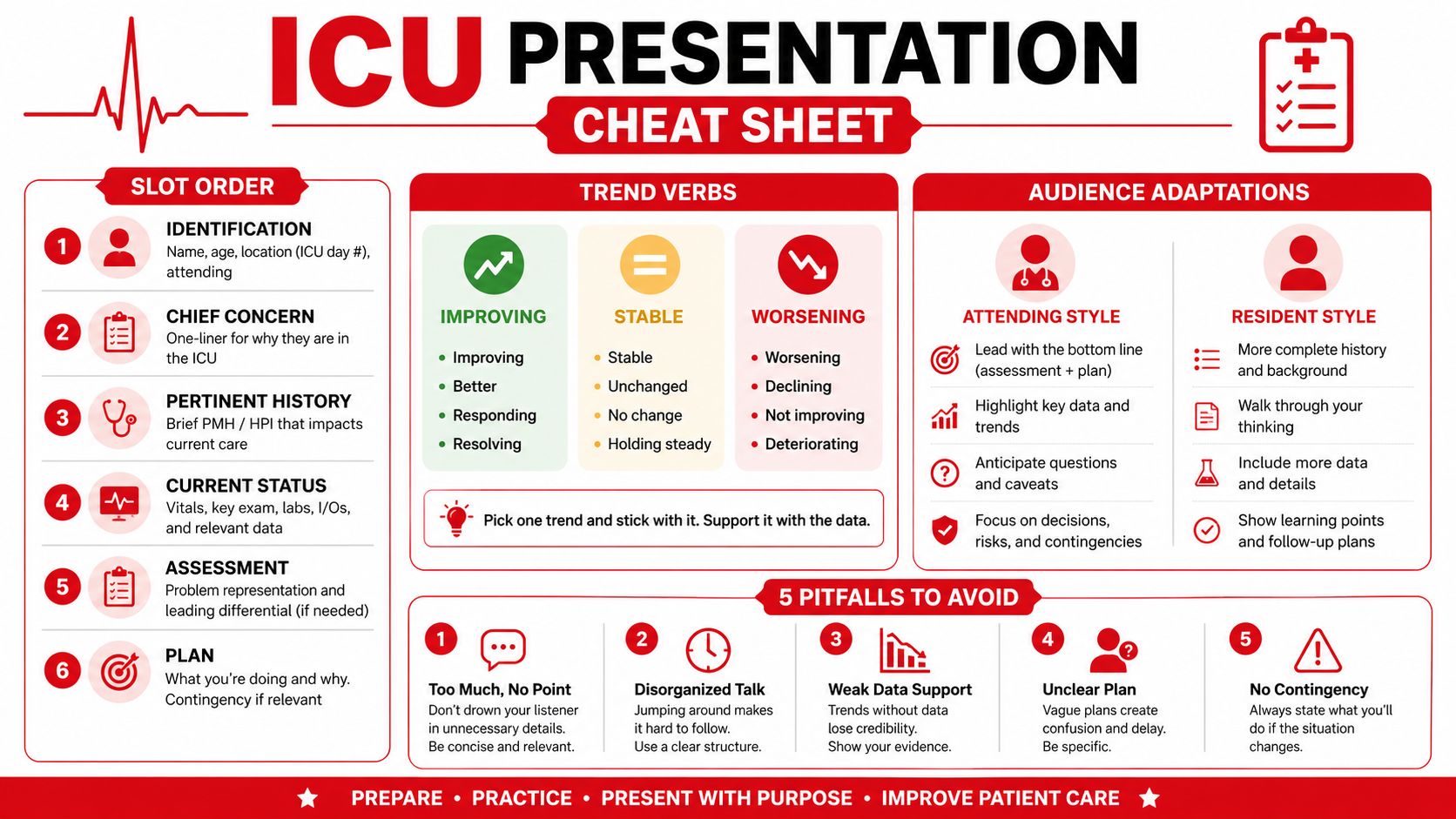
Keep the order fixed. One-line reason for ICU care. Overnight events. Vital-sign trends. Lines, tubes, drains. Labs and imaging. System-by-system assessment and plan. Use stable, improving, and worsening when you interpret the trend, and leave out the normal-value noise that doesn't change management.
The audience decides the emphasis. Attendings want the active problem and your plan. Nurses want the safety picture and what to watch next. Consultants want the question. Examiners want clean reasoning. The script stays the same, but the emphasis shifts.
To make this stick, rehearse one recent patient out loud, time yourself, and record it once. Then ask a senior to mark the one slot that felt muddy. The ICU presentation template is a skill, not a document, and it gets better with deliberate repetition.
If you want more high-yield clinical structure like this, Ace Med Boards offers tutoring and exam support that helps medical students practice the kind of presentation discipline you need on ICU rotations, oral exams, and shelf-style cases. Use it to sharpen your delivery, tighten your clinical reasoning, and build the kind of habits that make your rounds safer and smoother.