

You're sitting with the AAMC portal open, a payment card nearby, and several half-read FAQ tabs competing for attention. MCAT registration in 2026 isn't just a form. It's the process of reserving a seat through the AAMC system, paying the applicable fee, and ensuring that your identity and exam details are correct before test day.
The right approach is simple: plan from your application timeline, prepare your account before registration opens, select a date that matches your readiness, and protect yourself against avoidable name, payment, accommodation, and deadline problems. The official policy controls two decisions above all others: your registration name must match your accepted government ID, and the Fee Assistance Program rate applies only when approval is obtained before scheduling.
What AAMC Registration Looks Like in 2026
You find an open seat, select it quickly, and then realize the date does not fit your preparation or application timeline. That mistake is avoidable. For the 2026 testing year, AAMC registration opened during one window, from October 21 through October 23, 2025, for test dates from January through September 2026. AAMC has tentatively scheduled registration for 2027 to open from October 20 through October 22, but confirm the announcement before relying on those dates. Check the live AAMC MCAT registration page for current dates, fees, and procedures.
The standard registration fee is $355. Applicants approved for the Fee Assistance Program pay $145, and international examinees pay an additional $130. AAMC states that changes are not allowed fewer than 10 days before the exam. Rescheduling fees increase from $55 to $110 to $210 as the test date approaches, while cancellation refunds can reach $0 during the final 10 to 29-day window. Treat these figures as the current policy, not permanent rules.
Advisor rule: Register when your preparation plan supports the date, not simply because a seat appears.
Before entering the scheduling system, identify your application cycle, assess whether you need accommodations, confirm Fee Assistance eligibility, and list centers you can reach reliably. Use this MCAT test-date planning resource to compare options, then verify availability and policy details through AAMC.
Registration should answer six questions:
- When should you register? After confirming your preparation runway and application timeline.
- Which account should you use? Your existing AAMC account, never a duplicate.
- Which date and center fit? The choice that protects readiness and dependable travel.
- What must match? Your registered name and accepted government ID.
- What happens if plans change? Fees and restrictions depend on how close you are to test day.
- What should you verify afterward? Your confirmation email, appointment details, registered name, and calendar deadlines.
Planning Backward From Your Application Cycle
A seat on the wrong date can create an avoidable application problem. Start with the cycle in which you want your MCAT score available, then work backward from the official score-release date. The AAMC calendar pairs each administration with its release date, so use that schedule instead of estimating when results will arrive.
Your test date must leave room for score review, application preparation, and a decision about whether your application is ready to submit. A late administration can compress all three. Treat the score-release date as a planning deadline, not a detail to check after booking.
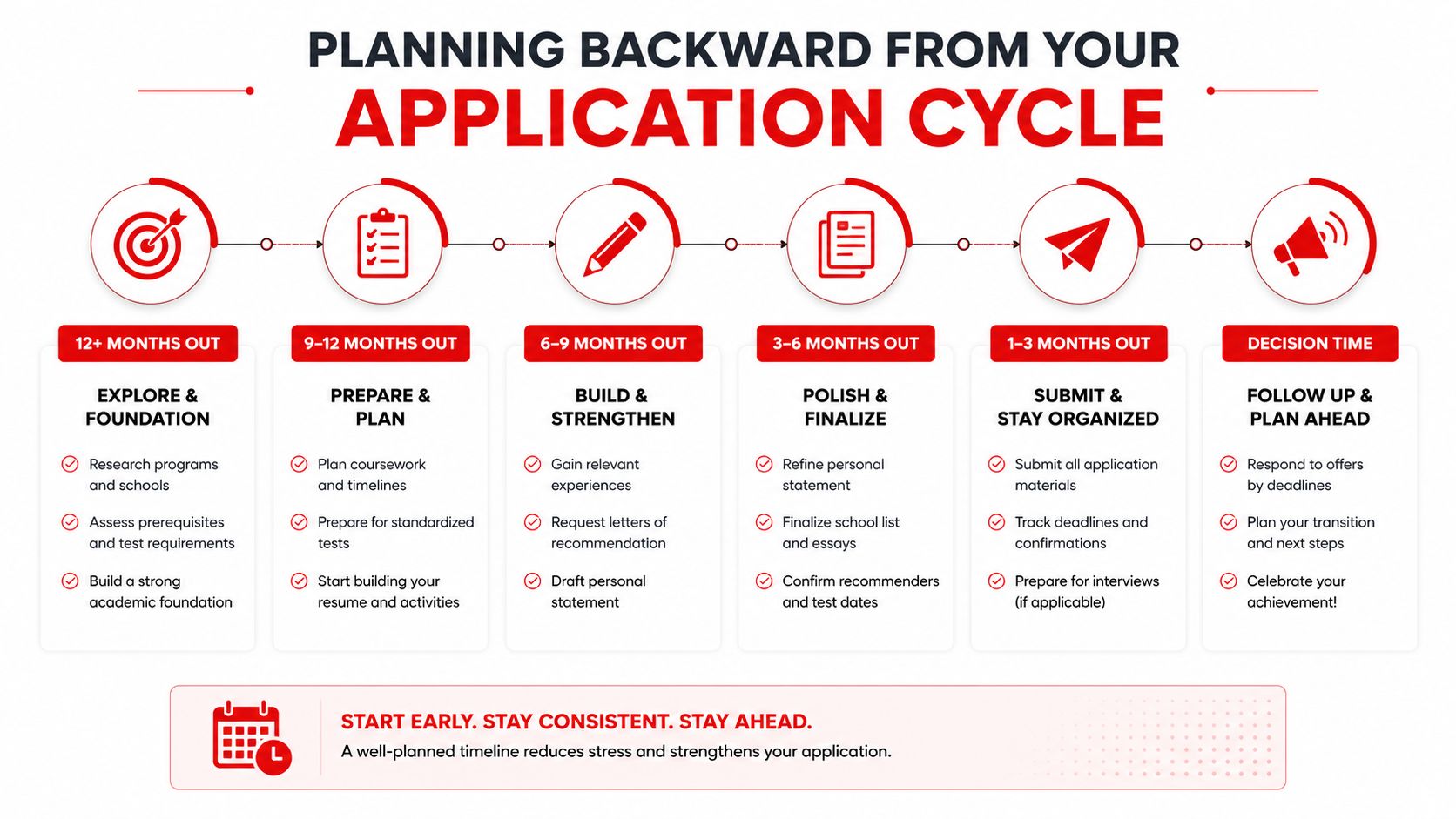
A backward-planning framework
Use this sequence before selecting a seat:
- Define the application cycle. Decide when your MCAT score must be available for your intended application work.
- Check the score-release date. Confirm the date on AAMC's official calendar, including the registration, scheduling, and cancellation deadlines tied to that administration.
- Set a realistic testing window. Allow time for content review, question practice, full-length exams, and recovery.
- Create a readiness checkpoint. Set a date to review study completion and practice performance before committing to the exam. If your preparation is behind schedule, rescheduling may protect your score better than keeping an early appointment.
- Reserve a primary and backup option. Account for travel, school, work, family responsibilities, center capacity, and the deadlines for changing your appointment.
Capacity and fees belong in this plan. A convenient center may fill before your preparation is complete, while delaying a change can reduce your options and increase the cost. Check the applicable AAMC policy for the administration you select, then choose a date you can execute rather than a seat you merely found.
Applicant volume also makes an early planning decision sensible. U.S. medical school applicants increased from 52,577 in 2023–2024 to 54,699 in 2025–2026, while matriculants rose from 22,980 to 23,440 over the same span, according to AAMC FACTS tables. Earlier data show a post-pandemic peak of 62,443 applicants in 2021–2022, followed by 55,189 in 2022–2023. These figures do not justify panic. They do justify treating the MCAT date as part of your application strategy.
A seat is useful only when it belongs to a plan you can execute.
Before choosing a date, compare your baseline, content coverage, and full-length schedule with this MCAT study-start planning guide. Keep the official calendar open while you plan. Registration should support your application timeline, preparation runway, and backup options.
Setting Up Your AAMC Account and Profile
A registration window can open while your profile still contains an old address, an unverified email, or a name that does not match your identification. Fix those details before you plan around a seat. Your AAMC account connects registration, payment, score records, and related services, so creating a second account creates avoidable record problems.
Complete the profile before scheduling
Use the official AAMC instructions to confirm the current workflow, required information, fee tiers, and deadline rules before you schedule.
- Use your existing AAMC ID. If you previously applied for the MCAT, the Fee Assistance Program, or the American Medical College Application Service, recover that account instead of creating another one.
- Match your legal name to your test-day ID. Enter your first and last names exactly as they appear on the accepted government ID. Middle names are not required, but resolve unusual initial-only identification with AAMC early.
- Check your date of birth. Compare it with the identification document you will present at the test center.
- Complete the registration-information tabs. Finish the required demographic, education, and intended medical-school-start information before the scheduling window opens.
- Confirm your email and phone number. Use contact details you monitor because AAMC sends confirmation messages and operational notices there.
- Handle Fee Assistance first. Approval must come before scheduling. The reduced rate is not retroactive, so do not register at the standard rate expecting AAMC to refund the difference.
Treat Fee Assistance as part of your registration timeline. If you may qualify, review the current requirements and apply early enough for AAMC to process the decision before you choose an appointment. This protects your budget and prevents a payment decision from forcing your test date.
Keep your login secure, then sign in before the opening window to verify every profile field. Save your preferred preparation materials in the MCAT preparation hub while keeping the AAMC portal as the authority for account, payment, eligibility, and scheduling rules. Preparation resources can organize your study plan, but they cannot override official deadlines or registration policies.
Choosing a Test Date and Location
A convenient seat is not automatically the right appointment. Start with your readiness plan and application deadline, then work backward to the test date. Choose the center only after confirming that the date leaves enough time for preparation, score release, and any retake decision. Reversing that order can force you into a location that conflicts with coursework or an application timeline.
For 2026, AAMC used the October 21–23, 2025 opening window for January through September administrations. For 2027, AAMC says registration opens October 20–22 by testing-center location. Follow the opening date assigned to your location. Logging in earlier does not guarantee better access. AAMC has described queue procedures in which people logged in by 11:50 a.m. Eastern Time were randomly assigned a place in line, while later logins joined at the end. It also says there is no advantage to logging in more than 10 minutes early. Review the AAMC's MCAT Registration 101 guidance before registration opens.
Compare the practical options
Filter centers by region, then evaluate the entire travel plan. A center requiring a flight creates more logistical risk than a slightly later appointment within driving distance. Check the route, parking, overnight needs, and whether the schedule supports your normal sleep and exam-day routine. Capacity can disappear quickly, so rank acceptable centers before you enter the scheduling queue.
AAMC offers an Appointment Notification Request for up to five active date-and-center combinations. A notification may be sent when a seat opens up to 15 days before the exam, but the system does not reserve that seat. You must still complete the change promptly, and another examinee may take the appointment first.
Use the current AAMC fee and deadline rules rather than older guides that repeat unsupported Gold, Silver, and Bronze tiers:
| Registration item | Current amount or rule | Who it applies to |
|---|---|---|
| Standard registration | $355 | Standard examinees |
| Fee Assistance Program rate | $145 | Applicants approved before scheduling |
| International surcharge | +$130 | International test-takers |
| Last day to schedule | 10 days before test day | All examinees, subject to AAMC policy |
| Changes fewer than 10 days before test day | Not allowed | All examinees |
Account for the complete testing day before booking transportation. The MCAT duration guide can help you plan travel, meals, and recovery around the exam's length and demands. Do not select a distant center just because it shows availability. Choose the appointment that protects preparation time, application timing, and reliable test-day logistics.
ID Requirements, Accommodations, and Confirmation
The most preventable registration problem is an identification mismatch. Your AAMC registration name must align with the accepted government ID you'll present at the test center. Treat the name field as a test-day requirement, not as ordinary profile information.
Review the current MCAT Essentials document before scheduling. For an accepted ID, verify that the document is current, unexpired, has a recognizable photograph, and includes a signature. U.S. and Canadian test-takers may use accepted forms such as a passport, driver's license, state identification card, or military identification. International examinees should generally plan around a passport and confirm the current AAMC requirements for their location.
Use a character-by-character check
Compare the registration confirmation with the ID you intend to bring:
- First name: Confirm the complete first name, not an informal shortened version.
- Last name: Check hyphens, spacing, accents, and suffixes.
- Middle name: A middle name isn't required, but don't introduce a mismatch by adding or altering information casually.
- Document status: Confirm that the ID will remain valid through test day.
- Photograph and signature: Make sure the document is recognizable and meets AAMC's current acceptance rules.
A name that looks close to you may not be close enough for test-center verification. AAMC policy overrides personal judgment, and a day-of correction isn't a reliable backup plan. If your ID uses initials rather than a full first or last name, the current Essentials guidance directs examinees to contact AAMC Services early for instructions.
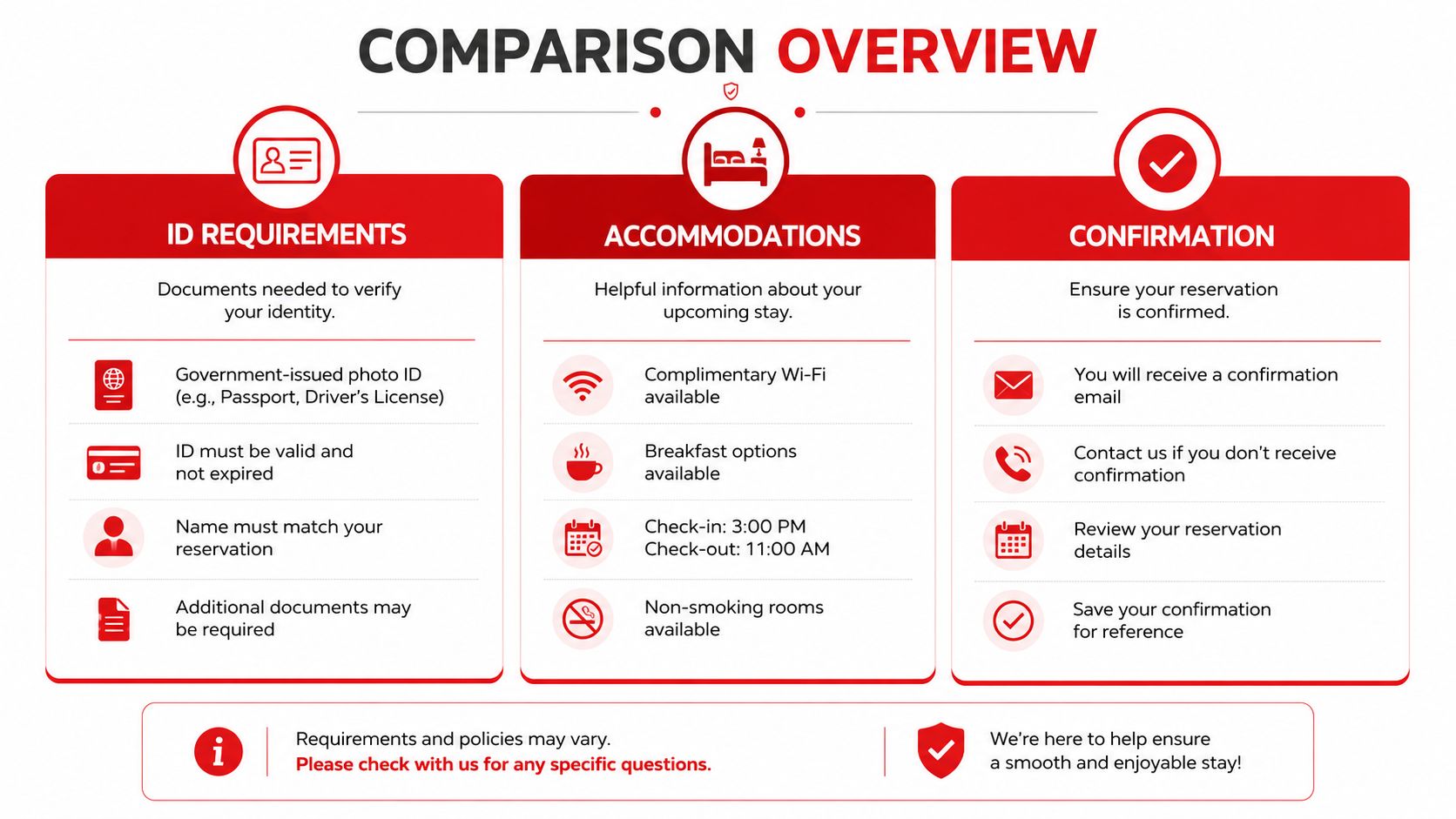
Submit accommodations separately
Accommodation requests go through the AAMC Accommodations Portal, not merely through the ordinary scheduling form. If you need testing accommodations, begin the request before selecting a date whenever possible. Reviews can take time, and scheduling first can create unnecessary pressure if the approved arrangement doesn't align with the appointment you've chosen.
Keep your documentation organized and follow the live portal's instructions. Don't assume that a previous school accommodation automatically transfers to the MCAT. AAMC decides accommodation requests under its own process, and preparation providers can't approve or modify those decisions.
Verify the appointment immediately
After scheduling, expect the confirmation email within 24 hours, then inspect it rather than filing it away. Confirm the registered name, test date, center, appointment time, and any other details displayed in the appointment record. Save the confirmation locally and keep a copy accessible without relying on a single inbox.
Add three calendar checkpoints:
- 60-day checkpoint: Reassess readiness, travel, and whether the appointment still fits your plan.
- 30-day checkpoint: Review the updated fee and cancellation consequences before making a change.
- 10-day checkpoint: Treat this as the final AAMC scheduling boundary. After it, changes aren't allowed under the stated policy.
The current AAMC policy lists rescheduling fees that increase from $55 to $110 to $210 as the exam approaches. Cancellation refunds also decline, reaching $0 in the final 10 to 29-day period. The precise fee or refund that applies depends on the live policy and your transaction, so verify it in the portal before confirming a change.
For an official walkthrough of registration concepts and operational details, watch the following educational video:
Medical emergencies should be handled through AAMC's emergency rescheduling process with the requested documentation, not treated as an ordinary portal change. If an emergency affects your appointment, contact AAMC promptly and follow the current instructions rather than assuming the standard deadline rules will be waived.
Troubleshooting Common Registration Problems
Use process guidance, not panic, when registration goes wrong. The following example is hypothetical, not a reported Ace Med Boards case.
Maria registers as “María” in her AAMC profile, while the passport she plans to use displays “Maria.” The first step is to compare the confirmation email with the passport, review the current MCAT Essentials, and correct the registration information through the MCAT Registration System if the portal permits it. If the discrepancy involves initials or a nonstandard name format, Maria should contact AAMC Services early for instructions rather than wait for test day.
A second common problem is a declined payment. Don't keep resubmitting the same card without checking whether the appointment was confirmed. Review the portal, email, and bank account, then contact AAMC if the transaction status is unclear. A second card may resolve a bank-side decline, but it shouldn't replace verification of whether the first attempt created an appointment or authorization hold.
Queue behavior also deserves realistic expectations. AAMC's registration process can be capacity-constrained and location-staggered, so being ready doesn't guarantee your preferred center. A browser refresh or private window may resolve a local session problem, but it won't create capacity where no seat exists.
| Common error | First-line fix | Escalate to |
|---|---|---|
| Name differs from ID | Compare the confirmation and ID, then correct the profile or registration before the applicable deadline. | AAMC Services |
| Payment is declined | Check whether an appointment was confirmed before retrying with another payment method. | AAMC and your card issuer |
| Preferred center is unavailable | Search backup centers and use the Appointment Notification Request for eligible combinations. | AAMC if the portal displays an unexplained error |
| Confirmation email is missing | Check spam, promotions, and other filtered folders, then verify the appointment in the portal. | AAMC if no appointment record appears |
| Accommodation isn't reflected | Review the separate accommodation process and appointment details. | AAMC Accommodations Services |
Use a current MCAT exam cost guide as a planning aid, but confirm every amount in the AAMC system before paying. Online summaries can become outdated when AAMC changes a fee or deadline.
Putting It All Together Before You Click Register
The final decision should pass a readiness test, not an availability test. Before you click the registration button, confirm that your preparation runway is realistic, your application timing is clear, and your backup plan doesn't depend on an unlikely seat appearing later.
The pre-click checklist
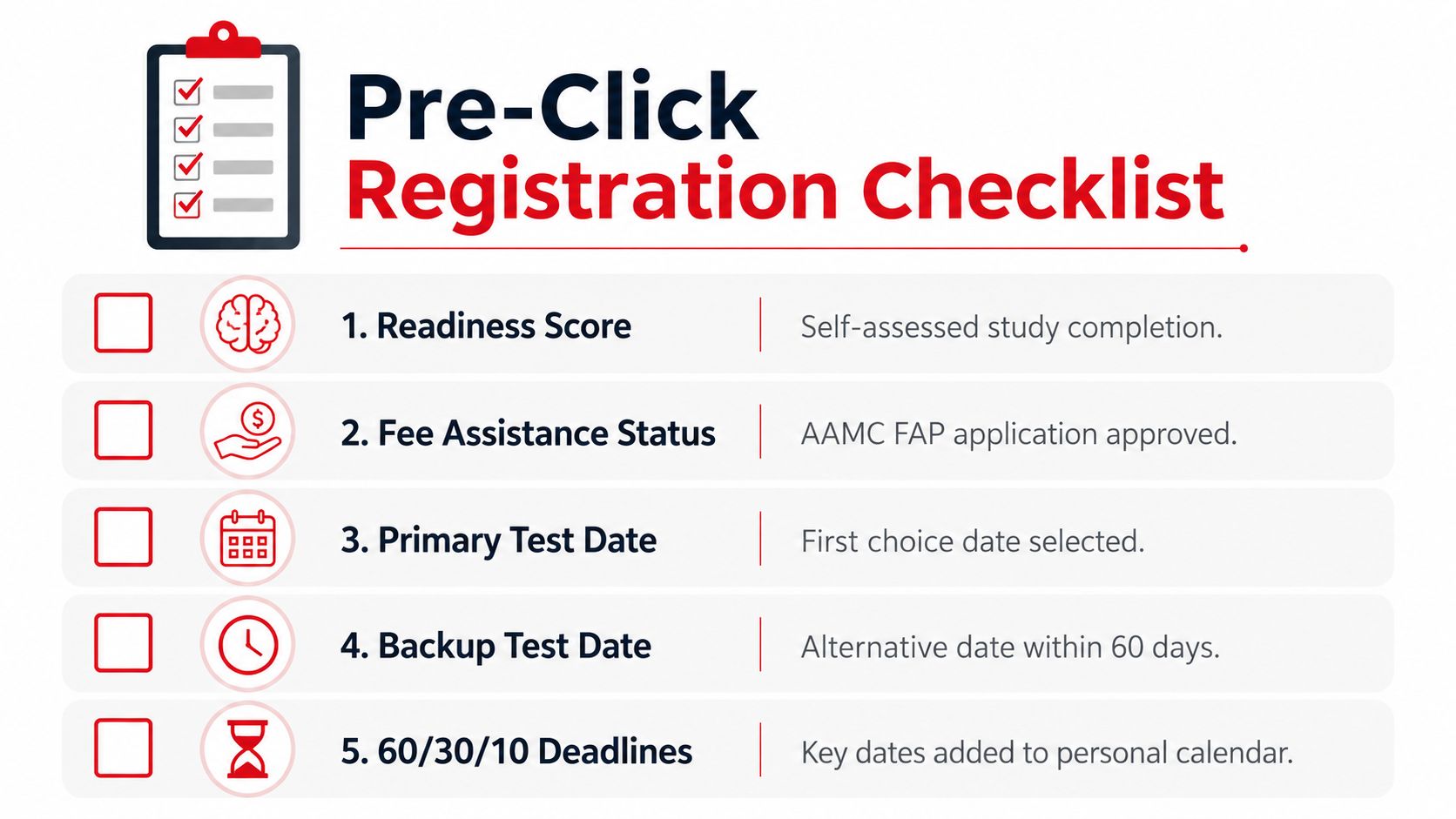
Check each item before submitting payment:
- Readiness score: Review your diagnostic and recent full-length performance against your preparation goals.
- Fee Assistance status: Confirm approval before scheduling if you intend to use the reduced rate.
- Primary date: Verify that the date supports your score-release and application timeline.
- Backup date: Identify another administration and at least one practical center.
- ID match: Compare the AAMC profile and intended government ID character by character.
- Accommodation plan: Submit any request through the separate AAMC process early enough for review.
- Deadline calendar: Add the 60-day, 30-day, and 10-day checkpoints.
- Confirmation record: Save the confirmation email, appointment details, and payment record after scheduling.
Postponement is strategically sound when your preparation has not reached the level required for a serious full-length evaluation, when your application timeline still allows a later administration, or when an unresolved ID or accommodation issue could jeopardize the appointment. It isn't a personal failure. A later, well-supported exam date is usually a better decision than forcing a date solely because seats are scarce.
Don't compare the cost of postponement with an invented “typical retake” price. Compare the actual AAMC change or cancellation consequence shown for your appointment with the academic, financial, and timeline consequences of testing before you're ready. The live AAMC policy is the final authority.
Ace Med Boards offers MCAT tutoring and readiness planning for applicants who want structured preparation or a second review of their registration timeline. Visit Ace Med Boards to discuss your study plan, readiness checkpoints, and test-date decision before you commit to a seat.
Sources
- AAMC MCAT registration and current fee policy
- AAMC MCAT scheduling and fees
- AAMC MCAT Registration 101
- AAMC U.S. MCAT calendar, deadlines, and score-release dates
- AAMC FACTS applicant and enrollment data