The exam is over, but the calendar still seems to belong to it. If a residency, licensure, or verification deadline is approaching, the practical question is when the COMLEX-USA Level 3 report will be available. The National Board of Osteopathic Medical Examiners (NBOME) generally releases Level 3 scores about eight to ten weeks after the testing window ends, with candidates receiving an email notification and retrieving the report through the NBOME Portal.
The key is to plan around the official cohort release date, not an individual test day or an assumed early-access time. Because NBOME can revise target dates, candidates should check the current official calendar and leave room for downstream requirements.
How COMLEX Level 3 Score Release Actually Works
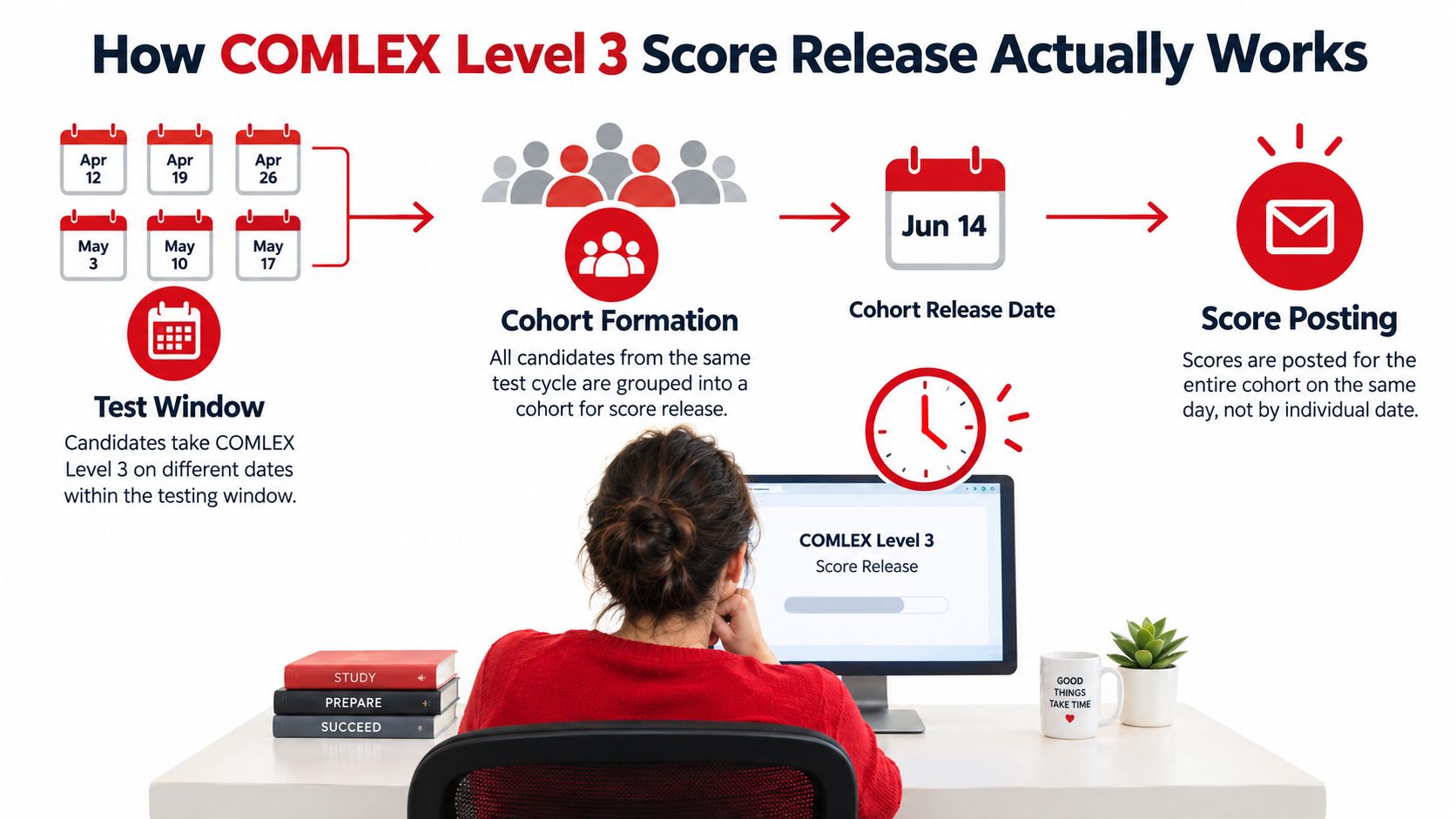
NBOME generally posts COMLEX-USA Level 3 score reports approximately eight to ten weeks after the end of the relevant testing window. That interval allows for quality-assurance checks, accuracy reviews, and, when needed, additional verification before results are published. The release schedule is tied to the testing cohort, so taking the exam near the start of a window doesn't necessarily mean receiving a report earlier than someone who tested near its end. (NBOME's official testing windows and score-release dates)
This is why Level 3 candidates shouldn't automatically apply expectations from Level 1 or Level 2-CE. Each exam has its own reporting schedule. Level 3's wait is linked to the window and the review process, rather than a guaranteed number of days from an individual appointment. Candidates looking for a broader overview of the exam can consult this COMLEX-USA guide.
What the release date means
NBOME publishes a target release date for each cohort. Scores are generally released by 5:00 p.m. Central Time on that date, barring unforeseen circumstances. Candidates are notified by email when the report is available, but the email is an alert, not the score report itself. The official report is accessed through the NBOME Portal.
A useful planning sequence is simple: identify the testing window, note its closing date, find the corresponding target release date on NBOME's current calendar, and use that date when mapping out program or licensure paperwork. If the published date changes, revise the plan based on NBOME's update rather than reading meaning into the delay.
Planning rule: The relevant benchmark is the cohort's official release date, not the day an individual candidate tested.
Reading the NBOME Testing Window Calendar
NBOME's published calendar works like a course schedule: each testing window is paired with one target release date that applies to everyone who tested in it. A candidate who sits on the first day of a window and a candidate who sits on the last day share the same release date. On the currently posted schedule, for example, the January 14 through February 7, 2026 window maps to April 2, 2026, and the March 2 through March 21, 2026 window maps to May 14, 2026.
| Example 2026 testing window | Target score release date | Approximate wait |
|---|---|---|
| January 14–February 7, 2026 | April 2, 2026 | About 8 weeks after the February 7 window close |
| March 2–21, 2026 | May 14, 2026 | About 8 weeks after the March 21 window close |
Those waits are approximations.
NBOME cautions that posted dates can shift because of scheduling conditions, testing-site disruptions, standard setting, or other operational variables. The calendar entry covering the candidate's own window remains the authority, so the row that matches the exam date matters more than any average.
A practical calendar check
Bookmark NBOME's published Level 3 testing-window calendar and locate the window containing the exam date. Record the window's end date and the listed target release date.
Then work backward from any outside deadline. A state board processing a licensure application, a residency program requesting documentation, or an IMG candidate arranging verification will each want to know when the official report arrives. Treat the target release date as the start of that timeline, not the finish. Asking the receiving organization what it needs and when it must arrive turns a posted calendar date into a concrete plan, with room for processing time on the receiving end.
Where and How You Will See Your Score Report
When NBOME makes a Level 3 report available, the candidate retrieves it through the NBOME Portal. The email notification lets the candidate know the report is ready, but the result itself isn't delivered in the email. NBOME doesn't provide official results by telephone, fax, or ordinary email. (NBOME's examination-score reporting information)
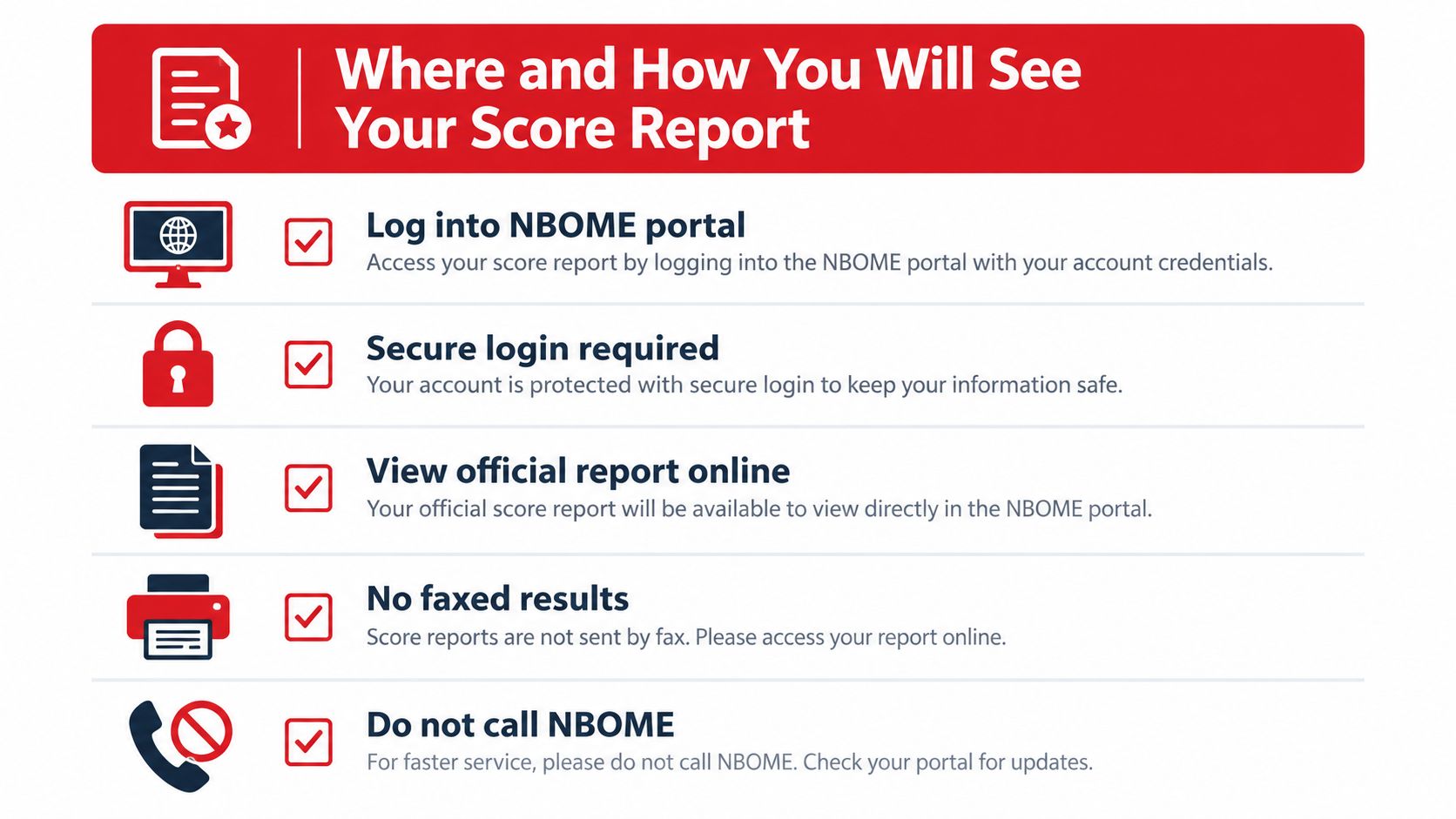
Candidates can reduce last-minute access problems by checking the logistics before the window closes:
- Confirm Portal access: Make sure the NBOME login works and that the candidate can reach the score-report area.
- Check the notification email: Confirm that the address on file is current and monitor its inbox and spam folder around the target date.
- Review program authorization: Osteopathic medical school and graduate medical education program officials may access a report when authorized by the candidate.
- Use the official report: Save or share the report using the options available through the Portal, and follow each recipient's instructions for documentation.
A candidate who doesn't see a report immediately should first check the official cohort date and Portal access. Calling or emailing to request the result won't substitute for the Portal report. If the date has passed, follow NBOME's current instructions for candidate support rather than relying on unofficial claims about early access.
Interpreting the Level 3 Score Report
A Level 3 report contains both a pass/fail decision and a three-digit standard score. NBOME recommends 350 as the passing standard. The report also includes a Performance Profile, which compares overall and competency-domain performance with that of first-time test-takers who passed. (NBOME's examination-score reporting information)
The three-digit standard score reflects performance on traditional multiple-choice questions and key-features components in clinical-decision-making cases. The pass/fail result answers whether the candidate met the passing standard. The profile offers additional context, but it shouldn't be treated as a diagnosis of a specific knowledge gap or a prediction of future examination performance.
A careful way to read the result
Start with the official outcome, then read the score and Performance Profile together. For a candidate who passed, the profile can help identify areas to review for personal learning. A score just above the passing standard still counts as a pass; the report's domain information may be more useful for planning continued study than repeatedly comparing the total score with another candidate's.
For a candidate who didn't pass, the total score alone doesn't identify exactly what caused the outcome. The profile can help guide a review, but it's only one part of a remediation plan. Candidates should also confirm the format and reporting framework that applied to their administration before comparing results across cohorts, particularly during changes to the exam format. For a general discussion of score interpretation, see this COMLEX score percentile guide, while keeping in mind that the official Level 3 report is the source for an individual result.
Sending Scores to Programs, State Boards, and IMG Verification
A report becoming available doesn't necessarily mean every organization has received the documentation it needs. Residency programs, state licensing boards, and organizations involved in international medical graduate (IMG) verification may have different requirements and processing steps. NBOME notes that authorized officials at an osteopathic medical school or graduate medical education program can access a candidate's report. Candidates should confirm how each intended recipient receives or verifies scores instead of assuming that one Portal action covers every organization. (NBOME's examination-score reporting information)
Map each recipient's requirements
For each organization, record the document required, how it must be sent, and the deadline by which it must arrive. This matters when a program start date or a licensing milestone depends on receiving documentation after the cohort release date. A candidate who has a fixed start date should ask the program or board what happens if the official report is delayed, and whether any other documentation is needed in the meantime.
| Recipient | What to confirm |
|---|---|
| Residency program | Whether an authorized official can access the report and what documentation the program needs |
| State licensing board | Its score-reporting procedure, required documents, and processing timeline |
| IMG verification organization | Whether it requires an official report or another verification step, and how to submit it |
Don't assume that an email notification to the candidate counts as official delivery to a third party. Confirm recipient-specific instructions directly, and keep a record of what was submitted and when. Candidates planning application and program milestones can also review this medical residency application timeline and adjust it to their own requirements.
Score Confirmation and What Verification Does
A candidate who believes a score report warrants a check can request one score confirmation per examination within 120 days of completing the test. NBOME lists a $75 fee for this process. A score confirmation is a verification step, not a way to obtain an early report or alter the cohort release schedule. Candidates should first review the official Portal report and NBOME's current instructions for submitting a request. (NBOME's examination-score reporting information)
The distinction matters when a deadline is near. Requesting confirmation doesn't make a result available sooner, so it shouldn't be used as a workaround for program or licensure planning. If a candidate suspects an administrative or scoring issue, the appropriate next step is to follow NBOME's formal process and preserve any relevant correspondence.
Before requesting confirmation, consider what question the request can answer. It's intended to check the reported score, not to provide a detailed explanation of every missed item or a fresh assessment of the candidate's preparation. A mismatch between expectations and the result can feel unsettling, but expectations alone don't establish that an error occurred. Candidates who also need to plan credential-related paperwork can consult this credential verification guide, while confirming requirements with the relevant organization.
Common Timing and Reporting Misconceptions
Several common assumptions can make the wait feel more alarming than it needs to be. The most important correction is that Level 3 reporting follows the cohort calendar, not an individual race to see who tested first.
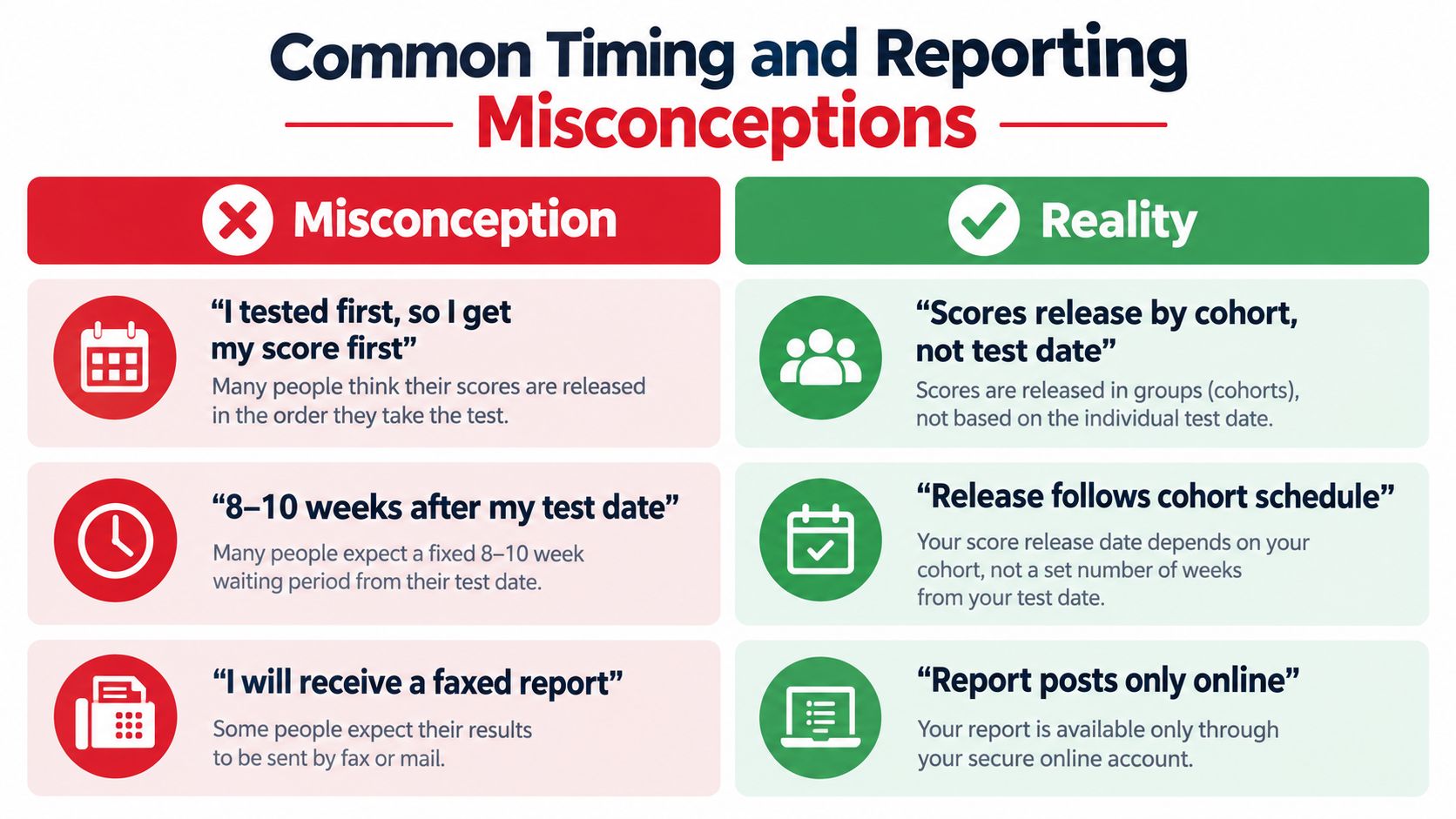
- “Testing first means receiving a score first.” Not necessarily. The target date is associated with the testing window.
- “The wait is counted from my appointment date.” NBOME's general timing guidance refers to the end of the relevant testing window, not necessarily the individual test date.
- “A missed target date means something is wrong.” Not by itself. NBOME warns that operational factors can change release dates.
- “A report will arrive by fax or email.” The official report is accessed through the NBOME Portal; email serves as a notification.
Level 1 and Level 2-CE have their own score-reporting schedules, so candidates shouldn't use those exams' timelines to estimate a Level 3 date. For details specific to Level 1, see this COMLEX Level 1 score-release guide.
If the target date passes without a notification, check the spam folder and Portal, confirm whether NBOME has posted a revised date, and then contact NBOME if the report remains unavailable. If NBOME updates the calendar, use the revised date for downstream planning.
Next Steps After Your Score Arrives
Once the report is available, the next step depends on the outcome and on what the candidate's program, licensing board, or verification body requires. A single result doesn't define a physician's potential, and a difficult outcome can be addressed with a practical plan.
- If the report shows a pass: Confirm whether the residency program and state board need documentation, then complete their required reporting steps. Keep a copy of the official report and note any remaining paperwork.
- If the candidate passed but wants to improve a specific area: Use the Performance Profile as a learning tool, not as a judgment about future performance. Decide whether targeted review would be useful for upcoming professional goals, and avoid assuming that the total score alone determines fellowship competitiveness.
- If the report shows a fail: Review NBOME's current rules and instructions before making retesting plans. Identify what needs to be clarified, build a focused remediation approach, and coordinate timing with program or licensing requirements. A failed attempt is a setback, not a permanent ceiling.
Candidates preparing for further COMLEX study may consider what kind of structure would help: independent review, official materials, or personalized tutoring. Ace Med Boards offers COMLEX tutoring, and candidates can review its COMLEX tutoring services to see whether that format fits their needs. For related context on how COMLEX results may intersect with residency planning, see this COMLEX scores and residency-match guide.
Frequently asked questions
When will the email notification arrive? NBOME notifies candidates when the report is available. Check the official cohort date and the Portal rather than expecting a fixed email delivery time.
Can a candidate get the score earlier? NBOME publishes target release dates by testing window. There's no confirmed early-access method in the official reporting guidance.
How can a candidate request another score report or transcript? Follow the current NBOME instructions for score reporting or transcript requests, and confirm the recipient's requirements before submitting anything.
Candidates who want help planning a structured COMLEX study approach can explore the options available through Ace Med Boards. A consultation can help determine whether personalized tutoring fits the candidate's preparation needs, without replacing NBOME's official reporting process or materials.