Spending hours reviewing a UWorld block can feel responsible while producing very little durable learning. To review UWorld questions faster, answer under time pressure, classify each item by confidence and error type, and reread only the explanation that changes future decisions. The aim isn't to skip learning. It's to replace passive explanation reading with active retrieval, targeted analysis, and spaced re-review.
A practical system starts with a simple question: What caused this response to be unreliable? A confident correct answer usually needs little attention. A guessed correct answer needs more than its score suggests. An incorrect answer may reflect a knowledge gap, a reasoning error, or an execution mistake. That distinction determines whether the next step is a brief fact check, a reconstructed decision pathway, or a correction to test-taking behavior.
The workflow below is designed for USMLE and Shelf learners who are losing study time inside explanations. It also complements a broader UWorld question strategy for USMLE preparation without reproducing licensed question-bank content.
Introduction to Efficient Review
The fastest useful review is selective review. A learner who spends the same amount of time on every item will over-review mastered material and under-review fragile reasoning. Instead, each question should receive a quick label immediately after the answer is submitted: confident correct, correct but uncertain, or incorrect.
That label is only the first filter. The second identifies the source of the problem:
- Knowledge gap: The relevant fact, mechanism, diagnosis, or management principle wasn't available.
- Reasoning error: The necessary information was known, but the clinical pathway was assembled incorrectly.
- Execution error: The learner misread a clue, ignored the question task, changed a sound answer, or committed prematurely.
This approach answers the practical question behind faster UWorld review: not “How can every explanation be read more quickly?” but “Which explanations deserve attention at all?”
Practical rule: Review to create a future decision rule, not to prove that the explanation made sense on a second reading.
A timed first pass should preserve the conditions that make questions useful. Afterward, the learner can review the tested concepts, extract one decisive clue, and write one concise retrieval prompt. Difficult ideas then return later, rather than being reread repeatedly in the same sitting.
The Science Behind Faster Retention
You finish a block, open the explanation, and everything looks familiar. That feeling is reassuring, but it is not the same as being able to retrieve the diagnosis, mechanism, or next step on your own during the next question. Faster retention starts when the answer is pulled from memory before the explanation is read.
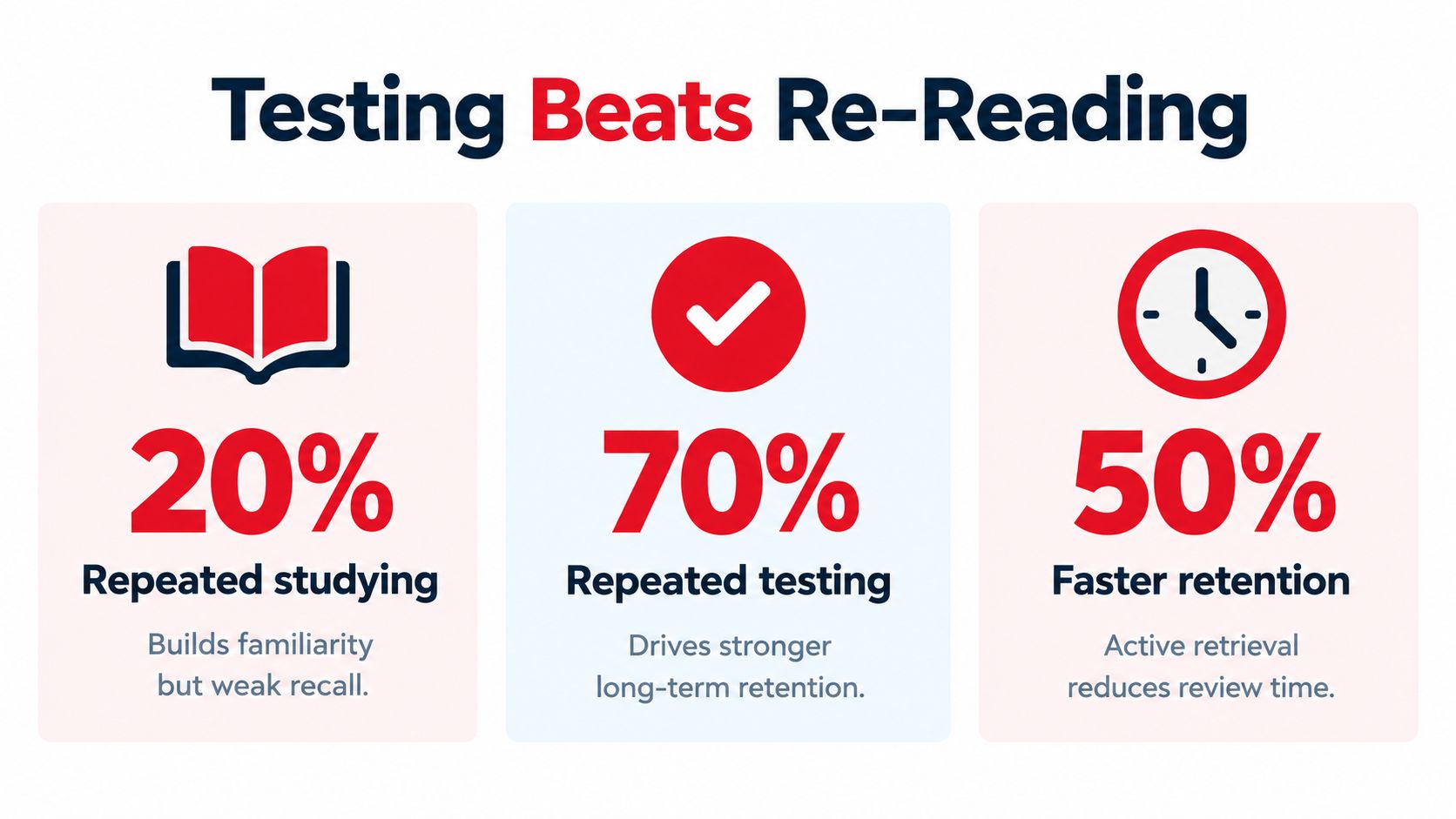
A 2014 medical-education review summarized studies showing that repeated testing led to final scores 13% higher on average than repeated studying six months after the original learning session. The same review also showed why feedback matters. Participants who received no test averaged 11% correct, those tested without feedback averaged 33%, those receiving immediate feedback averaged 43%, and those receiving delayed feedback averaged 54%. For UWorld review, that supports a simple sequence: commit to an answer, check the explanation for the exact miss, then return to the concept later instead of rereading the whole passage in the same sitting (Medical education review on retrieval practice).
Why delayed review can be more efficient
Delayed review works because it makes the brain do the expensive part again. If you can restate the rule after some forgetting has occurred, the memory is usually more usable on the next block than if you had just reread the explanation twice in a row. The same review found an approximately 2-to-1 performance advantage for expanding intervals over steady intervals.
The three-way triage mindset matters here. A knowledge gap needs a clean fact prompt. A reasoning error needs a short decision rule that shows how the clues should be connected. An execution error usually needs a behavioral fix, such as slowing down at the lead-in or checking the stem task before changing an answer. Those are different review products, and treating them the same wastes time.
Mental fatigue pushes learners back toward passive reading. If focus is slipping, use brief clearing mental fatigue techniques and then return to retrieval, not highlighting.
For a practical overview of active recall for medical studying, keep the principle simple: review should produce one future retrieval cue, not a second pass through the same explanation.
The Three-Step Review Workflow
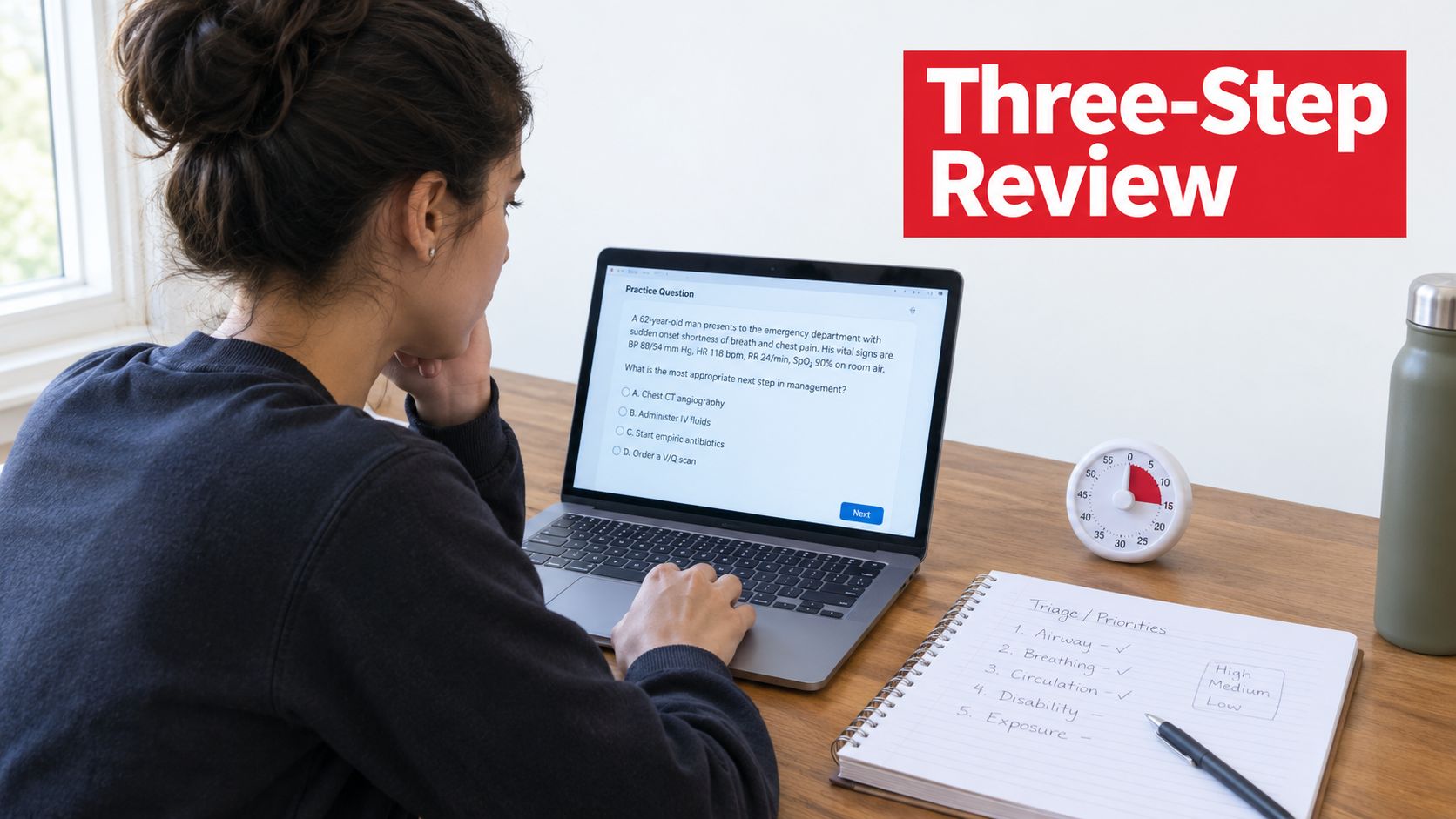
A UWorld block should have two distinct phases: testing and analysis. Mixing them encourages stopping after each question, reading immediately, and losing the pressure that reveals whether the answer was actually retrievable.
Step one uses a timed first pass
Complete the block under a defined time limit. USMLE sample materials specify a maximum of 30 minutes for a 20-question block, or approximately 90 seconds per question. The official USMLE sample items also encourage practice with the downloadable or interactive experience to become familiar with item formats and pacing.
During the first pass, record confidence rather than taking notes. A simple mark is enough:
| Response | Immediate label | Review priority |
|---|---|---|
| Correct and confident | C | Minimal |
| Correct but guessed or uncertain | U | High |
| Incorrect | I | High, then classify the error |
Don't open the explanation after each item unless the study session specifically requires untimed teaching. The first pass should show what the learner can do without assistance.
Step two performs rapid triage
After the block, return to each item and assign one of the three labels. A confident correct answer may need only a quick confirmation of the tested principle. A guessed correct answer deserves attention because the correct score can conceal unstable knowledge.
Incorrect answers then receive a second label. The learner should identify whether the miss came from missing information, faulty clinical reasoning, or careless execution. distractor analysis for board questions becomes useful at this stage, especially when an attractive wrong option pulled attention away from the decisive clue.
Step three conducts targeted deep dives
Read the explanation with a narrow purpose. Find the tested task, the decisive finding, and the reason the tempting alternative fails. Then write one sentence that could guide a future answer.
A deep review is justified when the learner can't explain why the correct option wins, when the same concept has appeared repeatedly, or when the question exposed a reasoning pattern likely to recur. It isn't justified merely because the explanation is long or interesting.
Triage and Classification Strategy
“Incorrect” is an outcome, not an explanation. Two missed questions can require completely different fixes, and a guessed correct answer may deserve more attention than a confident miss.
The three error types
Knowledge gaps are the most straightforward. The learner didn't know the mechanism, diagnostic association, drug effect, or next step. The fix is concise: identify the missing principle, verify it in the explanation, and convert it into a retrieval prompt.
Reasoning errors require more reconstruction. The learner may know the disease but fail to connect the presentation to the right decision. The review should restate the clinical pathway: what problem is being tested, which finding changes the probability, and why the next step follows.
Execution errors involve performance behavior. Examples include overlooking a negation, answering a different question from the one asked, anchoring on an early clue, or switching from a defensible answer without new evidence. The remedy is a behavioral rule, not another page of notes.
A guessed correct answer is evidence of uncertainty, even when the score records it as correct.
A worksheet that makes the distinction visible
The following original worksheet can be completed in a notebook or spreadsheet:
- Question task: Diagnosis, mechanism, next best step, interpretation, or another task.
- Initial answer and confidence: Correct-confident, correct-uncertain, or incorrect.
- Decisive clue: The single finding that should control the decision.
- Error class: Knowledge gap, reasoning error, or execution error.
- One-sentence rule: What should be retrieved next time?
- Recheck date: The next scheduled recall opportunity.
A knowledge gap might produce the rule, “A low complement pattern with this presentation points toward the relevant immune-complex process.” A reasoning error might become, “When the patient is unstable, prioritize the immediate decision pathway before pursuing confirmatory testing.” An execution error might read, “Underline the question task before comparing answer choices.”
The time allocation should follow the diagnosis. A small fact gap doesn't need a long narrative. A complex reasoning error may need a slower reconstruction, but only until the learner can explain the decision without looking. More review becomes wasteful when the learner is copying sentences rather than retrieving the principle.
Integrating Spaced Repetition
A useful error log is organized by mechanism, presentation, and decision rule, not by question number. Question numbers preserve the history of the bank, but they don't help the learner recognize that several different cases tested the same concept.
After reviewing an error, create one prompt. Good prompts require production:
- “What finding distinguishes this condition from its closest alternative?”
- “What is the next best step when this instability is present?”
- “Which clue changes the management pathway?”
- “Why is the tempting distractor less appropriate?”
Avoid copying an entire explanation or producing several cards from one item. The point is to make the learner retrieve the boundary that matters.
A practical review matrix
| Performance | What to record | Suggested action |
|---|---|---|
| Confident correct | Tested principle only | Move on unless the concept is repeatedly missed |
| Correct but uncertain | Decisive clue and uncertainty source | Recheck through a prompt |
| Incorrect, knowledge gap | Missing fact or mechanism | Learn briefly, then retrieve later |
| Incorrect, reasoning error | Misordered decision pathway | Reconstruct and test with a contrast |
| Incorrect, execution error | Misleading clue or behavior | Write a specific prevention rule |
Schedule difficult prompts after increasing gaps, such as one day, three to four days, and seven to ten days. The supplied educational evidence supports expanding retrieval intervals, and a practical review of health-professions education identified 33 studies examining retrieval practice and 16 examining spaced retrieval. (Systematic review of retrieval practice in health-professions education)
Retire a prompt after two confident recalls, unless the concept continues to fail in new questions. If the learner misses it again, rewrite the prompt around the actual confusion instead of just resetting the same card.
Learners building a broader system can compare these methods with VideoLearningAI spaced repetition strategies. For medical preparation, the tool matters less than whether the prompt forces recall and returns at a useful interval. A focused Anki and spaced-repetition workflow can support this process, but it shouldn't become a second source of passive workload.
Common Pitfalls and Fixes
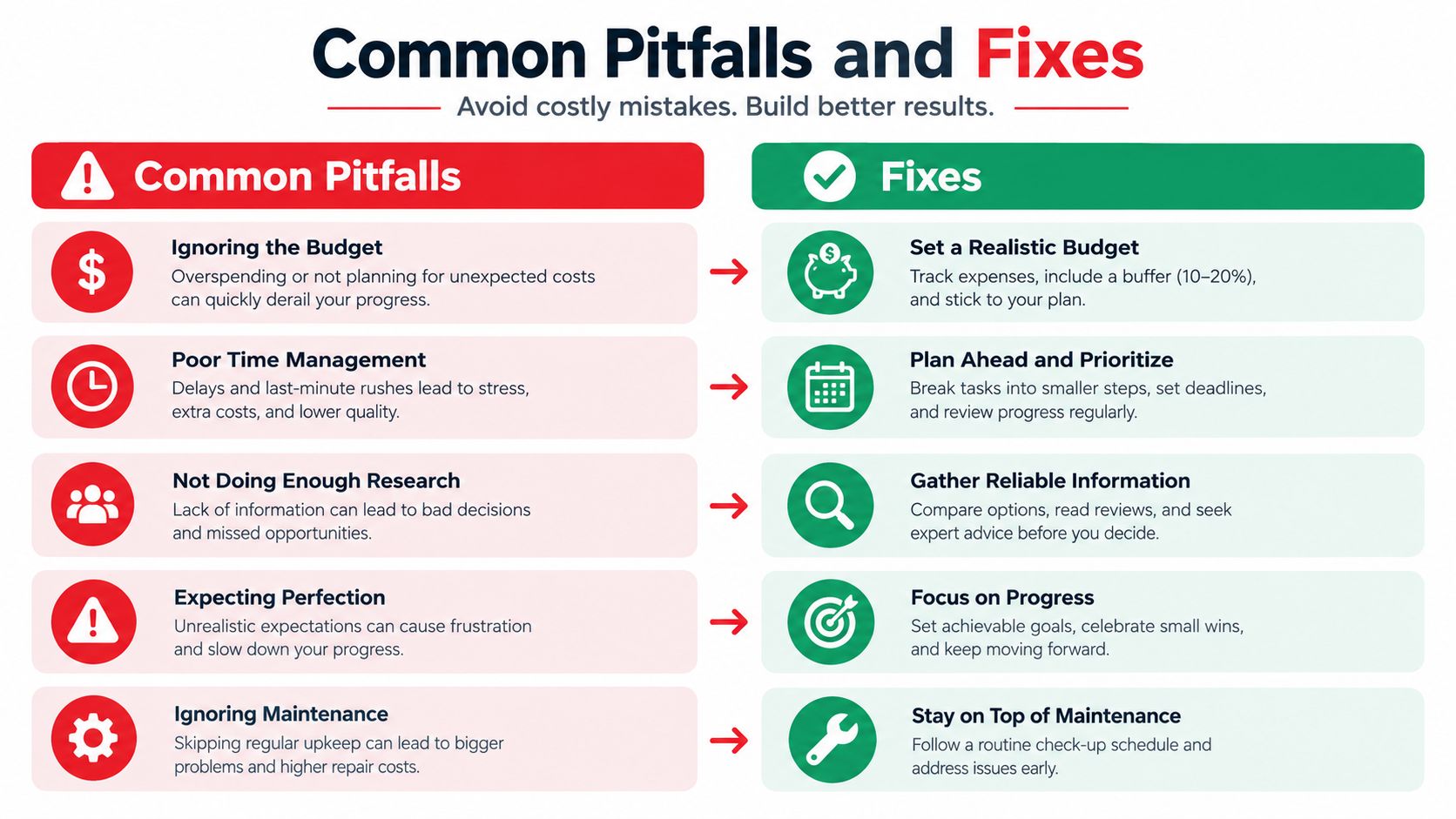
A common failure pattern looks productive on the surface. A resident finishes a large block, spends too long rereading explanations, then leaves without a clear record of whether the miss came from a knowledge gap, a reasoning error, or an execution error. Speed improves when each question is triaged first and reviewed only to the depth that fixes that category.
Question-bank volume still matters, but only in context. A University of Alabama School of Medicine study followed 185 first-year medical students with access to a commercial Step 1 question bank containing more than 2,100 items over 18 months. Both MCAT performance and questions attempted significantly predicted academic outcomes, with question-bank use showing the stronger association, especially among students with lower MCAT performance. The practical point is simple: volume increases exposure, but exposure alone does not correct a faulty decision rule. (University of Alabama question-bank study)
What wastes review time
- Linear rereading: reading every explanation the same way blurs the difference between secure material and fragile material.
- Immediate reattempts: seeing the concept again right away can create familiarity without delayed recall.
- Copying notes: transcription feels organized, but it rarely produces a usable retrieval cue.
- Ignoring uncertainty: guessed correct answers often reveal the same weakness as incorrect ones.
- Unlimited debriefs: one question can consume the session unless you set a stopping rule. Learners who notice anxiety driving that over-review often benefit from bounded test anxiety strategies.
USMLE Step 1 is administered in seven 60-minute blocks, with no more than 40 questions in any block and no more than 280 questions overall. Examinees receive at least 45 minutes of break time and a 15-minute optional tutorial, and finishing a block or the tutorial early can increase available break time. Those constraints support timed practice and capped review. (Official USMLE Step 1 exam content)
Use the cap to force a concrete output. Name the mechanism if the issue was knowledge, rebuild the path if it was reasoning, or write a prevention rule if it was execution. If the rule is still unclear, park the item for a later focused session instead of rereading it until attention fades.
Conclusion and Next Steps
The learner who spends too long on UWorld usually doesn't need to read faster. The learner needs a sharper filter. Timed blocks reveal performance without assistance, confidence labels expose fragile correct answers, and error classification determines whether the fix is a fact, a reasoning pathway, or a behavior change.
The original worksheet can be used after every block:
- Mark each answer as confident correct, uncertain correct, or incorrect.
- Identify the decisive clue and tested task.
- Classify the problem as knowledge, reasoning, or execution.
- Write one retrieval prompt.
- Revisit difficult prompts after expanding intervals.
- Stop when the future decision rule is clear, not when every explanation sentence has been copied.
Speed that sacrifices retrieval isn't efficiency. A shorter review that produces durable recall is more valuable than a longer session that leaves the learner recognizing explanations but unable to solve a fresh vignette. This educational guidance supports exam preparation only, not diagnosis or patient treatment.
A learner who remains unsure how to prioritize UWorld errors, interpret recurring patterns, or build a sustainable USMLE study plan can review the USMLE tutoring options available through Ace Med Boards.
Ace Med Boards offers individualized USMLE tutoring that can help learners analyze question-review patterns, prioritize weak areas, and build a more structured study workflow. Visit Ace Med Boards to learn about the service and decide whether a free consultation or Board Score Audit fits the learner's needs.