You're halfway through a question block, and the stem suddenly shifts from chest pain to a warehouse job, a chemical smell, or a hand tremor that started after a new assignment. That's the moment occupational health shows up on board exams. It's not a niche topic, it's a favorite way for exam writers to test whether you can take a history, spot an exposure, and connect a symptom pattern to prevention and reporting.
Why Occupational Health Appears on Every Major Board Exam
A factory worker walks in with numbness, tingling, and a vague abdominal complaint. The answer choices look like neurology, gastroenterology, or toxicology, but the key clue is hidden in the job history. That's exactly why occupational health keeps appearing on USMLE, COMLEX, and shelf exams, because it rewards the student who notices the work setting before chasing the lab value.
Exam writers love these stems because they can test three skills at once. They want to know whether you can recognize a classic exposure, whether you'll ask about occupation and industry, and whether you understand that symptoms may be work-related even when the diagnosis sounds ordinary. A polished answer usually depends less on memorizing a rare toxin and more on identifying the exposure pathway and the right next step.
The content also fits neatly into preventive medicine and primary care reasoning. The occupational history is part of the clinical story, not an optional add-on, and the USMLE content outline reinforces how broad that story can be across systems. When a question writer wants to separate a strong test taker from a guesser, occupational clues are one of the easiest ways to do it.
Practical rule: if the stem gives you a job, a task, and a symptom, pause before you chase the disease name. Ask what the worker touches, breathes, lifts, repeats, or wears.
The trap is that these questions often look like ordinary medicine. A patient with cough may not have infection, a patient with dermatitis may not have atopy, and a patient with weakness may not have a primary neurologic disorder. The best scores usually go to students who treat the work history as part of the differential, not as background noise.
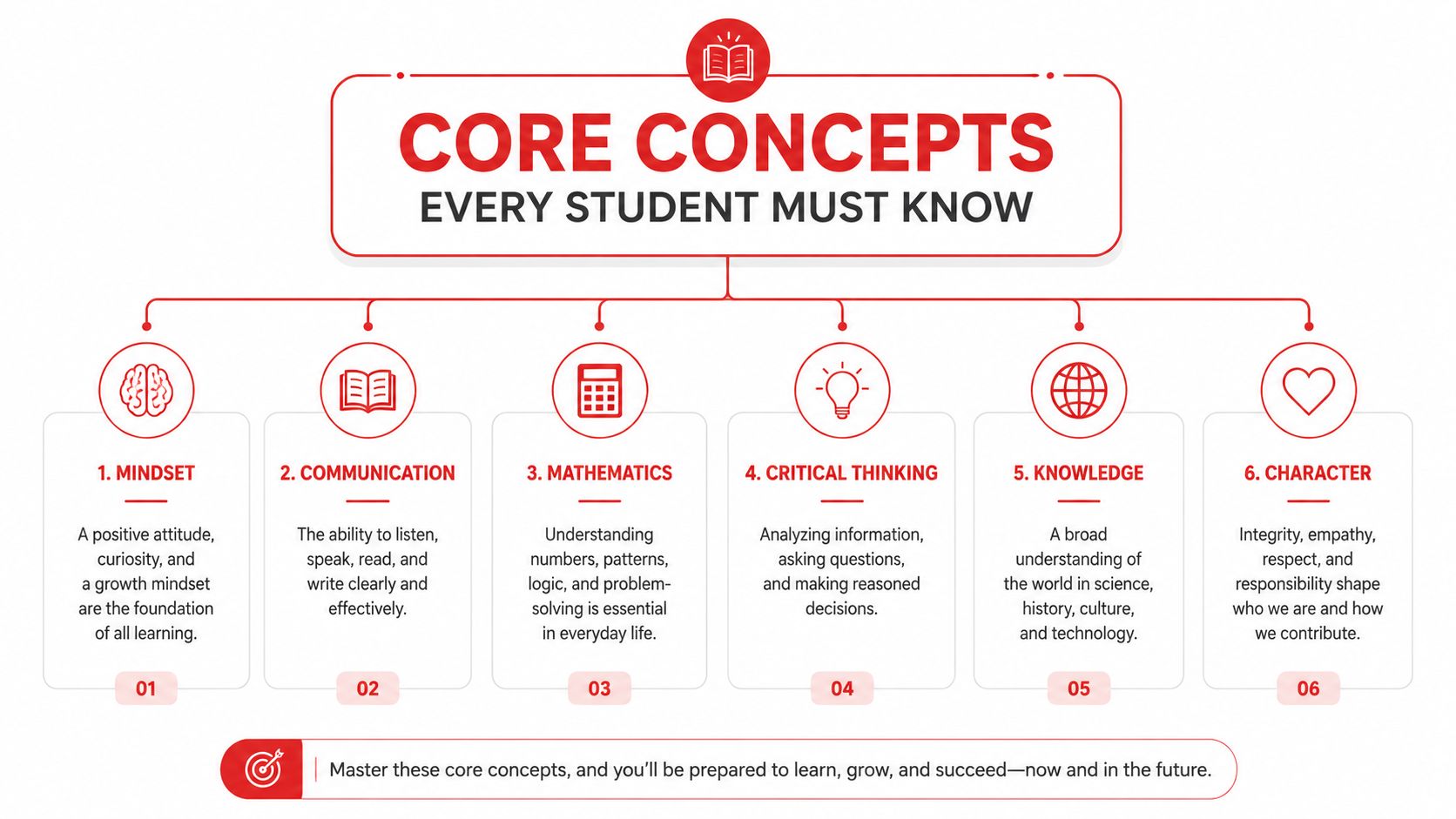
Core Concepts Every Student Must Know
A board question can look busy and still hinge on one simple move, identify the exposure first. If you sort occupational problems into chemical, physical, biological, ergonomic, and psychosocial buckets, the stem usually becomes easier to read. That sort of grouping follows the same logic as a clinical reasoning framework, you gather the relevant clues, then connect them to the body system that fits.
Start with the exposure, not the diagnosis
A useful occupational history starts with the five core data elements used in clinical review, occupation, industry, work-relatedness, employer, and exposures. The National Academies highlights those fields because they connect symptoms to job tasks and exposure pathways instead of treating every complaint as a generic illness. On exams, that matters because the same symptom can mean very different things depending on whether the worker handles solvents, dust, repetitive motion, or shift work.
The hierarchy of controls follows the same prioritization logic as treatment planning. You would not jump to inhalers before confirming the trigger in asthma, and you should not make PPE the first and only fix for a workplace hazard. The hierarchy moves from elimination and substitution, to engineering controls, then administrative controls, and finally PPE.
The exam answer is usually the most upstream fix available, not the most convenient one.
Learn work-related versus work-aggravated
This distinction shows up more often than students expect. A work-related disease is caused by the job or the exposure at work, while a work-aggravated condition is made worse by the job even if the underlying problem started elsewhere. That difference turns a vague stem into a clean answer, especially when the patient already has asthma, back pain, eczema, or arthritis.
The board-style move is to ask whether the job created the disease or only made it flare. That is the same reasoning you use when an answer choice tries to distract you with a pre-existing condition. If the work task explains the onset or the worsening, the question is pointing to occupational medicine.
Key Occupational Diseases and Toxicology Patterns
A lot of students try to study occupational disease as a long list. That works poorly on timed exams. A better approach is to group the classic diseases by organ system and then attach one occupation clue and one hallmark finding to each pattern, the way you would when reviewing toxicology in cytochrome P-450 drug interactions.
Build the pattern, not the catalogue
The pulmonary questions usually revolve around dust exposure and latency. The neurologic questions usually involve heavy metals or pesticides. The hematologic and hepatic questions tend to reward recognition of a specific industrial exposure plus a downstream malignancy or marrow problem. Dermatology questions often look trivial until you notice the glove, solvent, or wet work history.
| High-Yield Occupational Diseases by Organ System | |||
|---|---|---|---|
| Organ System | Disease | Occupation Clue | Classic Board Finding |
| Pulmonary | Asbestosis | Shipyard, insulation, construction | Progressive dyspnea with exposure history |
| Pulmonary | Silicosis | Sandblasting, mining, stone work | Chronic cough after dust exposure |
| Pulmonary | Coal worker's pneumoconiosis | Coal mining | Black lung pattern in a miner |
| Pulmonary | Occupational asthma | Bakeshop, laboratory, cleaning work | Symptoms that worsen at work and improve away from work |
| Neurological | Lead poisoning | Battery work, renovation, firing ranges | Abdominal pain plus neuropathic symptoms |
| Neurological | Mercury toxicity | Industrial exposure, contaminated settings | Tremor and neurobehavioral changes |
| Neurological | Organophosphate exposure | Farming, pesticide handling | Cholinergic symptoms after spraying |
| Hematological | Benzene-related marrow injury | Refining, industrial solvent exposure | Cytopenia pattern with exposure history |
| Hepatic | Vinyl chloride associated cancer | Plastics industry | Angiosarcoma pattern in an exposed worker |
| Dermatologic | Contact dermatitis | Healthcare, cleaning, metal, wet work | Rash that tracks with job exposure and glove use |
Watch latency and reversibility
Latency matters because some exposures create problems slowly, while others trigger immediate symptoms. Board exams love to hide that timing in the stem. If the complaint follows a new task by hours or days, think irritant or acute toxicity. If it appears after years, think chronic exposure, fibrosis, or malignancy.
That same logic helps with management answers. If the problem is clearly tied to a workplace exposure, the best next step is often removal from exposure, reporting, or surveillance rather than a dramatic specialty referral. In other words, don't let the test pull you away from the work history you were given.
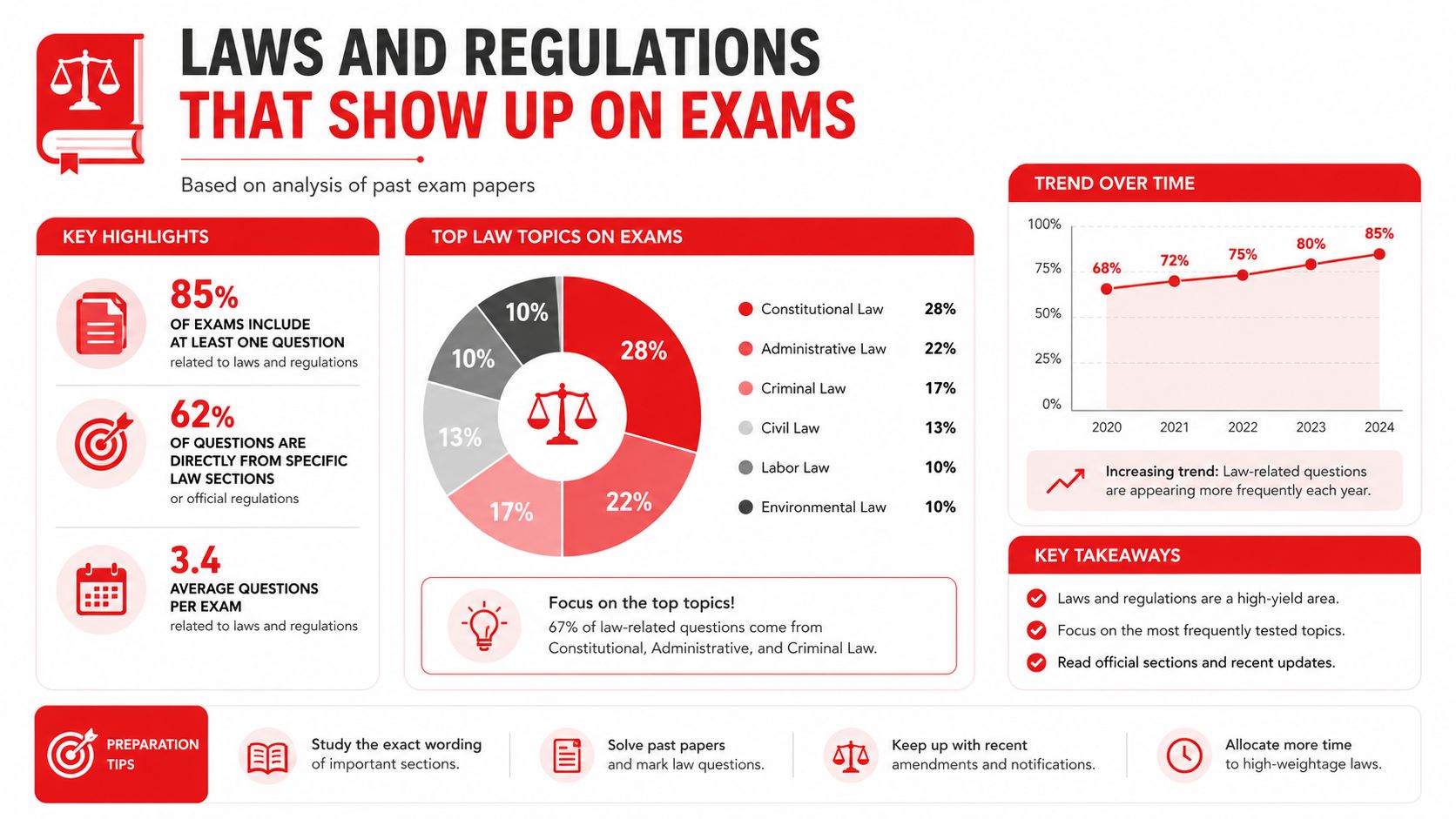
Laws and Regulations That Show Up on Exams
A resident opens a question about a hospital employee and assumes it is only infection control. The better move is to ask what the stem is really testing. Board writers often hide law inside routine care, then ask who investigates, who enforces, or what should be recorded after an incident. The right answer usually depends on whether you can separate OSHA from NIOSH.
Know who does what
OSHA is the enforcement arm. NIOSH is the research and recommendation side. That split is a common exam trap, especially when the question asks about inspections, citations, or workplace standards. If the stem is about surveillance, prevention science, or recommendations, NIOSH fits. If the stem is about regulatory action, citations, or employer compliance, OSHA is the name to remember.
The historical trend helps anchor the legal material. OSHA reports that worker deaths fell from about 38 per day in 1970 to 15 per day in 2023, and worker injuries and illnesses dropped from 10.9 incidents per 100 workers in 1972 to 2.4 per 100 in 2023 (OSHA data). OSHA also reports that in FY 2024 it conducted 34,696 federal inspections with roughly 1,850 inspectors responsible for about 130 million workers across more than 8 million worksites (OSHA data). Those figures are less about memorizing numbers and more about seeing that workplace risk still sits on a large scale, even in systems with formal oversight.
Read the vignette for the legal clue
A question may give you a nurse with a needlestick, a machinist with an amputation, or a painter with chronic symptoms, then ask what happens next. The legal answer is often documentation, reporting, or referral through the proper workplace process. If the stem mentions a recordable injury or employer surveillance, think about incident reporting and workplace documentation before you drift into treatment only.
Test-day shortcut: if the answer choices include a regulator, a research institute, and an insurer, match the action to the institution's job before you match it to the disease.
Clinical Case Vignettes and How to Solve Them
A strong occupational question usually gives you one big clue and a few decoys. The trick is to ignore the decoys until you've locked onto the exposure. Work through the stem the way you would on rounds, starting with the job title, then the task, then the symptom timing, then the most likely diagnosis.
1. Construction worker with progressive dyspnea
A 58-year-old man who spent decades cutting stone and mixing concrete comes in with slowly worsening shortness of breath and a dry cough. The key clue is the dust history, not the generic pulmonary complaint. On exam, the work history should push you toward a pneumoconiosis pattern, and the next move is to connect the symptom to the exposure rather than to overcall infection or heart failure.
2. Farmer with acute cholinergic symptoms
A farm worker develops salivation, tearing, diarrhea, and muscle twitching after spraying a field. The immediate pattern matters more than the crop. If the stem shows a pesticide exposure with acute cholinergic signs, the diagnosis should jump out before you start shopping for rare neurologic causes.
3. Battery factory employee with abdominal pain
A worker who handles lead products reports abdominal pain, fatigue, and numbness. That combination should make you think about a heavy metal exposure, especially when the job is industrial and repetitive. The board-style mistake is to treat the abdomen as the main system and forget to ask what's in the workplace.
4. Healthcare worker with a needlestick injury
A trainee sustains a needlestick while drawing blood. Many students focus only on the wound, but the exam is usually testing exposure-response thinking and infection prevention. The best answer often involves immediate post-exposure steps, documentation, and follow-up rather than waiting for symptoms.
5. Office worker with building-related illness
A desk worker develops headaches, eye irritation, and cough that improve when away from work. That pattern points away from a single infectious diagnosis and toward a building-associated exposure or irritant pattern. When symptoms improve on days off, the stem is telling you the environment matters.
A reliable way to solve these vignettes is to ask three questions in order:
- What is the exposure?
- What organ system is being affected?
- Does the timing fit acute toxicity, chronic disease, or work-aggravation?
If you can answer those three, the distractors get much weaker. The rest is just choosing the option that best matches the exposure history, not the most dramatic diagnosis in the list.
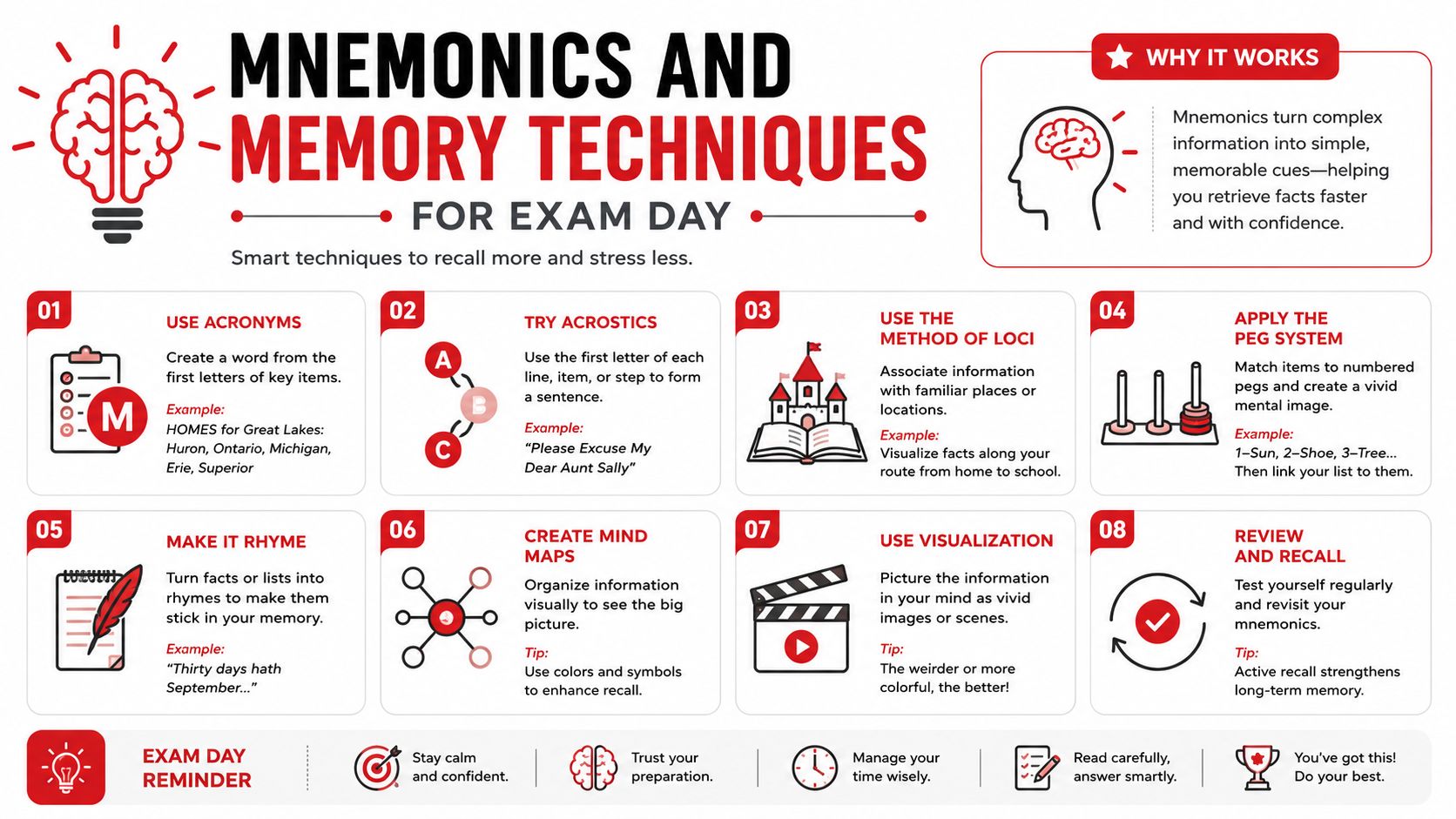
Mnemonics and Memory Techniques for Exam Day
Memory tricks work best when they match the exam's logic. On board questions, the clue usually starts with the workplace, then points you to the exposure, and only then to the diagnosis or next step. A small set of repeatable cues keeps you moving through that sequence without freezing under time pressure.
Start with the job, then ask what entered the body
A faster opening move is to name the setting before you name the disease. Factory, farm, office, clinic, or construction site usually tells you more than the symptom list does. That shift matters because occupational questions often reward the exposure history, not a memorized organ system.
For the hierarchy of controls, keep the order clear. Elimination comes first, then substitution, then engineering, then administrative controls, and PPE sits at the end as the least protective option. If a question asks for the best prevention step, choose the highest feasible level instead of reaching straight for a mask or glove.
For the pneumoconioses, use the workplace clue as the anchor. Stone and sand point toward silicosis, asbestos-heavy trades point toward asbestosis, and coal work points toward coal worker's pneumoconiosis. That pattern is easier to remember than a long definition, because the exam usually gives you the job first and the diagnosis second.
Keep a short exposure-history script
A short script helps when the stem feels crowded. Ask:
- Who works where?
- What do they handle or inhale?
- When did symptoms start relative to the job?
- What improves when they are away from work?
This is the same logic used in memory retention techniques, because repeated retrieval works better than rereading long lists. The boards love this structure since it turns a vague complaint into a cause-and-effect chain. It also helps you catch the common twist where symptoms begin after a new assignment, a new chemical, or a change in protective equipment.
Make the toxicology stick
Memory rule: if the stem gives you a factory, a farm, or a workshop, start with the exposure source before you commit to the organ system.
That rule keeps you from chasing the wrong diagnosis when the setting is doing most of the work. A worker with abdominal pain, fatigue, and numbness may look like a GI or neurologic problem at first glance, but the job history often points you toward the true cause. The exam likes that kind of misdirection, so the safest habit is to ask what the person breathes, touches, or carries home from work.
For review, the best mnemonic is the one you can reproduce under pressure. If you can recall the control ladder, the dust patterns, and the four-question exposure script, you will solve more questions than a student who memorizes a pile of unrelated phrases. The goal is not to sound clever. The goal is to retrieve the right pathway fast.
Screening and Prevention Strategies for Board Questions
Board exams like prevention because it tests whether you can think beyond the one patient in front of you. A screening question may ask what should be checked before exposure begins, what should be followed during work, or what should happen after a high-risk event. The best answer is usually the one that matches the hazard, the timeline, and the level of prevention.
Match the screen to the hazard
Some questions are about baseline fitness for duty, while others are about surveillance after exposure. Audiometry belongs with noise, pulmonary function testing belongs with dust or airway irritants, and biomonitoring belongs with certain chemical exposures. The important skill is not memorizing every schedule, it's matching the test to the risk.
That same pattern appears in employer surveillance. Occupational health reviews often track non-fatal work-related injuries and illnesses reported by employers, plus lost-time accidents, serious accidents, and fatalities. Guidance on occupational reporting emphasizes clear definitions, broad coverage, and quality checks, because inconsistent reporting makes comparisons weak and trend analysis unreliable.
Think in primary, secondary, and tertiary prevention
Primary prevention removes the hazard or reduces the chance of exposure. Secondary prevention catches the problem early, often before symptoms become severe. Tertiary prevention limits harm after injury or disease has already occurred. If you keep those three layers straight, the prevention questions become much easier to sort.
Board-style move: when the stem asks about prevention, choose the option that acts before disease is established if the patient is still asymptomatic.
Use screening as a systems question
A workplace screen is not just about one person. It's about the population of workers who share the same exposure. That's why occupational health questions often feel broader than standard outpatient medicine. The exam wants you to recognize that testing, reporting, and return-to-work decisions are all part of reducing downstream injury.
For infection-related occupational problems, the same logic applies to exposure control, documentation, and follow-up, which is why it helps to review infection control protocols alongside occupational exposure questions. The two topics overlap in practice, and exam writers know that overlap well.
Your Targeted Study Plan for Occupational Health Mastery
A smart study plan treats occupational health like a high-yield mini-system, not a random add-on. The fastest gains usually come from repeated exposure to stems, not passive reading. If you're short on time, focus on the pattern types that recur most often, then drill them until the job clue feels automatic.
Week 1
Start with the occupational history, the hierarchy of controls, and the major exposure categories. Do 10 to 15 mixed questions a day and tag every miss by clue type, not just by disease name. If you keep missing the same exposure pattern, that's your weak spot, not your memory.
Week 2
Move into toxicology and the classic organ-system pairings. Read each missed question aloud and force yourself to say the job clue first, then the diagnosis. That habit trains the exact reasoning board questions reward.
Week 3
Add prevention and reporting questions. Look for stems that ask what should happen next, who should be notified, or what kind of monitoring belongs after exposure. These are often easier than they look once you've learned to spot the action word.
Final review
Use one short mixed set, then review only the misses. Don't reopen every note you've ever made, because that usually turns into passive rereading. The goal is to turn the occupational clue into an automatic trigger, so the answer feels familiar within seconds.
If occupational health keeps slipping past you in question blocks, Ace Med Boards can help you turn those missed stems into a repeatable framework. Visit Ace Med Boards for focused exam prep that helps you work through toxicology, prevention, and board-style clinical reasoning with more confidence.