

A solid Step 3 study schedule is a realistic plan, usually spanning four to eight weeks, that fits your prep time around your residency duties. The whole game is about focusing on high-yield resources like UWorld for the multiple-choice questions and getting comfortable with the unique Clinical Case Simulations (CCS) format.
How Long Should I Study for Step 3? A Data-Backed Guide
Let’s answer the question you actually came here with: How long should I study for Step 3? For most IMGs and residents, the standard is 4-8 weeks, assuming you can put in 2-3 focused hours daily. That’s the sweet spot that covers the material without overwhelming your residency duties.
I’ve seen residents fail because they treated Step 3 like Step 2, studying for 6 months when 6 weeks was sufficient. The exam is different—it’s more about clinical judgment and biostats than brute-force memorization. The average passing score is around 228, and the first-attempt pass rate for U.S. grads is roughly 97%. But don’t let that lull you into complacency; the exam still demands a structured, consistent effort.
Official USMLE materials describe Step 3 as a two-day examination assessing knowledge needed for unsupervised medical practice. Day 1 focuses on foundations of independent practice and includes approximately 232 multiple-choice questions; Day 2 includes approximately 180 multiple-choice questions and 13 to 14 computer-based case simulations. The total question volume is therefore about 412 multiple-choice items, in addition to the case simulations. Source
USMLE Step 3 preparation is commonly planned over approximately 2 to 6 months, reflecting the reality that most examinees are residents balancing study with clinical responsibilities. A shorter two-month schedule may be reasonable for a resident who recently completed Step 2 CK, has strong general medical knowledge, and can maintain a consistent daily study routine. A longer six-month timeline can be more practical for international medical graduates, examinees returning to foundational science after several years, or residents with demanding call schedules. The most effective schedule is usually one that adapts to your performance data, not just calendar time. Source
Structuring Your Step 3 Study Timeline
Before you even think about opening a question bank, let’s get one thing straight. Step 3 is an exam you study for during residency, not in some magical, stress-free bubble. This isn't about locking yourself in a library for a month.
It’s about weaving smart, efficient prep into an already jam-packed life of long hours, clinical responsibilities, and a constant, desperate need for sleep. Your success hinges entirely on building a framework that works with your life, not against it.
This early planning stage is all about setting realistic expectations. The goal isn't just to pass, but to do it without completely burning out. That means being brutally honest about your upcoming rotations, personal commitments, and energy levels.
Laying the Groundwork for Success
First up, you need a clear picture of what you're facing. Step 3 is a two-day marathon. Most residents find that four to eight weeks is the sweet spot to cover everything without overwhelming their residency demands.
Day one throws 232 multiple-choice questions at you. Day two follows with another 180 MCQs and 13 Clinical Case Simulations, which really test your practical skills. To handle all that, you’ll need to master core resources like the UWorld question bank within your chosen timeframe.
Your specialty also makes a huge difference. An internal medicine resident will have a different starting point for the MCQs compared to a surgery resident. Pinpointing your natural strengths and weaknesses from day one helps you spend your precious time where it counts the most.
Choosing Your Timeline Wisely
The single most important decision you'll make is how long you're going to study. This isn't a one-size-fits-all answer; it's a personal calculation based on your life.
Here's a quick rundown of the common paths:
- The 4-Week Sprint: This is for residents on a lighter rotation, like an elective or research block. It demands intense, focused effort with several hours of study baked into every single day.
- The 8-Week Marathon: This is a much more common and sustainable approach, especially if you're on a tough rotation like ICU or surgery. This pace lets you chip away with 1-2 hours on workdays and save longer sessions for the weekends.
A classic mistake is drafting a super ambitious schedule that completely implodes after the first week of a brutal rotation. Be honest with yourself. It's far better to plan for a sustainable 8-week marathon than to fail at a 4-week sprint.
Matching Your Timeline to Your Residency Life
Use this self-assessment to find a study duration that aligns with your clinical demands and personal goals.
| Your Current Reality | Suggested Study Timeline | What to Prioritize |
|---|---|---|
| On a light elective or research block with predictable hours and low stress. | 4-6 Weeks | High-volume question practice (UWorld), mastering CCS cases, and taking full-length practice exams early. |
| Juggling a moderately busy rotation (e.g., outpatient clinics, general wards) with some weekend time. | 6-8 Weeks | Consistent daily study chunks, deep review of incorrects, and integrating CCS practice from the start. |
| In the middle of a demanding rotation like ICU, surgery, or nights with long, unpredictable hours. | 8-12 Weeks | Focus on survival. Use downtime for flashcards/apps, protect your days off for longer study sessions, and be flexible. |
| Have significant personal commitments (e.g., family, new baby, moving) on top of residency. | 10-12+ Weeks | A low-and-slow approach. Make very small, achievable daily goals to maintain momentum without adding stress. |
Choosing the right timeline is about being realistic, not heroic. An honest assessment here will save you a world of pain later on.
To make the most of your limited time, think about using some proven priority management systems to structure your days. The key is to find a rhythm that gets you through the material without leading to burnout. For a much deeper dive into building your schedule, check out our complete guide on how to study for USMLE Step 3.
Building Your High-Yield Resource Toolkit
An amazing study schedule is useless without the right resources to power it. But here's a trap I've seen countless residents fall into: they try to collect a massive library of every study aid imaginable. This is a huge mistake.
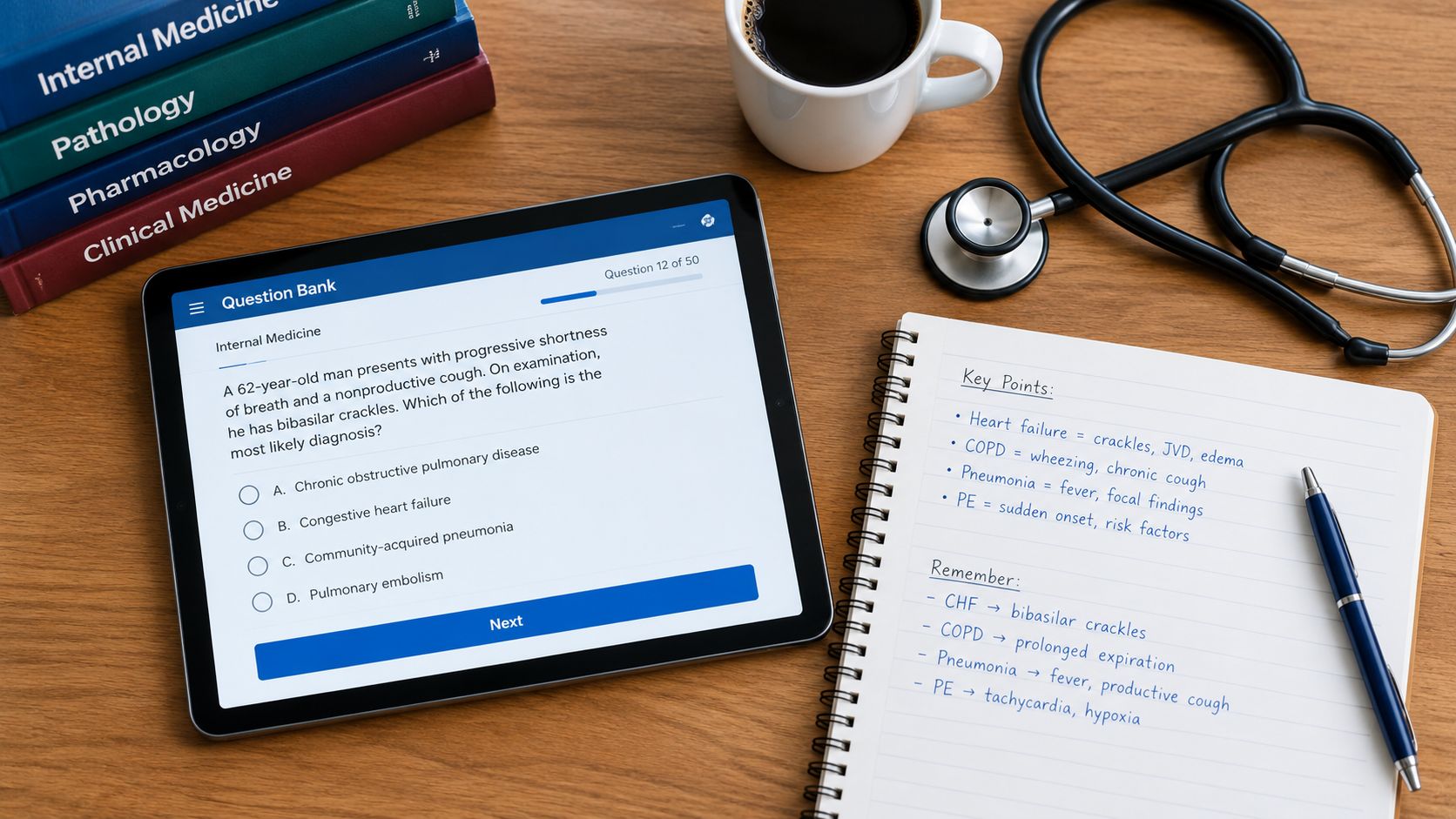
Spreading yourself too thin across a dozen different resources dilutes your focus and wastes time you do not have. Instead, aim to build a lean, powerful toolkit you can master. Start with a core set of essential tools, and add a few strategic supplements only where needed.
The Core Components You Cannot Skip
Let's cut right to the chase. At the heart of any successful Step 3 study schedule are two resources from UWorld: their Qbank and their integrated CCS cases. These aren't just "recommended". They are the gold standard, and you should not skip them.
- UWorld Qbank: This is your primary engine. The questions are notorious for mirroring the exam's difficulty and style, but the explanations are where the learning happens. Your goal should be to get through one full, focused pass of the entire Qbank. Don't just answer questions; dissect every right and wrong answer choice until you understand the "why."
- UWorld CCS Cases: The Primum® Computer-based Case Simulations (CCS) are a huge, heavily weighted part of Day 2. They're also weird if you've never practiced them. UWorld's simulation is fantastic for mastering the software's interface and timing, which is just as important as the medical knowledge itself on exam day.
You'll be spending a lot of time with this interface, so get familiar with it. It integrates both the Qbank and the CCS cases, making it easy to track your progress and hammer your weak spots.
Smart Supplemental Resources
Once you have UWorld locked down, you can consider adding one or two high-impact resources to fill very specific gaps. Resist the temptation to add more just for the sake of it.
Think of these as specialized tools. Is biostatistics making your head spin? The Randy Neil biostatistics videos on YouTube are legendary for a reason. I tried them myself, and they cut my study time by about 30%. He makes complex concepts click in a way that sticks. They are concise and ridiculously high-yield.
Avoid "resource overload" at all costs. I've seen residents armed with just UWorld and a solid grasp of biostats outperform those who dabbled in five different Qbanks and three review books. For Step 3, depth of knowledge beats breadth every single time.
What about after you've worked through all the UWorld CCS cases and still feel a little shaky? That's a perfect time to add a subscription to a platform like ccscases.com. It offers a ton of extra cases to help you build the muscle memory you need to fly through the software on exam day without a second thought.
Designing Your Personalized Study Calendar
Alright, the rubber meets the road. It’s time to turn your high-level strategy into a real, day-by-day calendar. Forget those generic, one-size-fits-all templates you find online, they’re brittle and tend to shatter the first time you get stuck on a long call day.
Your Step 3 study schedule has to be a living, breathing document. It needs to bend with the chaos of residency, not break. Whether you’ve carved out three intense weeks on an elective or you’re staring down ten grueling weeks in the ICU, the core principles are the same. We're building a system you can stick to, one based on consistency, not impossible daily goals.
Mapping Out Your Study Blocks
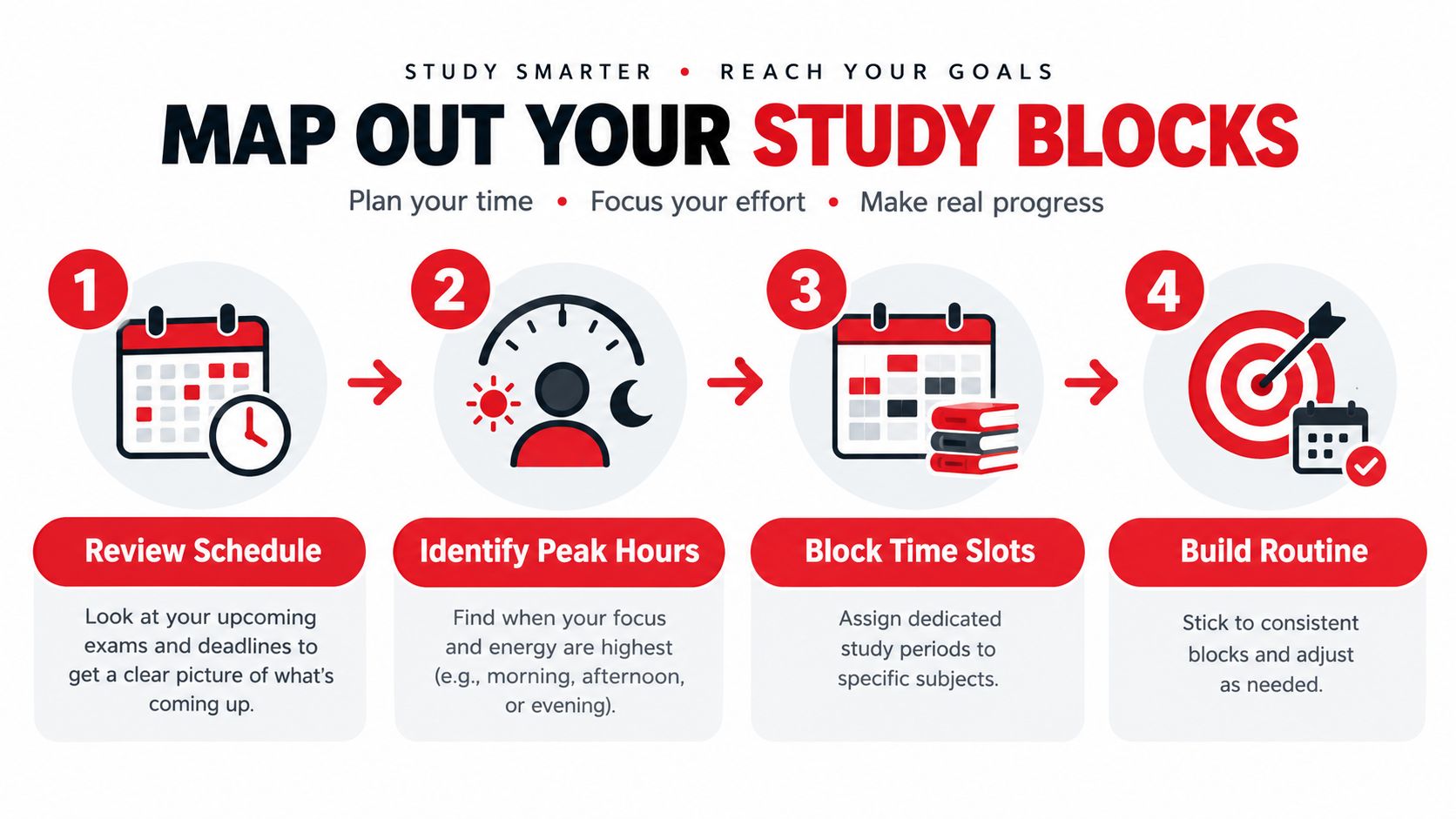
The most practical way to build this schedule is through block-based scheduling. Instead of just telling yourself you’ll "study after work" (we all know how that goes), you're going to assign specific tasks to dedicated, protected time slots. It’s a simple mental shift, but it makes your goals tangible and keeps you honest.
Think about the "found time" in your day. Your commute could easily become a high-yield biostats audio review. That thirty minutes of downtime waiting for a consult? Perfect for hammering out ten UWorld questions on your phone.
A solid study schedule is almost always built on a mountain of practice questions. A common and effective strategy is to aim for a total of around 2,300 practice questions. If you’re on a compressed three-week timeline, that might mean tackling about 150 questions per day. This pace can feel surprisingly manageable, especially for recent grads, since so much of the content is a direct overlap from Step 2 CK.
Grab a digital calendar like Google Calendar or even a simple spreadsheet. The first thing you do is block out all your non-negotiables: clinical shifts, call days, commute times, and protected time for sleep and meals. Whatever is left over is your potential study real estate.
This visual guide breaks down how to translate your topic list and available hours into a structured, actionable calendar.
As the graphic shows, this isn't just about filling empty slots. It’s a deliberate process that moves from big-picture planning to the nitty-gritty of daily scheduling, making sure every study session has a clear purpose while ensuring you don't burn out.
A Sample 6-Week Study Structure
Let's walk through what this looks like with a balanced 6-week plan. This framework is designed for a resident on a moderately busy rotation who is prioritizing consistency over cramming.
Here’s how you might structure a typical week to balance clinical duties with effective Step 3 prep.
A Week in the Life: A 6-Week Study Plan Example
| Day | Pre-Rounds or Commute | Post-Shift Study Block | Primary Goal |
|---|---|---|---|
| Mon | 15-20 UWorld Qs (Tutor Mode) | 20-25 UWorld Qs + Review | 1 UWorld block (40 Qs) |
| Tues | Biostats Podcast (Divine) | 40 UWorld Qs + Review | 1 UWorld block (40 Qs) |
| Wed | Review incorrects from Tue | 40 UWorld Qs + Review | 1 UWorld block (40 Qs) |
| Thur | Review CCS Cases (Notes) | 40 UWorld Qs + Review | 1 UWorld block (40 Qs) |
| Fri | Catch-up/Review Weak Topics | Light Review/Plan Weekend | Weekly Wrap-Up |
| Sat | Protected Morning Block | Rest / Non-Medical Time | 2 UWorld blocks (80 Qs) |
| Sun | Protected Morning Block | Prep for the Week Ahead | 3-5 CCS Cases (Timed) |
This structure dedicates weekend mornings to the heavy lifting—your big question blocks and focused CCS case practice. Weekdays are about chipping away with smaller, more manageable chunks of questions before and after your shifts.
This block-based approach transforms studying from a single, monumental task into a series of small, achievable wins. The real key is to protect these blocks with the same ferocity you would any other important appointment.
For anyone looking to really fine-tune their schedule, diving into advanced time management resources can be highly effective. For example, learning about tools that help with success with Calendly can provide powerful insights into optimizing your study blocks. Automating the planning process frees up precious mental energy that is much better spent on actual studying.
Developing a Winning CCS Case Strategy
Let’s be honest—the Clinical Case Simulations (CCS) are what keep most residents up at night. They make up a huge chunk of your Day 2 score, and the interactive format feels completely alien compared to any multiple-choice exam you’ve ever taken. This section is your dedicated CCS game plan.

These simulations aren't just about knowing the medicine. They’re about proving you can manage a patient in a timed, simulated environment. The scoring is a bit of a black box, but it clearly rewards systematic thinking, timely interventions, and getting the patient to the right place.
Demystifying The CCS Interface And Scoring
The first step to crushing CCS is getting comfortable with the software. It’s clunky, not intuitive, and fumbling with it on exam day will cost you precious minutes and points. Dedicate your first few practice sessions to just learning the mechanics without a clock ticking down.
You have to master the two clocks:
- Real-Time Clock: This shows how many actual minutes (10 or 20) you have left to finish the case.
- Simulated Time Clock: This jumps forward as you order tests and treatments, showing how the patient is progressing. Managing this clock is the secret to demonstrating effective care.
Scoring really comes down to hitting critical checkpoints in patient management. Did you stabilize an unstable patient before ordering that definitive CT scan? Did you give pain relief while waiting on lab results? These logical, well-timed actions are what build your score.
The biggest mistake is treating CCS cases like a scavenger hunt for the right diagnosis. Instead, think of it as managing a real patient. Your primary goal is to stabilize, investigate logically, treat, and move them to the correct level of care.
Building A Repeatable System
Confidence on CCS comes from having a reliable, systematic approach you can apply to any case, whether it’s a simple outpatient follow-up or a patient crashing in the ER.
Here’s a framework to practice until it’s second nature:
- Initial Assessment (First 2 Minutes): Quickly scan the initial vignette. Your first move should be ordering immediate stabilizing treatments (think oxygen, IV fluids, pain meds) and a focused physical exam.
- Broad Initial Orders: Get your first round of labs and imaging in. These should be appropriate for the chief complaint, not a "shotgun" approach where you order every test imaginable.
- Advance the Clock: Move time forward in small jumps to get results back. Then, react to the new information as it comes in. This is a cycle, not a one-time step.
- Refine and Treat: Based on those initial results, start narrowing your differential diagnosis, order more specific tests, and begin definitive treatment.
- Final Disposition: Once the patient is stable and a solid plan is in place, move them to the right setting—discharge home, admit to the ward, or transfer to the ICU.
This methodical process ensures you don't miss critical steps. Start with untimed cases to build this muscle memory, then gradually pick up the pace until you can complete cases within the time limit. Incorporating this practice is an essential part of any successful Step 3 study schedule.
To get a feel for the types of clinical scenarios you'll face, exploring a variety of USMLE Step 3 practice questions can be helpful. This helps you connect the MCQ knowledge base with the practical application required for the cases.
Using Your Data to Adapt and Improve
Your Step 3 study schedule isn't something you carve in stone and follow blindly. The best plans are living, breathing documents. Think of it as a roadmap that needs to change based on what you discover on the journey.
This means you have to become a pro at using your performance data as a diagnostic tool. It’s so easy to get fixated on that big, overall UWorld percentage, but deeper analytics hold the most valuable insights. Are you constantly fumbling questions on outpatient medicine? Or maybe specific biostats concepts, like number needed to treat, are tripping you up every single time?
Now you need to dig in. Your goal is to spot these patterns and make surgical adjustments to your plan. If your scores are tanking in one area, that's your signal to reallocate time. Maybe you swap a general review session for a focused deep dive into that one nagging topic.
Interpreting Your Practice Exam Scores
Practice exams, especially the UWorld Self-Assessments (UWSA 1 and 2), are more than just score predictors, and they are critical milestones. What matters is not only that three-digit number, but also the detailed performance feedback you receive. After you take one, block out serious time to review every single question, not just the ones you got wrong.
A detailed review lets teams make smart, data-driven changes in the final weeks.
- Weak Content Areas: Did you score way lower in obstetrics or surgery? Time to pencil in a few extra study blocks for those subjects.
- Question Type Struggles: Are you missing a ton of "next best step" questions? This could point to an issue with clinical decision-making, signaling a need for more CCS case practice.
- Timing Issues: Did you run out of the clock on a block? The solution is simple but effective: practice doing timed sets of 40 questions to build your pacing and stamina.
Historically, the pass rate for Step 3 is quite high for U.S. grads—around 97% pass on their first try, with the average score hovering near 228. But don't let that lull you into a false sense of security. If your previous Step scores were in the 200-220 range, you absolutely need to invest more dedicated study time. Step 3 hits clinical judgment and biostats hard. You can find more real-world insights on Step 3 performance statistics on Student Doctor Network.
Recognizing and Managing Burnout
Finally, let's talk about the most underrated skill in this whole marathon: knowing when you're hitting a wall. Pushing through exhaustion is completely counterproductive. You won't retain information, and you’ll just show up to the real exam already running on empty.
Your schedule has to be flexible. It needs catch-up days built in, but more importantly, it requires the wisdom to know when an extra hour of sleep is a better investment than one more block of questions. Staying sharp is about recovery, not just relentless effort.
If you’re consistently falling behind or feel completely overwhelmed, that’s a signal to adjust your schedule, not to grind harder. A great strategy is to build one buffer day into each week. Use it to handle unexpected chaos at the hospital or to rest. This proactive approach ensures you walk into your test sharp and ready, not drained and defeated.
Frequently Asked Questions
How many weeks should I study for Step 3?
Most residents need 4-8 weeks of dedicated preparation. If you're on a light rotation, 4 weeks can work with intense daily effort. On a busy rotation like ICU or surgery, plan for 8-12 weeks to avoid burnout.
How much time per day do I need to study for Step 3?
For a standard 6-8 week schedule, aim for 2-3 focused hours on workdays and 4-6 hours on weekends. Consistency beats cramming every time.
How long does it take to study for Step 3 as an IMG?
IMGs often need more time—typically 8-12 weeks—especially if you've been out of medical school for several years or have a demanding schedule. A longer timeline lets you rebuild foundational knowledge while managing other commitments.
How long do I need to study for Step 3 if I just took Step 2 CK?
If Step 2 CK is fresh, you can often get away with 4-6 weeks. The content overlap is significant, so you can move faster through the question bank and focus more on CCS practice.
Is 2 months enough to study for Step 3?
Yes, 2 months (8 weeks) is the most common and sustainable timeline for most residents. It allows you to balance clinical duties with steady, daily study without the pressure of a 4-week sprint.
How many hours a day should I study for Step 3 on a busy rotation?
On a demanding rotation, aim for 1-2 hours on workdays and protect 4-6 hours on your days off. Quality matters more than quantity—focus on UWorld blocks and CCS practice. A steady routine is your best defense against that overwhelmed feeling, which is often the first step toward USMLE exam burnout.
When should I start studying for Step 3?
Start 6-8 weeks before your exam date. If you're on a busy rotation, start earlier at 8-12 weeks. The key is to begin with a realistic assessment of your upcoming schedule.
Should I take Step 3 during intern year?
Most residents take it during PGY-1 while Step 2 CK knowledge is still fresh. The sweet spot is during a lighter rotation like an elective or research block, where you can protect your study time.
At Ace Med Boards, our expert tutors help you build a personalized study plan that fits the realities of residency. We focus on high-yield strategies to maximize your score without sacrificing your sanity. Get a free consultation today and take the final step with confidence.