
The USMLE Step 1 isn't just a test of knowledge; it's a marathon of clinical reasoning, pattern recognition, and strategic thinking under pressure. Many students know the facts but falter when applying them to complex, multi-step vignettes. This guide moves beyond simple memorization by dissecting 10 high-yield, board-style questions spanning the core disciplines. We reveal the underlying pathophysiology and, more importantly, the test-taking strategies needed to consistently identify the correct answer while deftly avoiding common distractors.
By analyzing each step 1 sample question, you will learn to think like the test-makers, pinpointing critical clues buried in the question stem and seamlessly connecting basic science concepts to clinical presentations. This isn't just another question bank; it's a strategic blueprint for building the analytical skills that lead to a top-tier score. A crucial part of any strategic guide to acing exams involves learning how to effectively make study guides that truly boost comprehension and retention for exam day.
Throughout this breakdown, you will gain actionable insights into how to approach different question types, from classic presentations of acute myocardial infarction to atypical infectious disease cases. Our goal is to equip you with a replicable method for deconstructing any question, ensuring you are prepared not just to pass, but to excel.
1. Acute Myocardial Infarction with Atypical Presentation in Diabetic Patient
A classic high-yield step 1 sample question involves a patient with a known comorbidity, like diabetes mellitus, presenting with an atypical constellation of symptoms for a common, life-threatening condition. This scenario tests your ability to look beyond textbook presentations and integrate pathophysiology with clinical reasoning. The key challenge is recognizing an acute myocardial infarction (MI) when the hallmark symptom, crushing chest pain, is absent.

This question type is crucial because it mirrors real-world clinical complexity. Long-standing diabetes often leads to autonomic neuropathy, which can blunt visceral pain sensation. As a result, a patient experiencing an MI might only report vague symptoms like fatigue, nausea, shortness of breath, or profuse sweating. The USMLE loves to test this concept to ensure future physicians maintain a high index of suspicion in at-risk populations.
Strategic Breakdown
- Clinical Vignette Insight: The prompt will provide clues: a history of poorly controlled diabetes, other microvascular complications (retinopathy, nephropathy), and symptoms that are anginal equivalents.
- Diagnostic Integration: You'll need to connect the patient's vague symptoms to the need for an immediate EKG and cardiac biomarker testing (troponins). The question might show an EKG with ST-segment elevations and ask for the underlying mechanism or next best step.
- Pathophysiology Link: The core concept is diabetic autonomic neuropathy affecting cardiac afferent nerve fibers, leading to a "silent MI."
Actionable Takeaways
- Suspect Ischemia Widely: In any patient with significant cardiac risk factors (especially diabetes, advanced age, or female sex) presenting with new-onset dyspnea, diaphoresis, or epigastric discomfort, keep MI high on your list of possibilities. Sharpening this skill is essential for developing a strong differential diagnosis.
- Master EKG Patterns: Be able to rapidly identify STEMI vs. NSTEMI and localize the infarction based on the leads showing ST changes.
- Know Biomarker Kinetics: Understand the rise and fall times for troponin and CK-MB. A question might give a timeline and ask which marker would be most useful.
2. Hypersensitivity Reaction with Anaphylaxis in Perioperative Setting
A frequently encountered step 1 sample question tests the immediate recognition and management of a Type I hypersensitivity reaction, specifically anaphylaxis, in a high-stakes setting like surgery. This scenario evaluates your grasp of immunology, pharmacology, and acute patient care. The challenge lies in rapidly identifying the clinical signs of anaphylaxis and selecting the correct first-line treatment from a list of plausible but incorrect options.
This question type is essential as anaphylaxis is a medical emergency requiring swift, decisive action. The USMLE will often present a patient who receives an IV antibiotic (e.g., a cephalosporin) or another agent and minutes later develops hypotension, tachycardia, wheezing, and urticaria. Understanding the underlying mechanism, from IgE cross-linking on mast cells to the massive release of histamine and other vasoactive mediators, is key to answering questions about pathophysiology and treatment.
Strategic Breakdown
- Clinical Vignette Insight: The prompt will emphasize the acute timing between drug administration and symptom onset. Key signs will include respiratory distress (stridor, wheezing), cardiovascular collapse (hypotension), and skin findings (hives, angioedema).
- Diagnostic Integration: You must immediately recognize the pattern as anaphylaxis. The question will likely ask for the single most important initial step in management, forcing you to prioritize among several correct but secondary actions.
- Pathophysiology Link: The core concept is a Type I (Immediate) Hypersensitivity reaction mediated by pre-formed IgE antibodies. This triggers mast cell degranulation, releasing mediators like histamine, tryptase, and leukotrienes.
Actionable Takeaways
- Epinephrine is Always First: In any question describing anaphylaxis, the immediate administration of intramuscular epinephrine is the correct answer. Antihistamines and corticosteroids are adjunctive therapies, not the first-line treatment for life-threatening symptoms. This is a critical point that requires sharp clinical reasoning.
- Memorize Cross-Reactivity: Understand the potential for cross-reactivity, particularly between beta-lactam antibiotics. For example, while low, there's a recognized risk when giving a first-generation cephalosporin to a patient with a severe penicillin allergy.
- Distinguish Anaphylaxis: Be able to differentiate anaphylaxis from other causes of perioperative hypotension, such as vasovagal reactions, anesthetic effects, or hemorrhage. The combination of hypotension with respiratory and cutaneous symptoms is the classic triad for anaphylaxis.
3. Infectious Disease with Atypical Chest X-Ray Findings and Systemic Manifestations
Another high-yield step 1 sample question focuses on an immunocompromised patient, typically with HIV/AIDS, presenting with respiratory distress and atypical imaging. This scenario tests your ability to connect a specific CD4 count threshold with the most likely opportunistic infection, even when classic signs are subtle. The challenge lies in recognizing diseases like Pneumocystis jirovecii pneumonia (PCP) from vague symptoms and non-specific chest X-ray findings.
This question type is essential as it evaluates your integrated knowledge of microbiology, immunology, and pharmacology. The USMLE frequently presents patients with low CD4 counts (e.g., <200 cells/μL) and symptoms like a dry cough, fever, and progressive dyspnea. The vignette may describe a chest X-ray with bilateral "ground-glass" opacities or even a normal X-ray, forcing you to rely on other clinical clues and lab values to make the diagnosis.
Strategic Breakdown
- Clinical Vignette Insight: The prompt will always specify the patient's immune status, most critically the CD4 count. Pay close attention to this number, as it dramatically narrows the differential diagnosis. A high LDH level is a classic clue for PCP.
- Diagnostic Integration: You must connect the CD4 count to the likely pathogen. For instance, a CD4 count <200 strongly suggests PCP, while a count <50 brings CMV or MAC into play. The question will ask for the diagnosis, mechanism of the treatment drug, or the criteria for starting prophylaxis.
- Pathophysiology Link: The core concept is impaired cell-mediated immunity. A low CD4+ T-helper cell count cripples the body's ability to fight off intracellular and fungal pathogens, leading to opportunistic infections that a healthy person would easily clear.
Actionable Takeaways
- Memorize CD4 Thresholds: Commit key thresholds to memory: <200 for PCP, <100 for Toxoplasmosis, and <50 for MAC and CMV retinitis. This is non-negotiable for quickly identifying the most likely organism.
- Recognize Imaging Clues: While a normal chest X-ray doesn't rule out PCP, be familiar with classic patterns. PCP often presents as bilateral, diffuse ground-glass infiltrates. To get more proficient, it's wise to learn how to interpret chest x-rays effectively.
- Know Prophylaxis and Treatment: Understand that TMP-SMX is used for PCP prophylaxis when CD4 counts drop below 200. It also provides coverage for toxoplasmosis. Be prepared to identify its mechanism of action (inhibiting folate synthesis).
4. Metabolic Disorder with Acute Neurological Manifestations and Abnormal Lab Values
A quintessential step 1 sample question tests the critical intervention sequence for a metabolic emergency. The vignette often features a patient with a history of alcohol use disorder or malnutrition who presents with acute confusion, ataxia, and ophthalmoplegia. This scenario is designed to assess your understanding of Wernicke's encephalopathy, a neurological disorder caused by thiamine (vitamin B1) deficiency. The core challenge is not just diagnosis, but knowing the precise order of treatment to prevent iatrogenic harm.
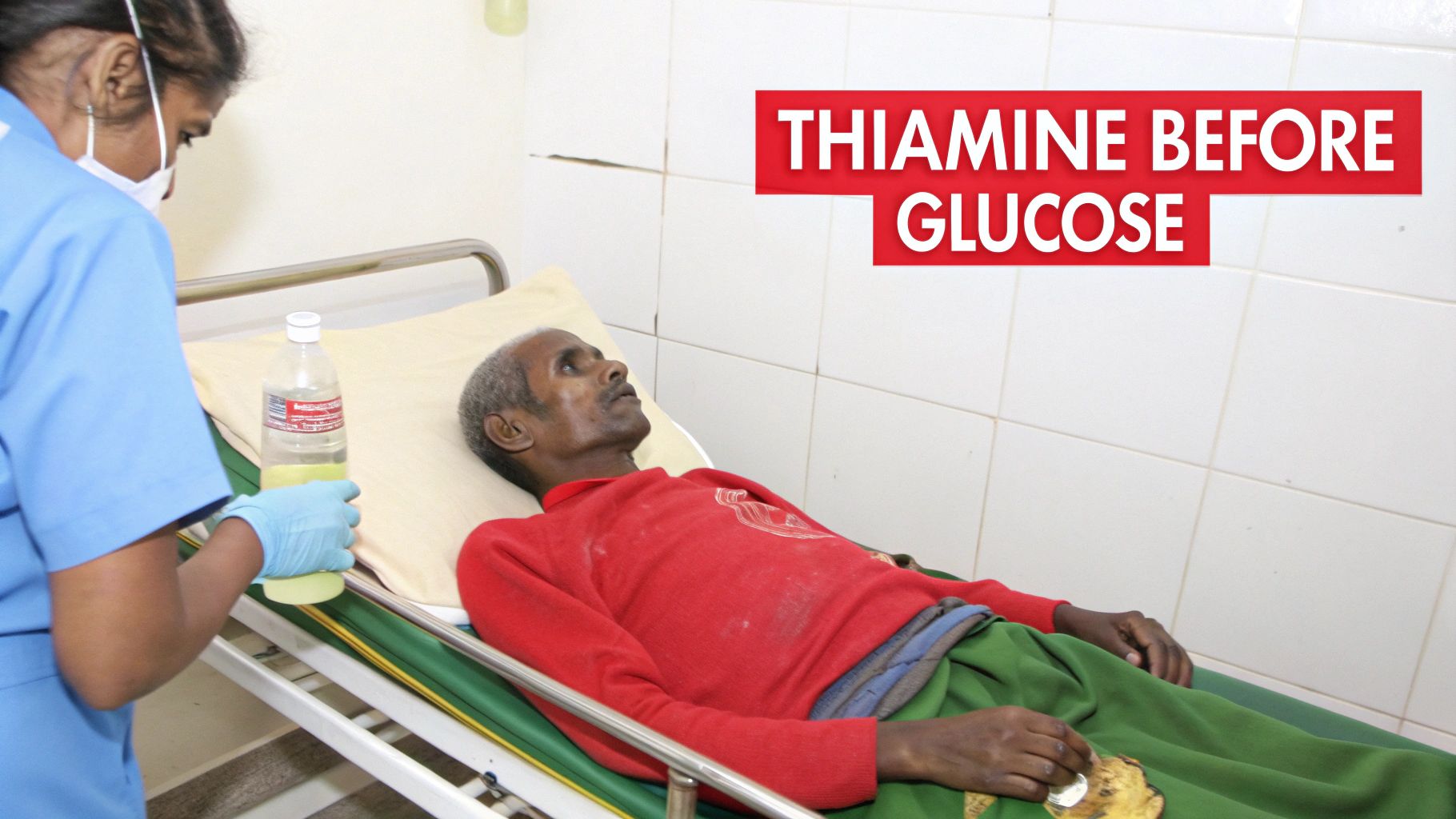
This question is a high-yield topic because it combines biochemistry, neurology, and clinical management into a single, high-stakes decision. Administering glucose before thiamine can precipitate or worsen the encephalopathy. This is because glucose metabolism requires thiamine as a cofactor for key enzymes like pyruvate dehydrogenase. In a thiamine-deficient state, a glucose load rapidly depletes the remaining thiamine, pushing the patient into a more severe neurological crisis.
Strategic Breakdown
- Clinical Vignette Insight: The prompt will provide a classic triad (confusion, ataxia, ophthalmoplegia), though not always complete, in a patient with risk factors like alcohol abuse, hyperemesis gravidarum, or recent bariatric surgery.
- Diagnostic Integration: Connect the clinical picture to thiamine deficiency. The question will hinge on the next best step, forcing you to choose between giving thiamine or glucose first.
- Pathophysiology Link: The core concept is thiamine's role as a cofactor for pyruvate dehydrogenase and α-ketoglutarate dehydrogenase. Without it, aerobic metabolism falters, leading to lactic acidosis and neuronal damage, particularly in the mammillary bodies and periventricular regions.
Actionable Takeaways
- Prioritize Thiamine: In any patient with suspected Wernicke's encephalopathy, the rule is absolute: give thiamine BEFORE glucose. This is a safety-critical concept heavily tested on the USMLE.
- Recognize High-Risk Groups: Be vigilant for thiamine deficiency not only in patients with alcohol use disorder but also in those with malnutrition from any cause, including chronic illness, eating disorders, or post-surgical states.
- Link to Korsakoff Syndrome: Understand that untreated or improperly managed Wernicke's encephalopathy can progress to Korsakoff syndrome, an often irreversible condition characterized by amnesia and confabulation.
5. Renal Pathology with Progressive Proteinuria and Declining Kidney Function
A quintessential step 1 sample question in renal pathology involves a young patient presenting with progressive proteinuria and a slow decline in kidney function. This scenario is designed to test your knowledge of glomerulonephritis, specifically the most common one worldwide: IgA nephropathy (Berger disease). The question will often hinge on interpreting biopsy findings and linking them to clinical progression and management.
This question type is high-yield because it integrates histology, immunology, and clinical medicine. A classic vignette might describe a patient with recurrent gross hematuria following an upper respiratory infection. However, the Step 1 exam often tests the more insidious presentation of progressive renal insufficiency. Recognizing IgA nephropathy's characteristic mesangial IgA deposits on immunofluorescence is key to solving the puzzle.
Strategic Breakdown
- Clinical Vignette Insight: Look for a young adult, often of East Asian descent, with hematuria (microscopic or gross), red blood cell casts, and proteinuria. The presentation can be episodic, often following a mucosal infection (URI or GI).
- Diagnostic Integration: The definitive diagnosis comes from a kidney biopsy. You must be able to identify mesangial hypercellularity on light microscopy and the pathognomonic granular IgA deposits in the mesangium on immunofluorescence.
- Pathophysiology Link: The core concept is the deposition of aberrantly glycosylated IgA1 immune complexes in the glomerular mesangium, which activates complement and triggers inflammation, leading to glomerular damage.
Actionable Takeaways
- Distinguish from Post-Infectious GN: Differentiate IgA nephropathy from post-streptococcal glomerulonephritis (PSGN). IgA nephropathy presents synpharyngitically (hematuria starts within days of infection), while PSGN has a latent period of 1-3 weeks. Biopsy shows IgA deposits in IgA nephropathy, versus IgG and C3 in PSGN.
- Recognize Prognostic Factors: The degree of proteinuria is a critical prognostic marker. Proteinuria >1 g/day, hypertension, and declining GFR suggest a worse prognosis and necessitate more aggressive therapy.
- Know Initial Management: For patients with significant proteinuria, the first-line treatment is an ACE inhibitor or an ARB. These medications reduce intraglomerular pressure and decrease protein excretion, slowing disease progression.
6. Endocrine Disorder Presenting with Cardiovascular Complications in Young Patient
Another high-yield step 1 sample question archetype links an endocrine disorder to a serious systemic complication, often in an unexpected demographic. A common scenario involves a young patient, typically female, presenting with new-onset atrial fibrillation. This question tests your ability to connect the dots between thyroid hormone physiology and its profound effects on the cardiovascular system, particularly beta-adrenergic receptor sensitivity.
This vignette style is effective because it forces you to build a differential diagnosis beyond common cardiac causes in young people. Untreated hyperthyroidism, such as in Graves' disease, dramatically increases the heart's sensitivity to catecholamines. This leads to a hyperdynamic circulatory state characterized by tachycardia, palpitations, and an increased risk of arrhythmias like atrial fibrillation. The USMLE frequently uses this setup to assess your grasp of both pathophysiology and acute management priorities.
Strategic Breakdown
- Clinical Vignette Insight: The prompt will feature a young patient without traditional cardiac risk factors presenting with palpitations, anxiety, tremor, and weight loss. The key finding will be atrial fibrillation on an EKG.
- Diagnostic Integration: You must recognize that hyperthyroidism is a primary cause of secondary atrial fibrillation. The question will probe your understanding of the next steps: TSH and free T4 levels for diagnosis and the immediate need for rate control.
- Pathophysiology Link: The core concept is thyroid hormone's upregulation of beta-1 adrenergic receptors in the myocardium. This increased sensitivity to circulating catecholamines is the direct cause of the patient's tachycardia and arrhythmogenesis.
Actionable Takeaways
- Consider Thyroid in A-Fib: In any young patient presenting with new-onset atrial fibrillation without obvious structural heart disease, thyrotoxicosis should be a top differential. This clinical reflex is essential for both the exam and the wards.
- Differentiate Acute vs. Long-Term Management: Know that beta-blockers (especially propranolol) are used for immediate symptom and rate control. Antithyroid drugs like methimazole or PTU treat the underlying cause but take weeks to become effective.
- Recognize Thyroid Storm Triggers: Be aware that stressors like surgery, infection, or trauma in a patient with untreated hyperthyroidism can precipitate a life-threatening thyroid storm, which presents with fever, delirium, and severe tachycardia.
7. Hematologic Malignancy with Constitutional Symptoms and Lymphadenopathy
A frequent high-yield step 1 sample question tests the diagnosis and initial workup of chronic lymphocytic leukemia (CLL). The vignette typically features an older adult with constitutional B-symptoms like fever, night sweats, and weight loss, alongside widespread lymphadenopathy and fatigue. This classic presentation tests your ability to connect clinical findings with laboratory data, specifically flow cytometry, to arrive at a precise diagnosis in hematologic oncology.
This question type is essential because it integrates multiple disciplines: pathology (abnormal lymphocytes, smudge cells), immunology (cell surface markers like CD5, CD19, CD20), and clinical medicine (staging and prognosis). The USMLE often includes a flow cytometry result to ensure you can differentiate CLL from other B-cell malignancies, such as mantle cell lymphoma, based on key markers.
Strategic Breakdown
- Clinical Vignette Insight: The prompt will provide a constellation of clues: advanced age, B-symptoms, generalized lymphadenopathy, and splenomegaly. The key is recognizing this pattern as suggestive of a chronic lymphoproliferative disorder.
- Diagnostic Integration: You must interpret the CBC showing marked lymphocytosis and then use the flow cytometry data (CD5+, CD19+, CD20+) to confirm CLL. The question may ask for the most likely diagnosis or the function of a specific CD marker.
- Pathophysiology Link: The core concept is the clonal proliferation of mature-appearing but functionally incompetent B-lymphocytes. These cells co-express the T-cell marker CD5, a hallmark feature of CLL.
Actionable Takeaways
- Memorize Key Markers: For Step 1, knowing that the combination of B-cell markers (CD19, CD20) with the T-cell marker CD5 strongly points to CLL is crucial. Distinguish it from mantle cell lymphoma, which is also CD5+ but typically CD23-negative.
- Understand Staging and Prognosis: Be familiar with the Rai staging system. Also, recognize that cytogenetic abnormalities like del(17p), which involves the TP53 gene, indicate a poor prognosis and resistance to standard chemoimmunotherapy.
- Recognize Complications: Associate CLL with common complications tested on the exam, such as hypogammaglobulinemia leading to recurrent infections, autoimmune hemolytic anemia, and Richter transformation to an aggressive lymphoma.
8. Rheumatologic Disorder with Multi-System Involvement and Serologic Findings
A quintessential step 1 sample question tests your ability to synthesize clinical features, physical exam findings, and complex serologic data to diagnose a multi-system autoimmune disease. The classic presentation of a young female with a photosensitive rash, joint pain, and fatigue is a strong signal for Systemic Lupus Erythematosus (SLE). This scenario challenges you to connect seemingly disparate symptoms to a single underlying immunologic process.

These questions are high-yield because they require integration across immunology, pathology, and pharmacology. The USMLE uses SLE to assess your understanding of type III hypersensitivity reactions, where immune complexes deposit in various tissues like the kidneys and skin, leading to inflammation and damage. Recognizing the significance of specific autoantibodies and complement levels is crucial for confirming the diagnosis and gauging disease activity.
Strategic Breakdown
- Clinical Vignette Insight: The prompt will often describe a young to middle-aged female with a constellation of symptoms: symmetric polyarthritis, malar rash, oral ulcers, and possibly pleuritic chest pain or signs of nephritis (proteinuria, hematuria).
- Diagnostic Integration: You must interpret key lab findings. A high-titer ANA is sensitive but not specific, while anti-Smith antibodies are highly specific (pathognomonic). Anti-dsDNA antibodies and low C3/C4 levels indicate active disease and a higher risk for lupus nephritis.
- Pathophysiology Link: The core concept is a failure of self-tolerance, leading to autoantibody production against nuclear antigens. The subsequent formation and deposition of antigen-antibody complexes drives a systemic inflammatory response.
Actionable Takeaways
- Memorize Key Antibodies: For SLE, know that anti-Smith is the most specific, while a negative ANA makes the diagnosis highly unlikely. Anti-dsDNA is associated with lupus nephritis. Anti-histone antibodies are linked to drug-induced lupus.
- Recognize Organ Involvement: Be prepared for questions about complications. Renal involvement (lupus nephritis) is common and serious, often requiring a biopsy. Neurologic symptoms (seizures, psychosis) can also occur.
- Connect Complement Levels to Activity: Low C3 and C4 levels are not just diagnostic clues; they signify complement consumption by immune complexes and correlate with active disease, particularly nephritis.
9. Toxicology Case with Altered Mental Status and Acid-Base Disturbance
A quintessential high-yield step 1 sample question combines toxicology with complex acid-base physiology. These vignettes typically present a patient with altered mental status and a history suggestive of ingestion, such as depression or alcohol use, forcing you to dissect laboratory values to identify the poison. The core challenge is differentiating between toxic alcohol poisonings like ethylene glycol and methanol, and understanding the interplay between the osmolal gap and the anion gap.
This question type is a favorite for exam writers because it tests the integration of biochemistry, pharmacology, and renal physiology. The scenario of an unresponsive patient with empty bottles of antifreeze (ethylene glycol) and aspirin nearby is a classic setup. It requires you to recognize the signs of a dual toxidrome, calculate critical lab values, and select the appropriate antidote and management strategy, such as fomepizole and hemodialysis.
Strategic Breakdown
- Clinical Vignette Insight: The prompt will provide key lab values: pH, HCO3, BUN, creatinine, and electrolytes. Your first step is to calculate the anion gap and recognize that a high osmolal gap (often provided or implied) points toward a toxic alcohol.
- Diagnostic Integration: You must connect ethylene glycol ingestion to its toxic metabolites (glycolic acid, oxalic acid) which cause a high anion gap metabolic acidosis. The question may mention calcium oxalate crystals in the urine, a pathognomonic finding.
- Pathophysiology Link: The key concept is that the parent compound (ethylene glycol) causes an initial osmolal gap, while its acidic metabolites, produced by alcohol dehydrogenase, cause the subsequent anion gap metabolic acidosis and end-organ damage (renal failure).
Actionable Takeaways
- Master Gap Calculations: Be able to quickly and accurately calculate the anion gap. A high anion gap metabolic acidosis in the setting of suspected ingestion should immediately make you think of toxins like methanol, ethylene glycol, and salicylates. Reviewing the fundamentals of this is crucial; you can find more detail on how to calculate the anion gap here.
- Know Your Antidotes: Fomepizole is the first-line antidote for both ethylene glycol and methanol poisoning as it inhibits alcohol dehydrogenase, preventing the formation of toxic metabolites. Understand its mechanism and when to use it.
- Distinguish Toxic Alcohols: Associate specific end-organ damage with each toxin. Ethylene glycol causes acute kidney injury due to oxalate crystal deposition, whereas methanol causes optic nerve damage and potential blindness.
10. Gastrointestinal Malignancy with Dysphagia and Constitutional Symptoms
A quintessential step 1 sample question tests the association between classic risk factors, a distinct clinical presentation, and a specific gastrointestinal malignancy. This scenario often involves an older male with a history of smoking and alcohol use who presents with progressive dysphagia and significant weight loss. The question challenges your ability to differentiate between the major types of esophageal cancer based on risk factors and location.
This question type is a staple because it integrates epidemiology, pathophysiology, and clinical diagnosis. The progression of dysphagia from solids to liquids is a critical clue pointing toward a mechanical obstruction, such as a growing tumor, rather than a motility disorder. The USMLE frequently uses this presentation to assess whether students can connect lifestyle risks like smoking to squamous cell carcinoma and chronic GERD to adenocarcinoma.
Strategic Breakdown
- Clinical Vignette Insight: The prompt will detail risk factors (smoking, alcohol, GERD, achalasia) and the classic progression of dysphagia. Constitutional symptoms like weight loss signal a catabolic state, raising suspicion for malignancy.
- Diagnostic Integration: You must connect the clinical picture to the likely diagnosis and subsequent diagnostic steps. A barium swallow showing a luminal narrowing followed by an endoscopic biopsy is the standard workup. The question could ask for the most likely histological finding.
- Pathophysiology Link: The core concepts are the distinct etiologies of the two main types of esophageal cancer. Squamous cell carcinoma is linked to irritants like smoke and alcohol, typically in the upper to mid-esophagus. Adenocarcinoma arises from intestinal metaplasia (Barrett's esophagus) secondary to chronic acid reflux, usually in the distal esophagus.
Actionable Takeaways
- Correlate Risk Factors with Histology: Always link smoking and heavy alcohol use with squamous cell carcinoma. Conversely, associate long-standing GERD, obesity, and Barrett's esophagus with adenocarcinoma.
- Analyze Dysphagia Progression: Remember that dysphagia for solids that progresses to liquids is a hallmark of a mechanical obstruction. This pattern is a major red flag for cancer.
- Know the Anatomical Associations: Location matters. Squamous cell carcinoma is more common in the upper two-thirds of the esophagus, while adenocarcinoma is predominantly found in the lower third, near the gastroesophageal junction.
Step 1 Sample Questions: 10-Case Comparison
| Case | Complexity 🔄 | Resources ⚡ | Expected outcomes 📊⭐ | Ideal use cases 💡 | Key advantages ⭐ |
|---|---|---|---|---|---|
| Acute Myocardial Infarction with Atypical Presentation in Diabetic Patient | High — multi-system reasoning, nuanced EKG/biomarker interpretation | Moderate–High — EKG, troponin, telemetry, possible urgent cath lab | High clinical impact: timely recognition → reduced mortality; high exam relevance | Teaching atypical ACS presentations and comorbidity integration | Tests real-world diagnostic synthesis across pathology, pharmacology, and clinical care |
| Hypersensitivity Reaction with Anaphylaxis in Perioperative Setting | Moderate — algorithmic but high-pressure decision-making | High — immediate epinephrine, airway support, IV/monitoring, OR/anesthesia resources | Very high impact: prompt epinephrine is lifesaving ⭐ | Training emergency response, perioperative protocols, drug cross-reactivity | Clear management steps; high-yield for boards and acute care |
| Infectious Disease with Atypical CXR Findings (PCP) | Moderate — integrates immunology, imaging, and microbiology | Moderate — CXR/CT, LDH, induced sputum/bronchoscopy, TMP‑SMX therapy | High: early tx/prophylaxis reduces morbidity in immunocompromised patients | Teaching opportunistic infections by CD4 thresholds and radiographic patterns | Combines microbiology and clinical thresholds; clear prophylaxis/action points |
| Metabolic Disorder: Wernicke's Encephalopathy (Thiamine Deficiency) | Low–Moderate — recognizable triad but critical sequencing | Low — bedside thiamine (urgent), basic labs, MRI optional | Very high impact: prompt thiamine BEFORE glucose prevents irreversible damage ⭐ | Teaching emergency management of nutritional deficiencies and intervention order | Single, time-critical intervention with clear pathophysiology—high clinical payoff |
| Renal Pathology: IgA Nephropathy | High — biopsy/immunofluorescence interpretation and longitudinal risk stratification | Moderate–High — urinalysis, renal biopsy, immunofluorescence, long-term follow-up/therapy | Variable: risk of CKD progression; ACEi/steroid can slow decline 📊 | Teaching glomerulonephritis pathology, microscopy correlation, chronic management | Strong clinicopathologic correlation guiding long-term therapy decisions |
| Endocrine Disorder: Hyperthyroidism with Atrial Fibrillation | Moderate — endocrine‑cardiac interplay and risk stratification | Low–Moderate — TFTs, ECG, beta‑blockers, antithyroid drugs, possible anticoagulation | High: symptom control and reduced thromboembolic risk; reversible with treatment ⭐ | Evaluating young AF patients and endocrine causes of arrhythmia | Clear diagnostic tests and treatable cause of arrhythmia; bridges endocrinology and cardiology |
| Hematologic Malignancy: Chronic Lymphocytic Leukemia (CLL) | High — immunophenotyping, staging, genetic prognostic markers | Moderate–High — CBC, flow cytometry, cytogenetics, oncology resources | Variable: prognosis depends on genetics; management ranges from observation to intensive therapy 📊 | Teaching flow cytometry interpretation, staging, and individualized oncology care | Illustrates individualized management and advanced diagnostic testing |
| Rheumatologic Disorder: Systemic Lupus Erythematosus (SLE) | High — multisystem diagnostic criteria and serologic interpretation | Moderate–High — serologies, complement levels, possible renal biopsy, long-term immunosuppression | Variable: monitoring/treatment reduces organ damage; relapsing course common 📊 | Teaching autoimmune serology, organ-based complications, and treatment escalation | High specificity antibodies guide diagnosis; integrates multi-organ management |
| Toxicology: Ethylene Glycol Ingestion with Acid‑Base Disturbance | High — complex acid‑base interpretation, multi-stage toxicity, co-ingestions | High — fomepizole/ethanol, urgent dialysis, ICU care, tox lab support | Very high stakes: early antidote/dialysis prevents renal failure and death ⭐ | Teaching osmolal vs. anion gap reasoning and urgent tox management | Demonstrates critical use of osmolal gap and indications for antidote/dialysis |
| Gastrointestinal Malignancy: Esophageal Squamous Cell Carcinoma | Moderate–High — staging (EUS/CT), multimodal therapy planning | High — endoscopy/biopsy, imaging, surgery, chemo/radiation teams | Generally poor prognosis; multimodal therapy can improve resectable disease outcomes 📊 | Teaching cancer red flags (progressive dysphagia), staging, and treatment algorithms | Clear symptom progression pattern; integrates oncology, GI, and surgical management |
From Sample Questions to Exam Day Success: Your Next Steps
Working through a diverse set of Step 1 sample question blocks, like the ones we’ve just dissected, is more than just a knowledge check. It's an active training exercise for your clinical reasoning muscles. You've navigated everything from a silent myocardial infarction masked by diabetic neuropathy to a complex toxicology case requiring precise, sequential intervention. The journey through these ten vignettes illuminates a foundational truth: Step 1 isn’t just about what you know, but how you apply what you know under pressure.
The ultimate goal of this deep-dive analysis is to transition you from a passive learner to an active problem-solver. By breaking down each vignette, we’ve uncovered the repeatable patterns and strategic frameworks that high-scorers use instinctively. Think of each question as a diagnostic puzzle where every piece of data, from a subtle lab value to a key phrase in the patient history, is a clue.
Key Strategic Takeaways to Master
The true value of practicing with any high-quality Step 1 sample question lies in the post-question analysis. As you continue your preparation, internalize these core strategies that we demonstrated throughout the article:
- Integrated Pathophysiology: Never study a system in isolation. The endocrine case presenting with cardiovascular complications and the renal pathology causing systemic symptoms are prime examples. Always ask, "How does this disease process affect other organ systems?" This integrated mindset is essential.
- Differential Diagnosis Funnel: Start broad and systematically narrow down your options. For the patient with atypical chest findings, we didn't just jump to one conclusion. We considered infectious, malignant, and autoimmune causes, using specific data points from the stem to eliminate less likely distractors.
- The "Why" Before the "What": Memorizing facts is insufficient. Understanding the rationale behind a best next step is critical. We saw this clearly in the toxicology case, where giving thiamine before glucose is a non-negotiable step to prevent Wernicke encephalopathy. This level of understanding separates a passing score from a stellar one.
- Pattern Recognition is Power: High-yield presentations, like the "painless" dysphagia in esophageal adenocarcinoma or the constitutional "B symptoms" of lymphoma, are bread-and-butter concepts. The more you expose yourself to these classic illness scripts through quality practice questions, the faster you will recognize them on exam day.
Turning Practice into Performance
Moving forward, your study sessions should be built around these principles. Don’t just tally your correct and incorrect answers. For every single Step 1 sample question you attempt, force yourself to articulate why the correct answer is right and, just as importantly, why every other option is wrong. This methodical approach transforms passive review into active learning, cementing concepts and building the analytical endurance required for an eight-hour exam.
Ultimately, mastering these questions is about building confidence. It’s about walking into the testing center knowing you haven't just memorized facts, but have developed a sophisticated, reliable system for dismantling any clinical vignette the exam throws at you. You are building the foundation not just for a great score, but for becoming a competent and thoughtful physician.
Feeling overwhelmed or want to refine your test-taking strategy with expert guidance? The team at Ace Med Boards specializes in one-on-one tutoring that goes beyond content review, focusing on the critical thinking and analytical skills needed to excel. Visit Ace Med Boards to schedule a free consultation and learn how a personalized study plan can help you achieve your target score.

