
You're halfway through your first pediatrics shift when the cases start arriving faster than you can organize them. A 4-month-old has a fever, an irritable toddler has a rash, and a teenager answers every question with a shrug while avoiding eye contact. The challenge isn't memorizing more disease names. It's learning how age, development, physiology, prevention, and family history change the meaning of the same symptom.
This pediatrics study guide uses a clinical-reasoning map for Shelf and USMLE preparation: presentation, localization or physiology, first tests, red flags, and referral boundaries. The examples are educational and include one clearly labeled composite vignette. They aren't a substitute for patient-specific medical advice or supervision during clinical care.
Why Pediatrics Feels Different on Day One
Pediatrics feels unfamiliar because the patient often can't provide the history, the examination changes with age, and normal findings aren't static. A heart rate, respiratory rate, blood pressure, or developmental behavior must be interpreted in context. A parent or caregiver may describe feeding, urine output, sleep, activity, and behavior more accurately than the child can.
Start every case with four questions:
- How old is the patient, and what should this age be able to do?
- Is the child physiologically stable, or compensating?
- What does the presentation localize to, and what findings change urgency?
- What is the safest first test or disposition?
A fever in a very young infant routes your thinking toward invasive infection and age-based evaluation. The same fever in an older child may lead you toward a focused examination and a narrower differential. That's why the stem's first sentence often matters more than the memorable disease name in the final sentence.
The parent is part of the examination
In pediatrics, the history is often a partnership. Ask what changed from baseline, whether feeding has changed, how many wet diapers are typical, whether the child is consolable, and whether the caregiver is worried because the child looks different. Parental concern doesn't replace your vital-sign assessment, but it can identify a subtle deterioration that a brief examination misses.
For family-centered communication and practical information for caregivers, use language that explains what you're assessing and why. Students often lose time by trying to sound certain before they've established the child's baseline.
Practical rule: In a pediatric stem, age is not background information. Age is an early diagnostic test.
Pediatrics became a distinct specialty in the nineteenth century. Abraham Jacobi is widely regarded as a founder of modern pediatrics after delivering medical lectures on childhood diseases in 1860, later helping establish a pediatrics chair at New York Medical College in 1861. The American Medical Association created a section on diseases of children in 1880, and the American Pediatric Society formed in 1888. These milestones reflect the specialty's central idea, children require age-specific training and reasoning rather than scaled-down adult medicine. A broader overview of a day in the life of a pediatrician can help connect the exam framework to real clinical settings.
Growth, Development, and Preventive Care Foundations
Growth and development are the connective tissue of pediatrics. A missed milestone may redirect a case away from infection and toward neurodevelopment, hearing, vision, nutrition, or an underlying genetic condition. A falling growth trajectory can matter more than a single measurement that still appears technically normal.
Use milestone domains instead of isolated facts
Organize development by gross motor, fine motor, language, and social domains. The following study table uses familiar age anchors. Treat it as a revision scaffold, not as a substitute for a formal developmental assessment.
| Age | Gross Motor | Fine Motor | Language | Social |
|---|---|---|---|---|
| 2 months | Begins better head control | Opens hands and watches them | Makes early vocal sounds | Smiles responsively |
| 4 months | Holds head steadily and rolls in one direction | Reaches for objects | Laughs and vocalizes | Engages with faces |
| 6 months | Sits with support and rolls | Transfers objects between hands | Babbles | Recognizes familiar caregivers |
| 9 months | Sits independently and may begin crawling | Uses an early pincer grasp | Responds to name and babbles with varied sounds | Shows stranger anxiety |
| 12 months | Pulls to stand or cruises | Picks up small objects | Uses a few meaningful words | Uses gestures and imitates |
| 2 years | Runs and climbs | Builds and manipulates simple objects | Uses short phrases | Plays beside other children |
| 3 years | Pedals and climbs with more coordination | Draws simple forms | Speaks in sentences | Begins cooperative play |
| 4 years | Hops and performs coordinated play | Draws a person with increasing detail | Tells simple stories | Engages in imaginative play |
| 5 years | Performs more complex motor tasks | Uses tools and writing materials with control | Communicates clearly in conversation | Follows rules in group play |
The exam shortcut is to identify the domain and direction of delay. A language-only concern suggests a different next question from global delay, and loss of a previously acquired skill is more concerning than a child who has always been slightly behind.
Read the curve, not just the point
Plot weight, length or height, and head circumference on an appropriate growth chart. A single percentile doesn't diagnose a problem. The more useful question is whether the child tracks along a consistent trajectory or crosses major percentile lines over time.
When growth falters, separate intake from absorption, losses, increased metabolic demand, and measurement error. Then connect the growth pattern to the stem. A child with poor weight gain and recurrent respiratory disease raises a different concern from a child with poor weight gain and feeding difficulty during infancy.
Preventive care appears in many vignettes because it supplies context:
- Infants: Review feeding, safe sleep, car-seat use, immunization status, and exposure risks.
- Young children: Consider lead and anemia screening when the clinical context and local recommendations call for it.
- School-age children: Reassess learning, behavior, vision, hearing, nutrition, and injury prevention.
- Adolescents: Use a private, structured psychosocial history, often organized with the HEADSS framework covering home, education or employment, activities, drugs, sexuality, and safety.
Caregivers also need practical ways to support behavior and communication. A resource on building emotional skills can complement, but not replace, clinical developmental screening.
High-Yield Acute Pediatric Presentations
Acute pediatrics questions become more manageable when you move from red flags to examination, first test, and disposition. The same symptom can produce a completely different workup in a neonate, toddler, and adolescent.
Fever and suspected infection
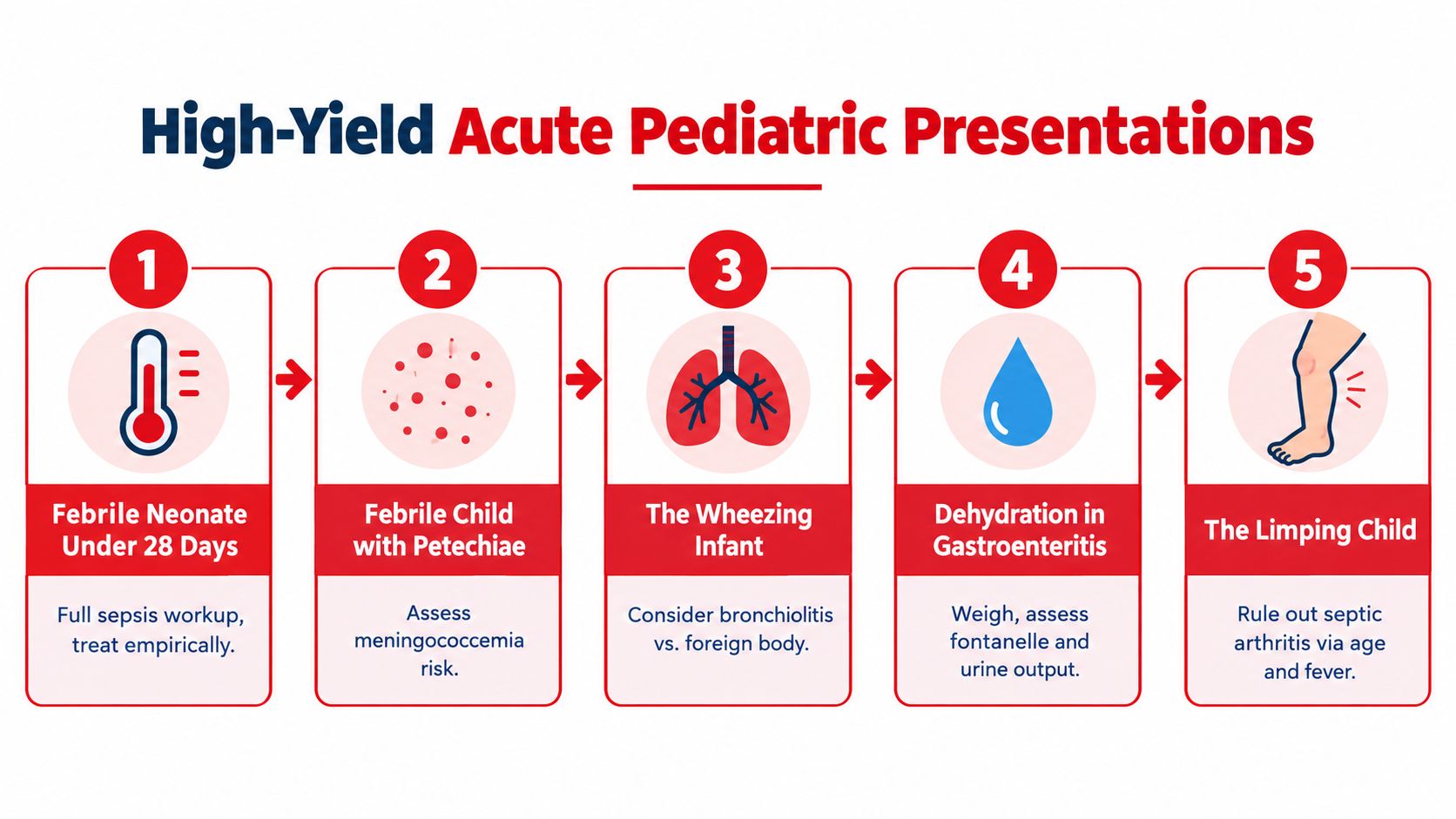
A febrile neonate younger than 28 days should trigger immediate concern for serious bacterial infection. The reasoning shortcut is not “the baby looks well.” It's age first, then appearance, perfusion, respiratory status, and risk factors. Culture-based evaluation and empiric antibiotics are central in suspected neonatal sepsis because early findings can be subtle. Neonatal sepsis occurs in about 1 to 4 per 1,000 births, with early-onset mortality near 18% and late-onset mortality up to 12%, according to the MSD Manual overview of neonatal sepsis.
A child with fever and petechiae requires rapid assessment for invasive bacterial disease, toxic appearance, perfusion abnormality, meningismus, and rapidly progressive rash. Don't let a normal blood pressure reassure you if tachycardia, cool extremities, delayed capillary refill, or altered behavior suggests compensated shock.
Wheezing, dehydration, and the limp
For a wheezing infant, first decide whether the pattern fits diffuse lower-airway disease, focal obstruction, or an upper-airway process. Work from respiratory effort, oxygenation, feeding ability, asymmetry, and sudden onset. Testing and treatment should follow the clinical picture rather than the presence of wheezing alone.
For gastroenteritis, assess hydration through mental status, mucous membranes, tears, capillary refill, heart rate, urine output, and weight when available. Oral rehydration is appropriate for a child who can drink and has no signs requiring emergency stabilization. A caregiver-focused resource on baby home care for diarrhea may help with general education, but exam questions still turn on hydration status and disposition.
A limping child requires localization. Ask whether the pain is in the hip, knee, or elsewhere, because hip pathology can present as knee pain. Fever, inability to bear weight, restricted joint motion, and inflammatory findings should raise concern for septic arthritis. Use age, fever, examination, and the relevant clinical prediction framework rather than selecting transient synovitis solely because it is common.
The same localization discipline applies to chest complaints. For a separate review of image-based reasoning, use this guide to interpret chest X-rays.
Chronic and Congenital Conditions You Must Recognize
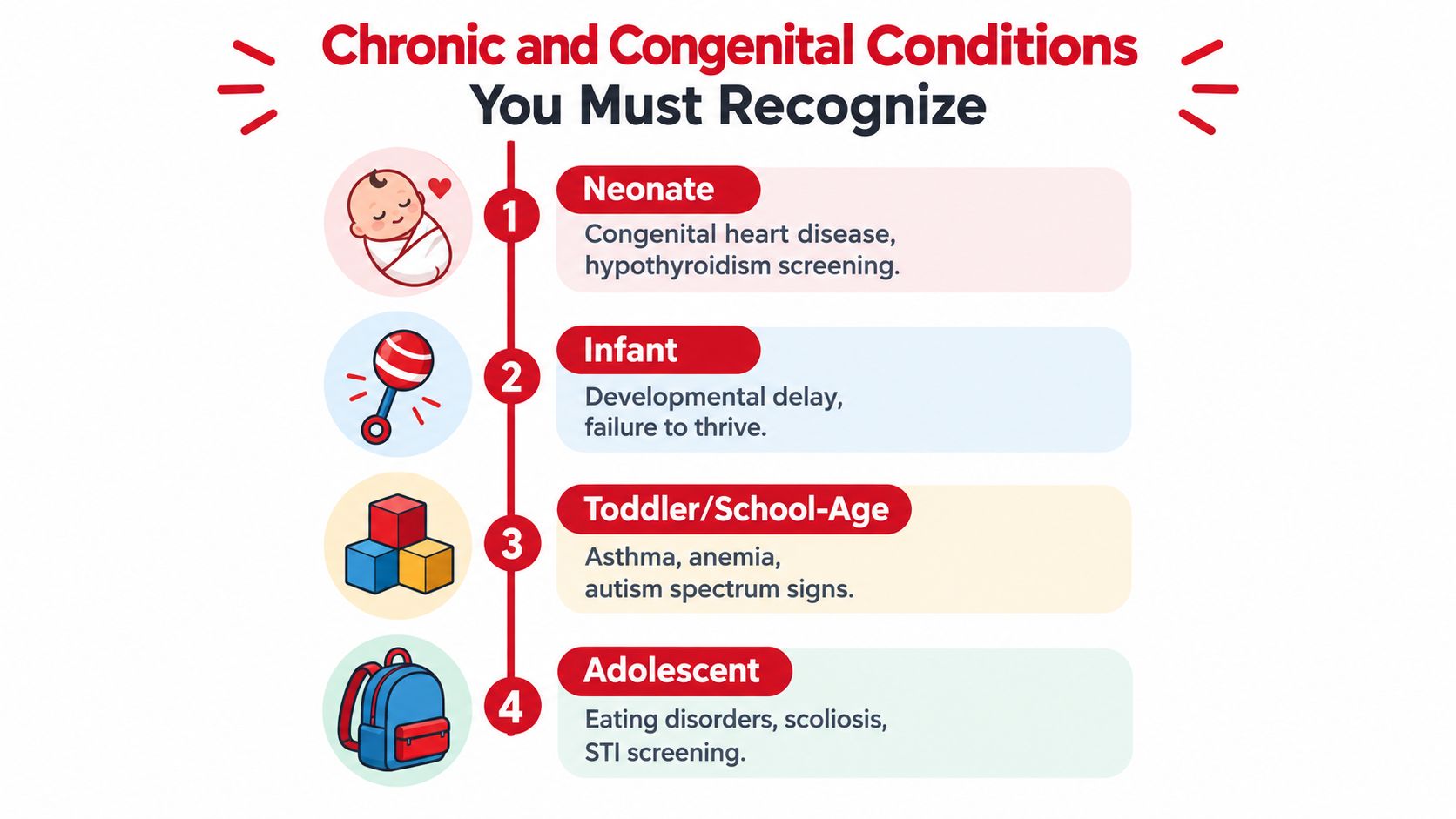
Chronic and congenital pediatrics is easier when you build the differential chronologically. A neonate, infant, school-age child, and adolescent have different screening histories, exposures, physiologic transitions, and common presentations.
Start with the age band
For neonates, review newborn screening and the confirmatory pathway rather than assuming a screening result is diagnostic. Common screening topics include phenylketonuria, congenital hypothyroidism, sickle cell disease, and cystic fibrosis. On an exam, the important move is to distinguish screening from confirmation and to connect an abnormal screen with the appropriate follow-up.
Congenital heart disease is best organized by physiology. Ask whether the lesion is acyanotic or cyanotic, whether blood moves through a left-to-right or right-to-left pathway, and what transition makes the lesion symptomatic. A murmur becomes more meaningful when paired with feeding difficulty, poor growth, respiratory symptoms, cyanosis, abnormal pulses, or exercise intolerance.
For an infant with failure to thrive, separate inadequate intake from malabsorption, increased energy needs, and systemic disease. A toddler with recurrent pneumonia may have asthma, aspiration, immune dysfunction, an anatomic problem, or cystic fibrosis. The shortcut is to count the pattern, identify the organ system, and ask what diagnosis explains both the recurrence and the associated growth or examination findings.
Use the stem's setting as a clue
School refusal can reflect learning difficulty, anxiety, depression, bullying, family stress, or a medical condition. An adolescent with exercise-induced syncope requires careful cardiac reasoning before a benign explanation is accepted. Type 1 diabetes questions often place diabetic ketoacidosis in the setting of missed insulin, infection, or another physiologic stressor. Asthma questions test severity, control, triggers, and stepwise therapy rather than a single isolated wheeze.
Cystic fibrosis stems commonly connect pulmonary disease with nutritional or gastrointestinal consequences. Kawasaki disease, immunoglobulin A vasculitis, and early-onset scoliosis are also easy to miss when the student anchors on a benign rash, abdominal complaint, or posture issue. Use the full pattern, not the loudest symptom.
For cardiovascular organization during review, the pediatrics cardiology resource can serve as a separate topic reference. Clinical decisions in real patients require current guidelines, supervision, and local protocols.
Pediatric-Specific Pharmacology and Immunization Logic
Pediatric pharmacology tests whether you recognize that children are not just smaller adults. Dosing often depends on weight, age, renal function, and formulation. Fluid management also requires attention to body size and perfusion rather than reflexively applying adult volumes.
The common dosing traps
Weight-based dosing means the first step is confirming the child's weight and the units used. Then check the maximum dose, concentration, route, interval, and organ-function considerations. Acetaminophen, ibuprofen, aminoglycosides, and other medications can appear in questions designed to expose unit errors or unsafe assumptions.
Fluid boluses are another frequent trap. A student may remember an adult volume and overlook the pediatric weight-based approach. On a board-style question, read the child's perfusion, mental status, urine output, and respiratory findings before deciding whether fluid, reassessment, escalation, or another intervention is appropriate.
Antibiotic restrictions are tested through toxicity and age context. Fluoroquinolones and tetracyclines may appear as distractors when the question is asking you to recognize pediatric safety concerns. Don't memorize a prohibition without asking what toxicity, exposure, or alternative the stem is testing.
Immunization is a timing problem
Routine childhood immunization prevents severe disease at a population level. In the United States, routine childhood vaccines prevented approximately 508 million cases of illness, 32 million hospitalizations, and 1.1 million deaths from 1994 through 2023, according to the Merck Manual discussion of childhood vaccination.
The 2026 American Academy of Pediatrics schedule is updated annually and is intended for routine immunization of children and adolescents through age 18 years in the United States, as described by the AAP policy information. The schedule covers routine immunization against 18 diseases, including influenza, respiratory syncytial virus, hepatitis A, hepatitis B, rotavirus, meningococcal disease, diphtheria, tetanus, pertussis, Hib, pneumococcus, polio, measles, mumps, rubella, varicella, and HPV, as summarized by HealthyChildren.org.
| Topic | Pediatric Rule | Adult Rule | Common Trap |
|---|---|---|---|
| Dose selection | Use weight, age, formulation, and organ function | Dosing is often less weight-dependent | Treating a child as a small adult |
| Fluid management | Interpret volume by weight and perfusion | Adult volumes use different assumptions | Choosing a fixed adult volume |
| Live vaccines | Check immune status, timing, and recent immune products | Apply adult-specific schedule and contraindications | Confusing precaution with absolute contraindication |
| Adolescent Tdap | Routine booster at age 11 to 12 years | Adult boosters follow adult recommendations | Missing the adolescent milestone |
| Rotavirus | Apply age-related schedule limits | Not a routine adult vaccine | Treating catch-up timing as unlimited |
| HPV | Follow the age-based adolescent schedule | Use adult catch-up guidance when applicable | Ignoring age at series initiation |
The AAP schedule specifically lists a 1-dose Tdap recommendation at age 11 to 12 years, as shown in the AAP immunization schedule document. For broader immunology review, use this immunology study resource.
Worked Composite Vignette and a Four-Week Shelf Plan
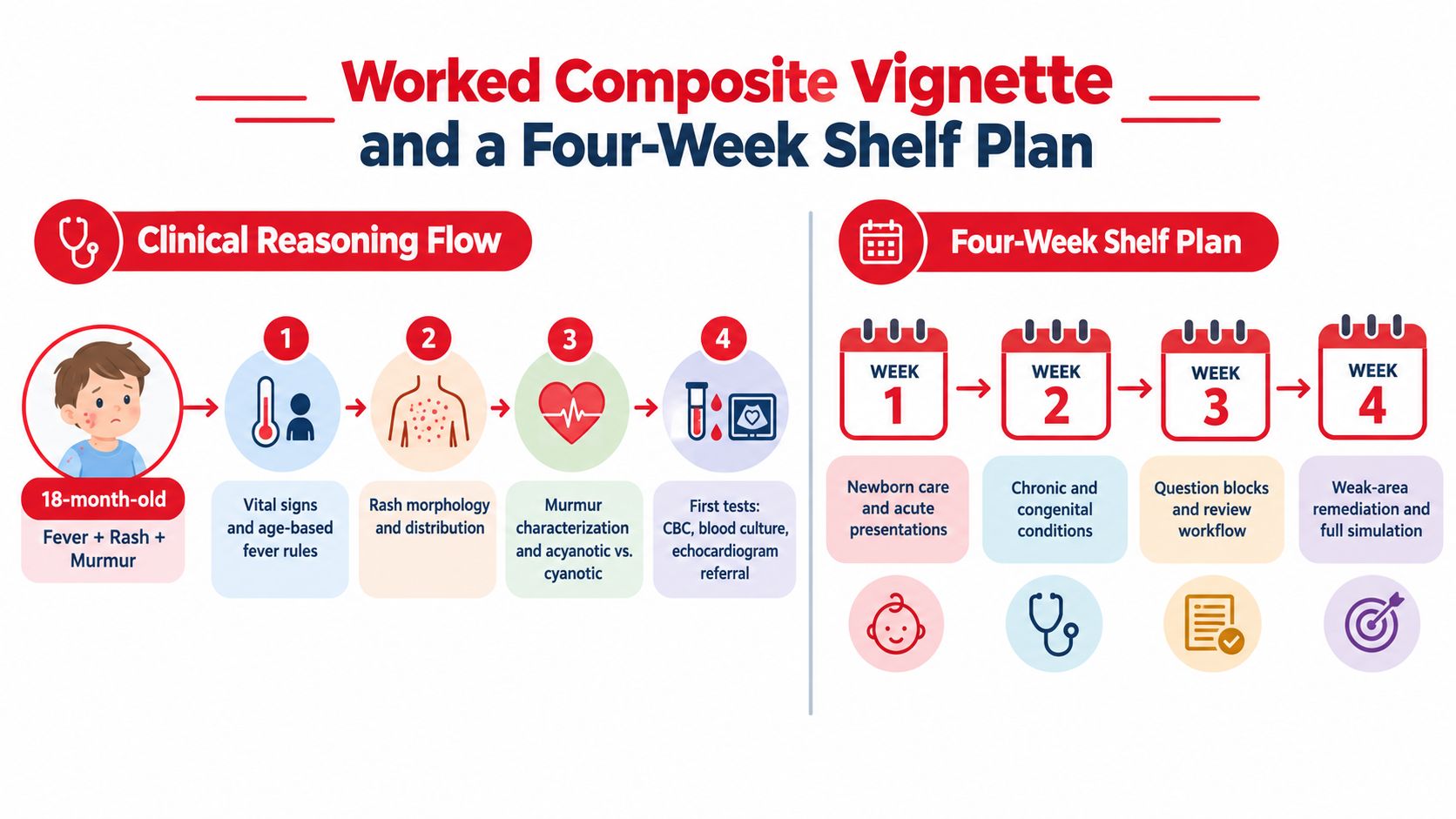
Labeled composite vignette: An 18-month-old has several days of fever, a diffuse rash, and a newly noticed murmur. The child is irritable but awake. The stem includes incomplete immunization information and a caregiver who is worried because the child is less interested in food.
Start with stability, not the murmur. Check appearance, perfusion, respiratory effort, hydration, mental status, and the fever history. If the child appears toxic or unstable, the immediate pathway is evaluation for serious infection and resuscitation as indicated. If the child is stable, characterize the rash and murmur before jumping to a named diagnosis.
The reasoning map
- Presentation: Fever, rash, irritability, and murmur in a young child.
- Localization or physiology: Is the rash infectious, inflammatory, or medication-related? Is the murmur innocent, acyanotic congenital disease, or associated with systemic illness?
- First tests: Select tests based on appearance and risk. Depending on the stem, these may include blood testing, cultures, or cardiac evaluation rather than an indiscriminate panel.
- Red flags: Toxic appearance, poor perfusion, altered mental status, respiratory distress, inability to hydrate, rapidly progressive petechiae, or concerning cardiac findings.
- Referral boundaries: Escalate suspected serious infection, significant cardiac disease, or diagnostic uncertainty to the supervising pediatric team. A board question may ask for the next test, while real care requires coordinated evaluation.
The differential could include Kawasaki disease, measles, or scarlet fever, but the shortcut is morphology and pattern. Conjunctival findings, oral changes, extremity changes, lymphadenopathy, exposure and immunization history, pharyngitis, and the quality of the murmur each carry different weight. Don't let one memorable feature decide the case.
A practical four-week plan
| Week | Primary focus | Daily work |
|---|---|---|
| 1 | Growth, development, preventive care, and newborn topics | Review milestone cards, growth-curve interpretation, and one Anki deck focused on milestones |
| 2 | Acute presentations | Complete question blocks, then map each error to age, red flag, first test, or disposition |
| 3 | Chronic disease, congenital conditions, pharmacology, and immunization | Use mixed review and build a one-page comparison sheet for recurring traps |
| 4 | Question-bank review and weak-area repair | Work under timed conditions, review incorrect answers, and use an NBME self-assessment according to your school's schedule |
Set a daily UWorld question target that fits your rotation, energy, and review time rather than borrowing someone else's number. The review is the learning event. For every missed question, write the tested presentation, the decisive finding, why your choice was wrong, and the shortest reasoning shortcut that would have worked.
The NBME Pediatrics Shelf is described as an online exam with 110 questions in 165 minutes, averaging 1.5 minutes per question, according to AMBOSS's Pediatrics Shelf overview. Two days before the exam, check logistics, sleep, permitted materials, transportation, food, hydration, and the topics you'll review lightly rather than attempting to relearn an entire rotation.
When fatigued, use a stop rule: identify age, stability, the organ system, and the single finding that separates the leading choices. If you're still rereading after that, choose the answer supported by the strongest discriminating feature, flag the item if permitted, and move on.
For a broader rotation framework, use this Shelf exam preparation guide. It should complement, not replace, your school's materials, official examination guidance, clinical supervision, and independent question review.
Key Takeaways and Common Pediatric Exam Questions
Five rules to use under time pressure
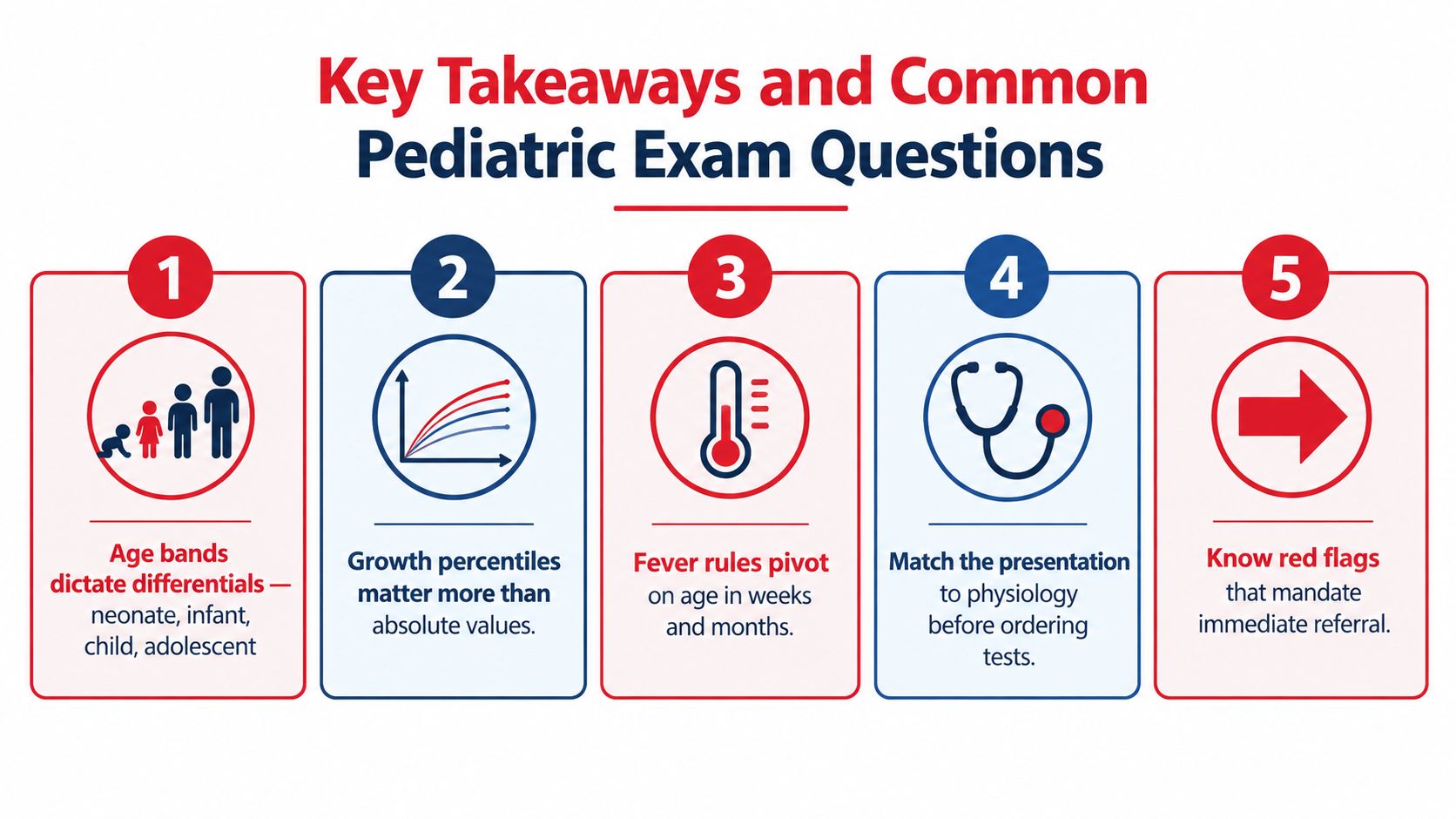
- Age sets the differential. A neonate, infant, child, and adolescent with the same symptom don't have the same risk profile.
- Trajectory beats a single percentile. Growth interpretation depends on the pattern over time and the clinical context.
- Fever rules pivot by age. A well-appearing young infant still requires age-based reasoning rather than reassurance alone.
- Immunization timing is clinical reasoning. Schedule details can change the probability of infection and the next step.
- Milestones are scored by domain. Identify whether the concern is motor, fine motor, language, social, or global, then ask what that pattern suggests.
Frequently asked questions
How should I handle a normal-appearing febrile infant?
Start with age, temperature history, feeding, perfusion, respiratory status, and risk factors. Appearance matters, but it doesn't erase age-based risk in very young infants.
When should parental concern change my assessment?
Treat it as meaningful clinical information, especially when the caregiver describes a clear change from baseline. Confirm it with vital signs, hydration, behavior, and examination rather than dismissing it or accepting it without assessment.
Which scoring tools should I recognize?
Know the purpose of the APGAR score, Ballard assessment, and Ages and Stages Questionnaire. Don't confuse a newborn transition score with a developmental screening instrument.
How do pediatric vital signs differ from adult norms on exams?
Normal ranges vary with age. Use the age provided, look for trends and compensation, and interpret the number alongside work of breathing, perfusion, mental status, and urine output.
What if two growth or milestone answers seem correct?
Choose the option that explains the pattern in the stem, not the isolated fact you remember. Recheck age, developmental domain, growth trajectory, and whether the child has lost a previously acquired skill.
Exam habit: Don't ask only, “What disease is this?” Ask, “What does this child's age make dangerous, and what finding changes disposition?”
If pediatrics feels like a collection of disconnected diseases, Ace Med Boards offers diagnostic tutoring and personalized study-plan support for Shelf and board preparation. Visit Ace Med Boards to discuss your current rotation, question-review workflow, and the areas where you want a more structured plan.