
You're halfway through a practice block when a vignette gives you a sodium value that looks close to normal, a creatinine result in unfamiliar units, and several distracting symptoms. You hesitate, not because you've never seen the numbers, but because you're unsure whether the value is the clue or the noise. NBME lab values are best used as an exam reference for interpreting that kind of case, not as a list of isolated facts to recite.
The National Board of Medical Examiners (NBME) Laboratory Values reference sheet standardizes commonly tested chemistry and hematology ranges for U.S. medical exams. It includes values such as sodium, potassium, bicarbonate, urea nitrogen, creatinine, glucose, calcium, magnesium, amylase, and lipase, with paired conventional and SI units in many entries. The most reliable preparation method is to connect each range to a clinical pattern, then practice identifying what the question is asking.
Introduction and Key Takeaways
During a timed block, a vignette may give you a laboratory value that sits near a reference boundary, uses an unfamiliar unit, or competes with several distracting findings. The task is to decide whether the result changes the differential, supports the illness script, or is background noise. Treat the official reference display as a tool for that decision, not as a list to recite.
The current NBME posting lists sodium at 136–146 mEq/L, potassium at 3.5–5.0 mEq/L, bicarbonate at 22–28 mEq/L, urea nitrogen at 7–18 mg/dL, and creatinine at 0.6–1.2 mg/dL. It also lists fasting glucose at 70–100 mg/dL, calcium at 8.4–10.2 mg/dL, magnesium at 1.5–2.0 mg/dL, amylase at 25–125 U/L, and lipase at 13–60 U/L in the NBME Laboratory Values reference sheet.
These are standardized examination references, not universal physiologic absolutes. A clinical laboratory may use a different interval because of its analytic method and reference population. For patient care, interpret each result with the clinical context and the local laboratory system. This article supports examination preparation, not diagnosis or treatment.
For exams on or after May 14, 2026, candidates should use the new official interactive software. USMLE also provides more than 100 free sample questions to help students become familiar with the interface and question style. Examination procedures and registration policies can change, so review the current 2026 USMLE Bulletin and Addendum before scheduling.
Key takeaways
- Use the NBME sheet as a standardized exam reference, then ask whether the value fits the patient's presentation.
- Connect values into patterns, such as electrolyte relationships, renal markers, or anemia morphology.
- Read the task before the options to identify whether the question asks for a diagnosis, mechanism, next finding, or interpretation.
- Record the cause of each error in a worksheet, separating knowledge gaps from evidence-selection, illness-script, question-task, or pacing problems.
- Practice with the official interface, particularly if your exam is on or after May 14, 2026.
Understanding the NBME Laboratory Values Reference Sheet
A patient arrives with weakness and an electrocardiogram abnormality. Several laboratory values are flagged, but potassium deserves attention before an unrelated, mildly shifted result. The reference sheet is most useful when it supports that decision rather than replacing it.
A reference interval generally describes the central 95% of values in a healthy reference population, often bounded by the 2.5th and 97.5th percentiles. A result near either boundary therefore requires context. A value outside one laboratory's interval is not automatically a disease threshold (reference interval guidance).
Reference intervals also vary with the selected population and factors such as age, sex, ethnicity, and biologic variation. Use the official NBME Laboratory Values reference sheet as the examination standard, then test the number against the patient's symptoms, time course, and other findings.
How to use the sheet efficiently
Read the vignette and identify the question task before scanning the table. Then locate the panel that can answer that task. For weakness with an electrocardiogram change, prioritize potassium. For an acid-base problem, start with bicarbonate, chloride, and the blood gas. This sequence prevents a familiar-looking value from distracting you from the main physiologic problem.
Unit differences can create avoidable errors, especially for international medical graduates familiar with another reporting system. Translate the unit first, then judge whether the magnitude fits the clinical pattern. For example, the NBME sheet lists sodium at 136–146 mmol/L and creatinine at 53–106 μmol/L. The number becomes meaningful only after both steps are complete.
For an additional study aid, review this lab values reference guide, then compare it with the current official NBME material. Use the official sheet as the anchor for exam decisions, and record recurring unit or interpretation errors in your review worksheet.
Practical rule: Verify the unit, identify the relevant range, and return to the question task. Recognition matters less than deciding what the result means in this patient.
Complete Blood Count and Coagulation Panels
Hematology questions rarely test a single number in isolation. They usually ask you to combine the complete blood count, cell morphology, symptoms, and time course into a coherent mechanism. A useful starting point is to classify the anemia by mean corpuscular volume, then use the reticulocyte response and other findings to narrow the illness script.
The main interpretive groups are:
| Pattern | First reasoning question | Common exam direction |
|---|---|---|
| Microcytic anemia | Is hemoglobin synthesis impaired or iron unavailable? | Compare iron handling, inflammation, globin production, and cellular morphology |
| Normocytic anemia | Is production reduced or loss occurring? | Consider marrow function, kidney-related signaling, hemolysis, or acute blood loss |
| Macrocytic anemia | Is DNA synthesis impaired or are cells enlarged for another reason? | Separate megaloblastic from nonmegaloblastic patterns |
The table is a reasoning scaffold, not a replacement for the full vignette. Platelets add a second dimension. A patient with bleeding may have thrombocytopenia, a platelet-function problem, or a coagulation-factor problem. The timing and distribution of bleeding can be more informative than a mildly abnormal count.
Reading PT, PTT, and INR as a pathway map
Prothrombin time, or PT, evaluates the extrinsic and common pathways. Partial thromboplastin time, or PTT, evaluates the intrinsic and common pathways. The international normalized ratio, or INR, standardizes PT reporting for clinical comparison.
Rather than memorizing disconnected associations, draw the pathway mentally:
- PT prolonged with PTT preserved: Think about an extrinsic-pathway problem or an issue affecting factors measured through PT.
- PT preserved with PTT prolonged: Consider an intrinsic-pathway problem, an inhibitor, or a medication effect.
- Both prolonged: Look for a common-pathway issue, broader factor depletion, or a systemic process.
- Platelet abnormality with coagulation tests not explaining the bleeding: Reconsider primary hemostasis and platelet function.
Exam writers may include overlapping symptoms to make several diagnoses appear plausible. Your job is to identify the test pattern that separates them. A prolonged PTT alone doesn't establish one diagnosis, and a normal platelet count doesn't rule out every bleeding disorder.
Watch for unit confusion, especially when an international learner is accustomed to a different reporting convention. Also avoid treating “normal” as synonymous with “irrelevant.” A normal value can be a decisive negative if it excludes the pathway your leading diagnosis requires.
For additional review of blood-cell patterns, use the hematology study resource.
The most productive question after a missed item is not “Which range did I forget?” Ask instead, “Which relationship did I fail to use?” That answer tells you whether to review a value, a pathway, or the interpretation of the entire panel.
Electrolytes and Renal Function Markers
A patient with vomiting, weakness, and reduced urine output may present several abnormalities at once. The task is to decide which finding explains the symptoms, which reflects the underlying process, and which is incidental. Read the chemistry panel as a connected physiologic story rather than a row of independent numbers.
Sodium reflects water balance and osmolality, potassium affects membrane excitability, bicarbonate helps classify acid-base disturbance, and renal markers provide context about filtration, perfusion, and hydration. NBME's reference sheet lists sodium at 136–146 mEq/L, potassium at 3.5–5.0 mEq/L, bicarbonate at 22–28 mEq/L, urea nitrogen at 7–18 mg/dL, and creatinine at 0.6–1.2 mg/dL per the official NBME Laboratory Values reference sheet. It also reports sodium in mmol/L and creatinine in μmol/L, which helps when conventional and SI units appear in different resources.
A compact interpretation sequence
Begin with the clinical frame. Is the problem acute or chronic, and does the setting suggest postoperative stress, outpatient disease, or critical illness? Then work through the panel in a consistent order:
- Sodium: Decide whether altered water balance or osmolality fits the neurologic or volume-related findings.
- Potassium: Relate the value to weakness, arrhythmia risk, medication exposure, or movement between intracellular and extracellular compartments.
- Bicarbonate: Ask whether a metabolic process is present, then compare it with the blood gas and other electrolytes.
- Urea nitrogen and creatinine: Interpret both alongside hydration, perfusion, muscle mass, and the timeline.
- Pattern: Determine whether the abnormalities share one mechanism or represent unrelated findings.
For acid-base questions, classify the blood gas direction before naming a diagnosis. Decide whether the bicarbonate change supports a metabolic process, then assess whether the respiratory response is appropriate. If enough information is provided, calculate the anion gap using the supplied formula or case values, and interpret it within the clinical context.
Why relationships outperform memorization
A memorized potassium interval is less useful if you cannot connect potassium to membrane excitability in a weakness vignette. Likewise, a familiar creatinine interval does not distinguish chronic reduced filtration from an acute change without a timeline. Board questions reward the explanation linking the values, symptoms, and physiology.
Log each missed question by asking which relationship you failed to use. A nephrology study guide can reinforce kidney-related patterns, while the worksheet helps turn each error into a repeatable decision step. Keep that review exam-focused rather than treating a board-style simplification as individualized clinical instruction.
Hepatic and Pancreatic Enzymes
A patient with jaundice, abdominal discomfort, and abnormal liver tests may fit several diagnoses. The useful question is not which enzyme is high alone, but whether the combined pattern is hepatocellular or cholestatic. Treat the panel like a map: the direction and relative size of the abnormalities guide the next clinical question.
A hepatocellular pattern emphasizes injury to hepatocytes, with aminotransferases playing the leading role. A cholestatic pattern points toward impaired bile flow or biliary tract disease, particularly when alkaline phosphatase rises disproportionately. Bilirubin adds another layer. Interpret it by asking whether the problem involves production, conjugation, excretion, or bile flow.
Build the pattern before naming the disease
Work through the vignette in a consistent order:
- Compare AST and ALT: Decide whether aminotransferases dominate and whether the history supports hepatocellular injury.
- Check alkaline phosphatase: A disproportionate increase shifts attention toward cholestasis or obstruction, especially with compatible symptoms.
- Interpret bilirubin with the other markers: Jaundice identifies a finding, not its mechanism.
- Use the timeline: Sudden pain, medication exposure, systemic illness, and chronic symptoms suggest different processes.
- Separate association from proof: The enzyme pattern narrows the differential, but history and examination findings complete the reasoning.
Fatigue, abdominal discomfort, jaundice, and nausea may appear in several answer choices. Their overlap makes them weak discriminators. The laboratory configuration, timing, and task in the question carry more weight.
Record the decision in a vignette worksheet: dominant pattern, supporting findings, contradictory findings, and the diagnosis or mechanism being tested. This converts a reference-range question into a sequence of clinical decisions.
Pancreatic markers need context
The NBME sheet lists amylase at 25–125 U/L and lipase at 13–60 U/L per the official reference sheet. Neither value establishes a diagnosis by itself. First identify what the question asks: a pancreatic source, an explanation for abdominal symptoms, an associated complication, or a process in another organ system.
Renal dysfunction and other abdominal conditions can accompany abnormal pancreatic markers. Such details may test whether you give one laboratory result too much weight. A convincing pancreatic illness script requires compatible symptoms, timing, and supporting findings, not a value outside the listed interval.
For each missed question, log the error precisely. Did you misclassify the pattern, ignore the timeline, or accept a result without checking the question's task? Compare every distractor with the actual findings. If an option requires cholestasis without supporting alkaline phosphatase or symptoms, record that contradiction. If pancreatic inflammation is not the tested mechanism, treat the enzyme result as a deliberate distraction.
Arterial Blood Gas and Endocrine Values
Arterial blood gas interpretation and endocrine testing both reward sequential reasoning, but they ask different questions. An arterial blood gas describes a current acid-base and respiratory state. Endocrine testing often examines feedback loops through stimulation or suppression. Confusing these purposes can make a familiar result seem more complicated than it is.
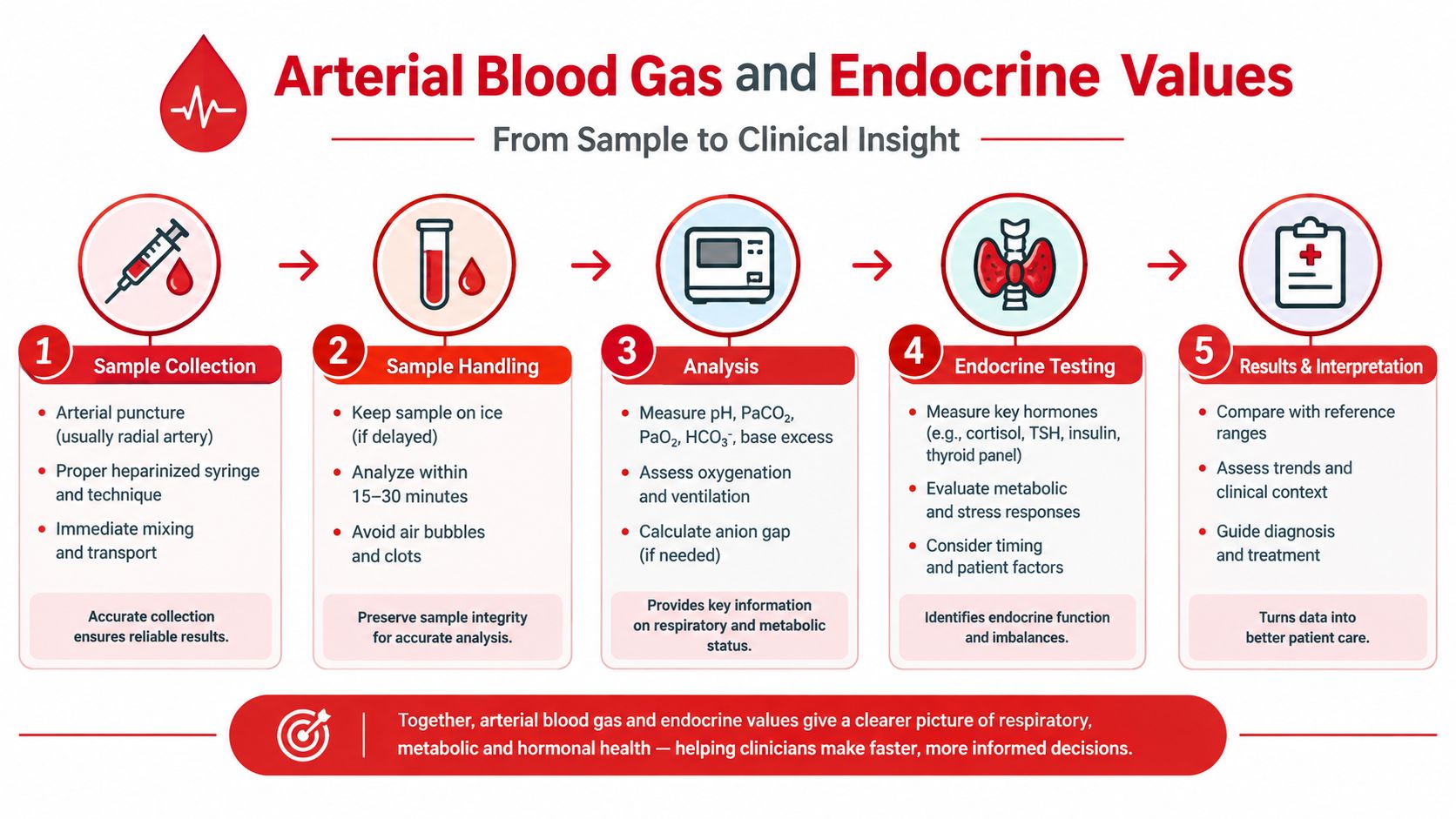
A disciplined blood gas sequence
Read an arterial blood gas in a fixed order:
- Assess pH direction: Decide whether the overall state is acidemic or alkalemic.
- Assess carbon dioxide: Determine whether respiratory physiology supports the pH direction.
- Assess bicarbonate: Determine whether metabolic physiology supports the pH direction.
- Identify the primary process: Decide which variable best explains the initial disturbance.
- Evaluate compensation: Ask whether the other system is responding appropriately or whether a mixed disorder may be present.
The anion gap can add another layer when the chemistry values support its calculation. Don't calculate automatically if the question doesn't provide the needed data or doesn't ask for that interpretation. A well-written answer usually depends on recognizing the dominant process and the clinical context, not performing every possible calculation.
For a worked review of this sequence, use the arterial blood gas interpretation guide.
Endocrine tests assess feedback
Thyroid and adrenal questions often present a hormone result alongside a regulatory hormone or a stimulation or suppression test. The central question is whether the gland is producing appropriately for the regulatory signal.
| Testing situation | What to ask |
|---|---|
| Baseline hormone pair | Is the target hormone consistent with the regulatory hormone? |
| Stimulation test | Does the target gland respond when prompted? |
| Suppression test | Does the system turn down when feedback should reduce output? |
| Multi-step endocrine vignette | Where in the axis is the defect? |
Cortisol-related questions may use suppression or stimulation logic to distinguish an autonomous process from a regulatory abnormality. Primary hyperaldosteronism questions may combine endocrine findings with potassium and acid-base data. The lab value is one piece of the feedback loop. Interpret it alongside the direction of regulation, not as a memorized label.
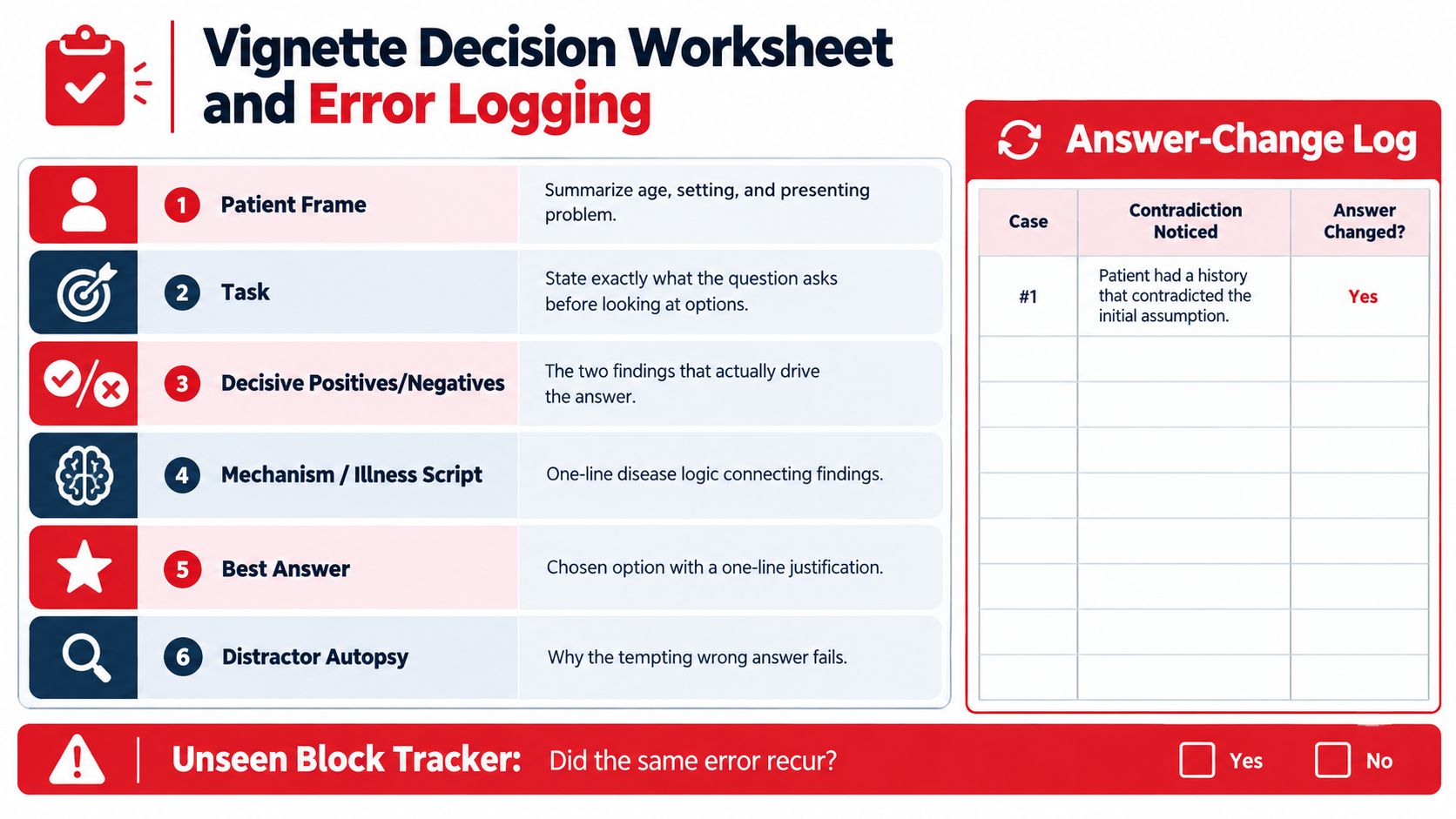
Vignette Decision Worksheet and Error Logging
Passive review feels productive because the numbers look familiar. It becomes active learning only when you can use the values to choose an answer and explain why competing answers fail. The following worksheet is designed for original practice cases and official sample questions, not recalled examination content.
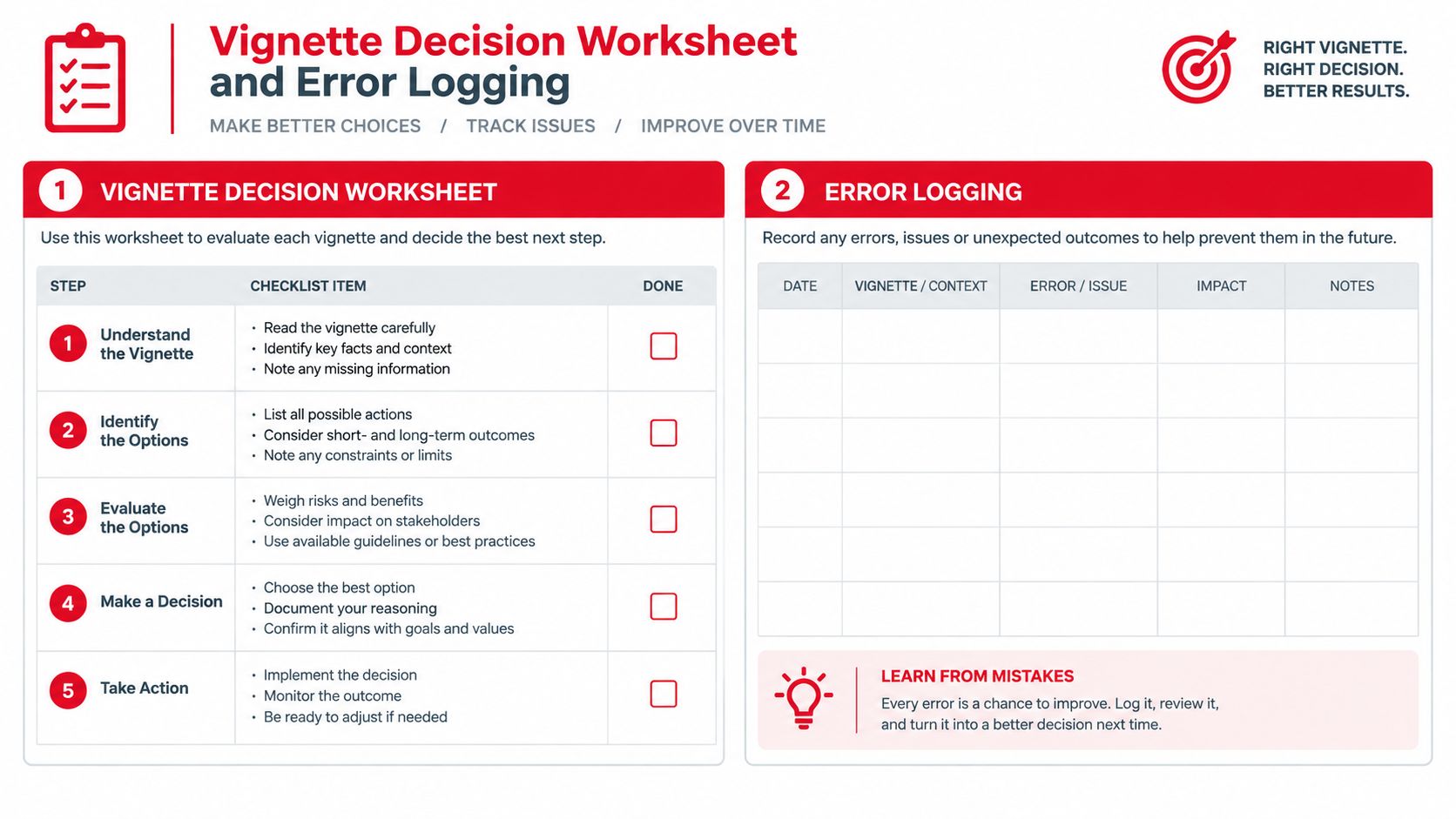
A clearly labeled composite example
Composite educational example: A learner changes a correct answer after noticing one unfamiliar laboratory unit. During review, the learner must state the task and two decisive findings before looking back at the options. The learner changes the answer only if a specific contradiction defeats the original illness script. Unseen blocks later show whether the same error recurs.
Use this original worksheet format:
| Worksheet field | What to record |
|---|---|
| Patient frame | Age group, setting, time course, and presenting problem |
| Task | Exactly what the question asks, such as diagnosis, mechanism, next finding, or interpretation |
| Decisive positives and negatives | The two findings that carry the most diagnostic weight |
| Mechanism or illness script | One sentence linking the findings through physiology |
| Best answer | Your choice and the shortest defensible reason |
| Distractor autopsy | Why the most tempting alternative fails |
| Transfer rule | The reusable lesson for a new vignette |
The key behavior is to separate evidence from discomfort. An unfamiliar unit is not automatically a contradiction. A genuine contradiction would be a finding that makes your chosen mechanism physiologically inconsistent or conflicts with the question's requested task.
Error logging that changes future study
Tag each missed item with its narrowest cause:
- Knowledge: You didn't know the relevant range or mechanism.
- Illness script: You knew the facts but failed to connect the pattern.
- Question task: You answered a different question from the one presented.
- Evidence selection: You focused on a vivid but low-value detail.
- Pacing: You understood the case but ran out of usable time.
Then write a transfer rule. “Review potassium” is too broad. “When weakness and a chemistry abnormality appear together, check whether the question asks for the mechanism rather than the diagnosis” is actionable.
Answer-change rule: Change an answer only when you can name the contradiction. If you can't name it, mark the uncertainty and review the reasoning after the block.
Treat commercial question banks as proprietary. Don't copy their stems, answer choices, or explanations into your notes. Instead, record the reasoning pattern in your own words and practice transferring it to an original or officially released educational case.
Timed Practice and Readiness Framework
A student sees sodium, creatinine, and bicarbonate in a timed vignette, recognizes each name, and still misses the question. The problem may be decision-making rather than recall. Readiness should therefore reflect how consistently you identify the relevant value, connect it to physiology, and answer the task under time pressure.
The readiness sequence
Orient to the testing environment. Review the official content outline, sample questions, and interface. For exams on or after May 14, 2026, include the interactive software in preparation instead of encountering it for the first time on exam day. USMLE provides more than 100 free sample questions for familiarization, as described in the official USMLE sample questions.
Establish a baseline. Complete a timed assessment containing mixed systems and laboratory interpretation. Treat the result as a diagnostic map, not a prediction. For every missed or uncertain item, record whether the problem involved recall, interpretation, question-task reading, evidence selection, or pacing.
Remediate the specific error. A knowledge error calls for review of the relevant reference entry and mechanism. An illness-script error calls for a one-sentence pattern summary. A task error calls for rewriting the question before examining the choices. A pacing error calls for rehearsing the same decision sequence under timed conditions.
Retest with unfamiliar material. Repeating an item can produce recognition without flexible reasoning. Use unseen mixed blocks and track timed accuracy, error categories, completion, confidence calibration, and official self-assessment trends. Avoid treating any cutoff or score change as universally safe without current official evidence and individual context.
A reusable planning timeline
| Preparation phase | Lab-value task | Readiness check |
|---|---|---|
| Orientation phase | Learn the official interface and locate reference information | Can you find the relevant table while preserving the question task? |
| Baseline phase | Complete mixed timed practice | Can you identify why each error occurred? |
| Remediation phase | Review only the mechanisms and patterns in your error log | Can you explain the relationship between values without copying a list? |
| Transfer phase | Complete unseen mixed blocks | Does the same error recur in a different organ-system vignette? |
| Final review phase | Rehearse the worksheet and test-day workflow | Can you decide efficiently when units or details are unfamiliar? |
The January 2026 service transition changed registration routes. U.S. MD/DO students and graduates register through NBME, while eligible international graduates register through FSMB. Check the current 2026 Bulletin and Addendum for eligibility, registration, timing, and software details instead of relying on an older study guide, as advised in the USMLE Bulletin information.
For mixed timed practice, use the NBME practice exams resource alongside official materials and independent review. A practice block has value when each miss becomes a documented reasoning error, a targeted correction, and a rule you can transfer to the next vignette.
Frequently Asked Questions
Do I need to memorize every NBME laboratory range?
You should know the major patterns and commonly tested reference entries, but memorizing a long list without understanding the physiology has limited value. Use the official reference sheet when available, then practice deciding which value matters and why. The goal is rapid interpretation, not recitation for its own sake.
What should I do if the units differ from those used at my school?
First identify whether the result is reported in conventional or SI units. The NBME sheet provides paired SI units for many values, including sodium and creatinine (NBME Laboratory Values). Translate the unit, then interpret the result within the vignette. Don't assume an unfamiliar unit means the result is abnormal.
How should I handle a vignette containing many laboratory results?
Read the question task before reviewing every number. Mark the values that directly support or contradict the leading mechanism, and treat unrelated results as possible distractors. If you need to return to the table, do so for the specific analyte rather than scanning the entire reference sheet.
Which lab-value tables cause the most hesitation?
Students commonly struggle when a value must be interpreted with another panel rather than recalled alone, such as bicarbonate with an arterial blood gas, creatinine with hydration and time course, or coagulation tests with platelet findings. Practice those relationships using the vignette-decision worksheet. For exams on or after May 14, 2026, also practice with the official interactive software and review the current USMLE Bulletin and Addendum.
Ace Med Boards offers one-on-one USMLE tutoring that can incorporate lab-value interpretation, timed mixed-block review, and an individualized error log. Visit Ace Med Boards to learn about the tutoring approach and request a free consultation focused on your current preparation needs.