
So, when exactly can you take the MCAT? The test is offered on multiple dates from January through September every year.
This isn't just a random schedule. It’s intentionally designed by the AAMC to align perfectly with the medical school application cycle, giving you strategic windows to test and get your scores in on time.
Your Quick Guide to Annual MCAT Dates

Think of the annual MCAT schedule as your roadmap for the entire med school admissions process. Getting a handle on its structure is the first step to building a smart, stress-free application timeline. The AAMC typically releases the full calendar of dates in the fall for the upcoming year, giving you plenty of time to plan.
The schedule is broken into distinct testing windows. You’ll find a lot more dates offered during peak study seasons—like late spring and summer—but none during the late fall months of October, November, or December. This break allows the testing cycle to reset before kicking off again in the new year.
To give you a better feel for the rhythm of the testing year, here’s a quick overview of what to expect.
Typical Annual MCAT Testing Windows at a Glance
This table breaks down the standard testing periods, helping you visualize the flow of the MCAT calendar and choose the best window for your application strategy.
| Testing Period | Typical Frequency | Best For Applicants Who… |
|---|---|---|
| Winter (Jan) | Low (2-4 dates) | Want scores early to plan a potential retake. |
| Spring (Mar-May) | Medium (6-8 dates) | Are applying without a gap year and want scores by June. |
| Summer (Jun-Sep) | High (12-15 dates) | Need a full summer break for dedicated studying. |
This is just a general guide, of course. For a detailed breakdown of every single date, registration deadline, and score release day, you can always check our complete and updated guide to the latest MCAT test dates.
How MCAT Scheduling Evolved Over Time
The flexible, multi-date MCAT schedule we have today is a surprisingly recent development. For decades, premeds faced a much tougher, high-stakes system that was a far cry from the strategic options you have now.
Imagine trying to plan your entire medical school application around just one or two test days for the whole year. That was the reality for generations of students. The exam was a paper-and-pencil affair, creating a massive logistical bottleneck that left zero room for error or a bad test day.
The Shift to a Digital Exam
The real game-changer was the transition to a computer-based format. This single technological leap completely blew up the old system and reinvented when the MCAT is offered. In 2005, the AAMC announced the end of the paper era, with the final paper version administered in August 2006. This pivot to a digital platform unlocked the ability to offer the exam far more frequently.
The modern MCAT, offered more than 25 times annually at Pearson VUE centers, gives you unprecedented control. You can now pick a date that fits perfectly with your study plan and application timeline—a strategic advantage that simply didn't exist before.
Appreciating Modern Flexibility
This evolution from a twice-a-year headache to a year-round calendar has totally transformed the application process. Instead of your entire plan hinging on a single, high-pressure day, you now have the power to choose a date that fits your academic schedule and personal readiness.
Understanding this history helps you appreciate just how important your scheduling choices are. You can use this flexibility to optimize your prep and position yourself for success in a way previous generations of premeds could only dream of. This control is a crucial part of building a well-planned application, which we cover in our guide to the complete AMCAS application timeline.
The move from a rare, high-pressure event to today's frequent offerings is a huge deal in medical education. You can learn more about the exam’s transformation on Wikipedia.
Decoding the Annual MCAT Calendar
It's easy to look at the MCAT calendar and just see a list of dates. That's a rookie mistake. A better way to think about it is as a strategic roadmap broken into distinct seasons, each with its own set of pros and cons for your med school application.
The AAMC intentionally splits the year into three main testing windows. They're designed to line up with the major milestones of the application cycle. Nailing your timing here can make a huge difference, affecting everything from your study schedule to how early admissions committees see your completed application.
The Three MCAT Testing Windows
The annual schedule is broken down into Winter, Spring, and Summer testing seasons.
Winter (January): If you test in January, you'll get your score back before anyone else. This is perfect if you want to know where you stand well before applications open in May. It gives you peace of mind or, if things don't go as planned, plenty of runway to regroup for a retake without messing up your whole application year.
Spring (March-May): This is the sweet spot for a lot of premeds, especially those on a traditional timeline. Testing in the spring means your score will land right as the application portals are opening up, making sure your file is complete and ready for that crucial early review.
Summer (June-September): These dates are incredibly popular, and for good reason—they let you study without distractions after the spring semester wraps up. The downside? A late summer test can put you in a serious time crunch, since your score won't arrive until much later in the application season.
Navigating Peak Testing Months
The MCAT schedule is built around the premed academic calendar, so the busiest months offer the most test dates. You'll find the most availability during the summer, especially in June and August, to handle the flood of students who are finally free from classes.
Knowing when the MCAT is offered isn't just about finding a date—it's about finding your date. A January test offers a safety net for retakes, while a May test positions you for early application submission. Choose the window that best aligns with your personal readiness and strategic goals.
The exam has come a long way from being a rare, paper-based test to the flexible, computerized format we have today. This evolution is what gives you the power to plan so strategically.
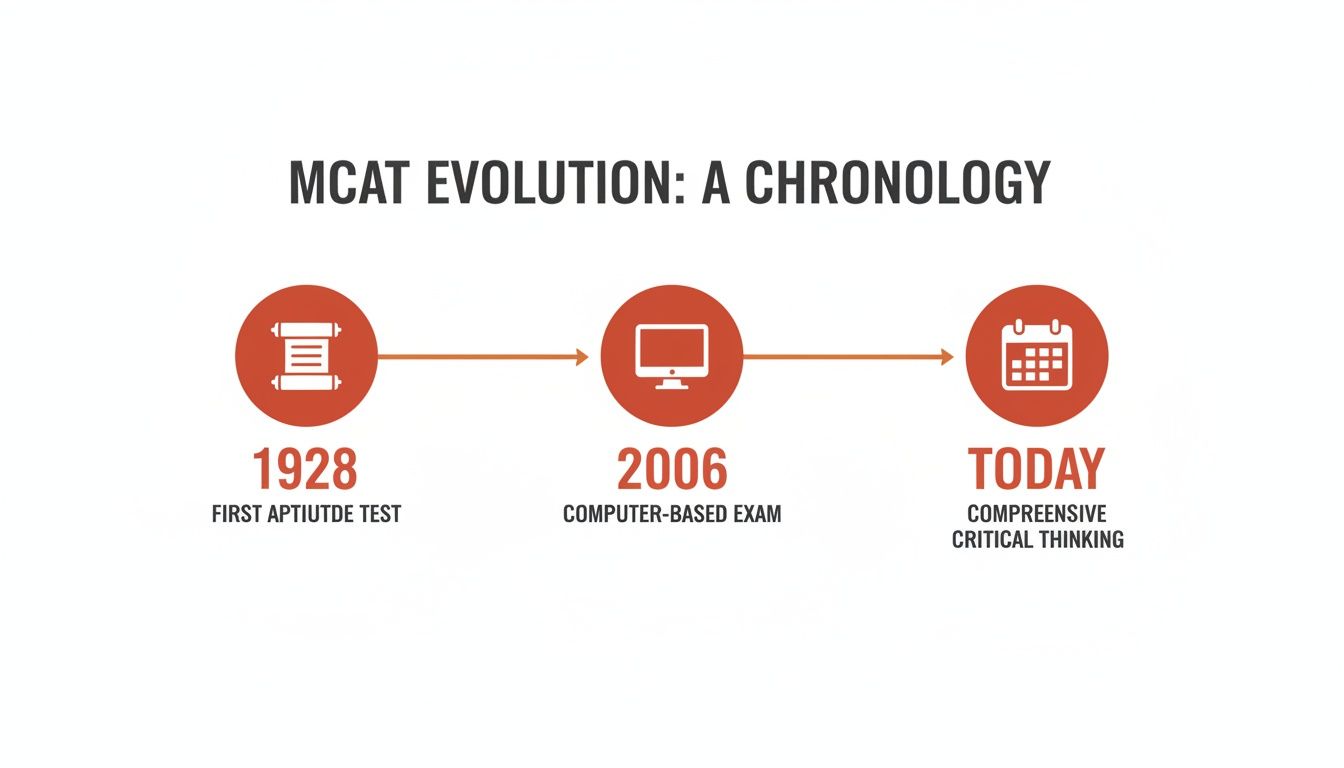
This modern flexibility is a game-changer. For instance, in 2026, the AAMC is planning over 25 test administrations. It kicks off with four dates in January and hits its peak with a bunch of options in June, July, and August. You have more control over your timeline than ever before. You can explore more about future MCAT dates and see how they line up with application cycles to start building your own plan.
Navigating Registration and Score Release Timelines

Knowing your target test date is a huge first step, but the timelines that kick in afterward are just as important. Think of registering for the MCAT like booking a flight for a wedding you absolutely can't miss—the earlier you lock in your spot, the fewer headaches (and extra costs) you'll deal with later.
This "book early" strategy is key because the AAMC uses a tiered deadline system. The closer you get to your test day, the more expensive it becomes to reschedule or cancel. It’s a system designed to encourage planning ahead.
Understanding the MCAT Rescheduling Zones
The AAMC breaks down the timeline into three "zones," each with different fees for making changes.
- Gold Zone (60+ days out): This is your sweet spot. If you have any doubt about your date, this is the cheapest and most flexible window to make adjustments.
- Silver Zone (30-59 days out): Changed your mind? It’s still possible, but the fees start to bite here. You'll pay a higher price for any changes.
- Bronze Zone (10-29 days out): This is the last-chance saloon for rescheduling, and it comes with a hefty fee. Any changes in this window will hurt your wallet.
- The 10-Day Cutoff: Once you’re inside 10 days from your exam, you’re locked in. No more changes, cancellations, or rescheduling. Period.
But the most critical timeline of all begins the moment you walk out of the test center: the long wait for your score. You won’t see your results for 30 to 35 days. This waiting period is a massive factor in your application strategy, as medical schools won't even look at your file until it's 100% complete—MCAT score included. You can get a closer look at the exact MCAT score release dates to see how this delay plays out for each test date.
The 30-day score release delay is non-negotiable. You have to build this waiting period into your application calendar to make sure your file gets in front of admissions committees as early as possible.
So, how does this actually affect your application timeline? Let's walk through a few examples.
Sample MCAT Test Date to Score Release Timeline
This table shows how that 30-35 day wait directly impacts when your application is considered "complete" and ready for review by medical schools.
| If You Test On… | You Can Expect Your Score Around… | Impact on Application Timeline |
|---|---|---|
| April 26 | May 29 | Perfect timing. Your score lands right as primary applications open for submission. |
| June 15 | July 16 | Solid. Your application gets marked "complete" mid-summer, keeping you competitive. |
| August 24 | September 24 | Risky. Your file won't even be reviewed until the fall, putting you at a disadvantage. |
As you can see, a later test date directly translates to a later review. In the world of rolling admissions, timing is everything. Planning your test date around the score release is one of the most strategic moves you can make.
Choosing the Best MCAT Test Date for You
Let's get one thing straight: there is no single "best" day to take the MCAT. There's only the date that's best for you. Your ideal test day is a moving target, completely dependent on your academic schedule, personal study habits, and med school application timeline.
The real key is to look past the generic advice and pick a date that gives you a strategic advantage. For a lot of traditional undergrad juniors who want to apply without a gap year, a spring test date is often the sweet spot.
Testing in April or May lets you use the spring semester for your final prep push, ensuring your score arrives right around the time medical school applications open in June. This timing gets your application in for early review, which is a major plus in the world of rolling admissions.
Tailoring Your Test Date to Your Path
The right strategy can shift dramatically depending on your circumstances. Let's walk through a few common scenarios to see how this plays out.
- The Traditional Applicant: Aim for a spring date like April or May. This gives you a few solid weeks of dedicated study after final exams but gets your score back early in the application cycle.
- The Gap Year Applicant: Good news—you've got a lot more flexibility. Think about a less crowded test window, like late January or early March. This gives you the entire fall semester to study without academic pressure and gets your score back well before application season even starts.
- The Retaker: If you find yourself needing to retake the exam, schedule your second shot as early as you responsibly can. A late spring or early summer retake still allows your shiny new score to be sent to schools without causing major delays.
The most important factor, hands down, is your readiness. Never, ever rush into a test date just to meet an "ideal" timeline. A high score from a July test will always beat a low score from a May test.
Aligning Your Study Plan with Your Test Date
Once you've zeroed in on a target window, your very next step is to build a study plan that works backward from that date. A well-structured schedule is your best defense against burnout and ensures you cover all the necessary content without cramming.
As you plan, understanding different educational formats like cohort-based courses can help you structure your prep more effectively, which in turn might influence your final test date choice.
We've got a whole guide on this, so be sure to check out our advice on when you should start studying for the MCAT. Ultimately, the perfect test date is one you can confidently prepare for without sacrificing your grades or your sanity.
Common Questions About MCAT Scheduling
Figuring out the logistics of when to take the MCAT can feel just as complicated as the exam itself. Let's cut through the confusion and tackle some of the most common scheduling questions so you can finalize your plans with confidence.
How Far in Advance Should I Register?
The short answer: as soon as you’ve locked in your test date. Official registration for the entire upcoming year usually opens in October, and the most popular dates—especially in the spring and early summer—get snatched up incredibly fast.
To make sure you get your preferred testing center and time, you should aim to register at least three to four months in advance. This saves you from the last-minute stress of finding an open seat and helps you avoid the higher fees that come with booking closer to the deadline.
Can I Take the MCAT Outside the United States?
Yes, the MCAT is offered at a number of international Pearson VUE centers. The catch is that both the dates and the locations are far more limited than what's available in the U.S. and Canada. If you're planning to test abroad, it’s absolutely critical to check the AAMC website early to see which countries are hosting the exam and when.
International testing spots are notoriously competitive. Thinking ahead isn't just a good idea here—it's essential if you want to secure a seat.
What Happens if I Need to Reschedule?
You can reschedule your exam directly through the AAMC website, but be very mindful of the deadlines and fees. The cost to reschedule or cancel your test jumps up as you get closer to your exam date, with strict cutoffs at 60, 30, and 10 days out. For more on the life cycle of your score, check out our guide on how long an MCAT score is good for.
Once you hit that 10-day window before your exam, no changes are possible. The whole system is designed to reward careful planning, so try to be as certain as you can before you book your spot.
Planning your MCAT is a huge step, and Ace Med Boards is here to support you through every stage, from exam prep to admissions consulting. Get personalized guidance to achieve your best score and strengthen your application. Book a free consultation today at https://acemedboards.com.

