
Embarking on the pre-medical track is a significant commitment, and choosing the right undergraduate institution is the foundational first step. The journey to medical school is notoriously competitive, and the college you attend can profoundly impact your preparation, opportunities, and ultimately, your medical school application. A strong pre-med program provides more than just the required science courses; it offers a robust ecosystem of support, including dedicated advising, ample research opportunities, and access to clinical experiences that are crucial for building a compelling profile. Finding the best pre med schools isn't about chasing prestige alone; it's about identifying an environment where you can thrive academically, gain practical experience, and receive the guidance needed to navigate the complex application process successfully.
This guide is designed to cut through the noise and provide a clear, strategic framework for your college search. We will explore a curated list of top-tier institutions renowned for their pre-medical success, but we go beyond a simple ranking. We will dissect what makes a pre-med program truly effective, focusing on critical factors like MCAT scores of matriculants, medical school acceptance rates, research funding, and the strength of their pre-health advising services.
You will gain actionable insights into how to evaluate each school based on your personal academic goals, learning style, and career aspirations. We will highlight specific programs, unique research initiatives, and hospital affiliations that set these schools apart. By the end of this article, you will have a comprehensive understanding of the landscape of pre-med education and be equipped with the knowledge to build a balanced and strategic list of the best pre med schools that align with your future as a physician.
1. Niche
Niche has become a go-to resource for college discovery, and its dedicated "Pre‑Medicine/Pre‑Medical Studies" category makes it an invaluable starting point for aspiring physicians. Unlike platforms that simply list general university rankings, Niche allows you to filter specifically for schools that offer strong pre-med tracks, combining hard data with thousands of student reviews to give you a more holistic picture.
This platform is ideal for the initial, broad phase of your search for the best pre med schools. You can quickly generate a list of over 100 institutions and then narrow it down using a powerful set of filters.
Key Features and How to Use Them
Niche’s strength lies in its user-friendly interface and robust filtering capabilities. It’s completely free to use, requiring only an optional account creation for saving your lists and preferences.
- Dedicated Pre-Med Category: Start your search directly within the Pre‑Medicine/Pre‑Medical Studies section. This ensures every result is relevant, saving you from sifting through schools that don't have a defined pre-med pathway.
- Granular Filtering: Use the filters to zero in on your ideal school profile. You can sort by selectivity (e.g., A+, A, A-), SAT/ACT score ranges, school size, public vs. private status, and even geographic location using the map view.
- Qualitative Insights: Don't just look at the numbers. Each school profile includes detailed student reviews on academics, student life, and the campus environment. This qualitative data provides context that statistics alone cannot.
Pro Tip: Create a free Niche account to build a "My List" of potential schools. As you research, add colleges that pique your interest. You can then use the platform's comparison tool to see how your top choices stack up side-by-side on key metrics like acceptance rate and average cost.
Why It Stands Out
What makes Niche unique is its blend of quantitative data with qualitative, real-world feedback. While official university websites provide curated information, Niche gives you a sense of what it’s actually like to be a pre-med student on that campus, straight from those who have been there. This user-generated content helps you understand the campus culture and academic rigor, which are crucial factors in determining your success and overall well-being.
As you build your list, remember that a strong pre-med program is just one piece of the puzzle. Understanding what do medical schools look for in an applicant, including research, clinical experience, and strong personal qualities, is equally important.
| Pros | Cons |
|---|---|
| Free to Use: All features are accessible without a fee. | Sponsored Placements: Top-of-list results may be sponsored. |
| Excellent Filtering: Easy to narrow down hundreds of options. | Subjective Methodology: Rankings mix data with user reviews. |
| Student Reviews: Provides valuable, on-the-ground insights. | "Pre-Med Major" Focus: May overlook schools with strong science programs but no formal "pre-med" major tag. |
2. CollegeVine
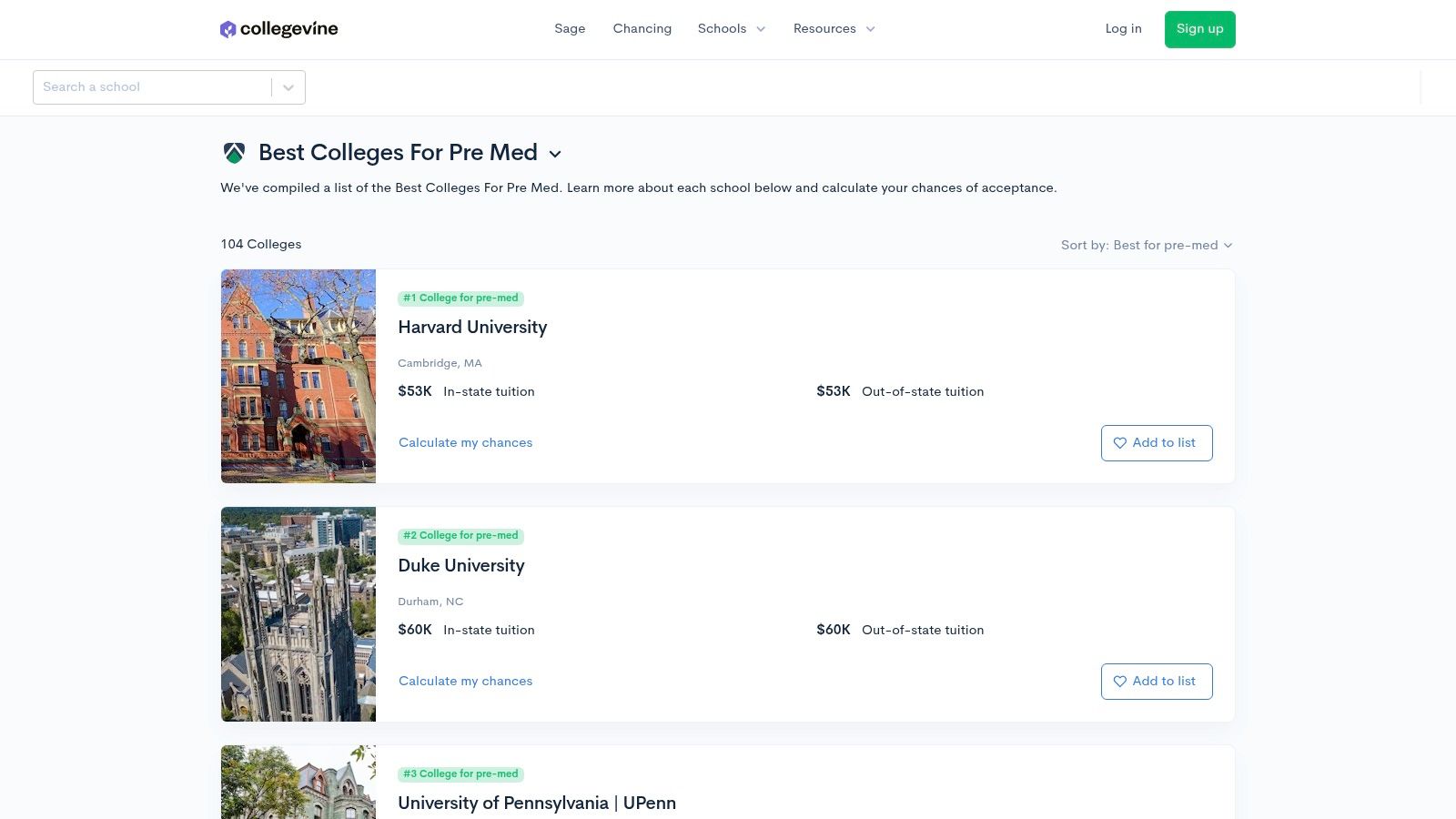
CollegeVine takes the search for the best pre med schools a step further by integrating its curated rankings with a powerful suite of free admissions tools. It moves beyond simple discovery and helps you actively plan your application strategy, making it an excellent resource for students who are ready to build a concrete, data-driven college list.
The platform is designed for the more strategic phase of your search, where you transition from a broad list of possibilities to a balanced roster of reach, target, and safety schools based on your academic profile.
Key Features and How to Use Them
CollegeVine's core value lies in connecting school data directly to your personal application profile. To access the full suite of tools, you'll need to create a free account and input your academic information, such as GPA and test scores.
- Integrated School List & Chancing Engine: Start by exploring their list of the Best Colleges for Pre-Med. For each school, you can immediately use their "chancing calculator" to estimate your odds of admission based on your profile, helping you categorize schools as reach, target, or safety.
- Application Management Tools: As you add schools to your list, CollegeVine helps you track application deadlines and requirements. This feature centralizes your planning, preventing you from missing key dates or supplemental essay prompts.
- In-Depth Blog Content: The platform supplements its rankings with detailed articles that dive into the specifics of pre-med life at various universities, offering deeper insights than a simple profile page.
Pro Tip: Use the chancing engine as a guide, not a guarantee. Enter your entire profile, including extracurriculars, to get the most accurate estimate. Then, use this data to build a balanced list of 8-12 schools that includes at least two safety, four target, and two reach options.
Why It Stands Out
What sets CollegeVine apart is its focus on actionable planning. Instead of just presenting a list, it provides the tools to use that list effectively. By calculating your admission chances for each institution, it empowers you to build a strategic and realistic school list, which is a critical step toward a successful application cycle. The integration of application management features makes it a one-stop-shop for both research and organization.
A strong application strategy involves more than just grades and a good school list; it also requires a compelling narrative. Learning how to write a personal statement that tells your unique story is essential for standing out to admissions committees.
| Pros | Cons |
|---|---|
| Actionable Planning: Free, personalized tools help build lists. | Account Required: Full interactivity requires creating a user account. |
| Combines Lists with Guidance: Connects rankings to practical tips. | Opaque Methodology: Ranking system is proprietary and not transparent. |
| Builds Balanced School Lists: Helps categorize reach/target/safety. | Chancing is an Estimate: The admissions calculator is a guide, not a certainty. |
3. College Board BigFuture
As the official resource from the organization that administers the SAT, the College Board’s BigFuture platform offers an authoritative and trusted starting point for academic planning. Its "Pre‑Medicine" major overview and college search tool provide a foundational understanding of what a pre-med track entails, directly from a source that shapes college admissions.
This platform is less about subjective rankings and more about factual discovery. It's an essential tool for verifying which institutions officially offer a pre-med pathway and understanding the core curriculum you'll need to master, making it a crucial step in building a list of the best pre med schools that align with academic realities.
Key Features and How to Use Them
BigFuture is completely free and serves as a reliable database for exploring majors and colleges across the United States. Its clean interface makes academic exploration straightforward and data-driven.
- Pre-Medicine Major Overview: Before diving into schools, start with the Pre‑Medicine major profile. It outlines typical coursework, related majors, and potential career paths, giving you a clear academic roadmap.
- College Search with Pre-Med Filter: Use the "Find Colleges" tool and apply the "Pre‑Medicine/Pre‑Medical Studies" major filter. This generates a comprehensive, unranked list of every U.S. institution offering a designated pre-med track.
- Data-Driven Comparison: While it doesn't rank schools, it provides hard data on admissions, cost, and student body composition for each institution. You can use this to manually compare schools based on your own criteria.
Pro Tip: Use BigFuture as a verification tool. After building a preliminary list from sites like Niche or U.S. News, cross-reference it here to confirm that each school has a structured pre-med program and to review the specific academic requirements.
Why It Stands Out
BigFuture’s authority and comprehensive scope are its biggest differentiators. Unlike ranking sites that use complex, sometimes opaque methodologies, this platform provides unfiltered, factual data straight from the source. It’s not designed to tell you which school is "best," but rather to empower you with the foundational information needed to decide for yourself.
This focus on core academics is vital, as a strong GPA in the right courses is non-negotiable. Understanding the typical curriculum is the first step in learning about the official prerequisites for medical school that every applicant must meet.
| Pros | Cons |
|---|---|
| Free and Authoritative: Information comes from a trusted source. | Not a Ranked List: Discovery is filter-driven and requires manual effort. |
| Comprehensive U.S. Coverage: Includes a wide range of institutions. | Less Editorial Guidance: Doesn't offer opinions on the "best" programs. |
| Clear Academic Roadmaps: Excellent for understanding course expectations. | Lacks Qualitative Insights: No student reviews or campus culture details. |
4. AAMC (MSAR + Premed Navigator)
The Association of American Medical Colleges (AAMC) is the authoritative source for medical school admissions, making its resources indispensable for any serious pre-med student. Instead of ranking undergraduate programs, the AAMC provides the tools to work backward from your end goal: getting into medical school. Using the Medical School Admission Requirements (MSAR) database and the free Premed Navigator, you can align your undergraduate journey with the precise expectations of admissions committees.
This platform is ideal for the strategic planning phase of your search for the best pre med schools. It allows you to understand what medical schools actually value, which in turn helps you evaluate whether an undergraduate institution has the resources, curriculum, and opportunities to help you build a competitive application.
Key Features and How to Use Them
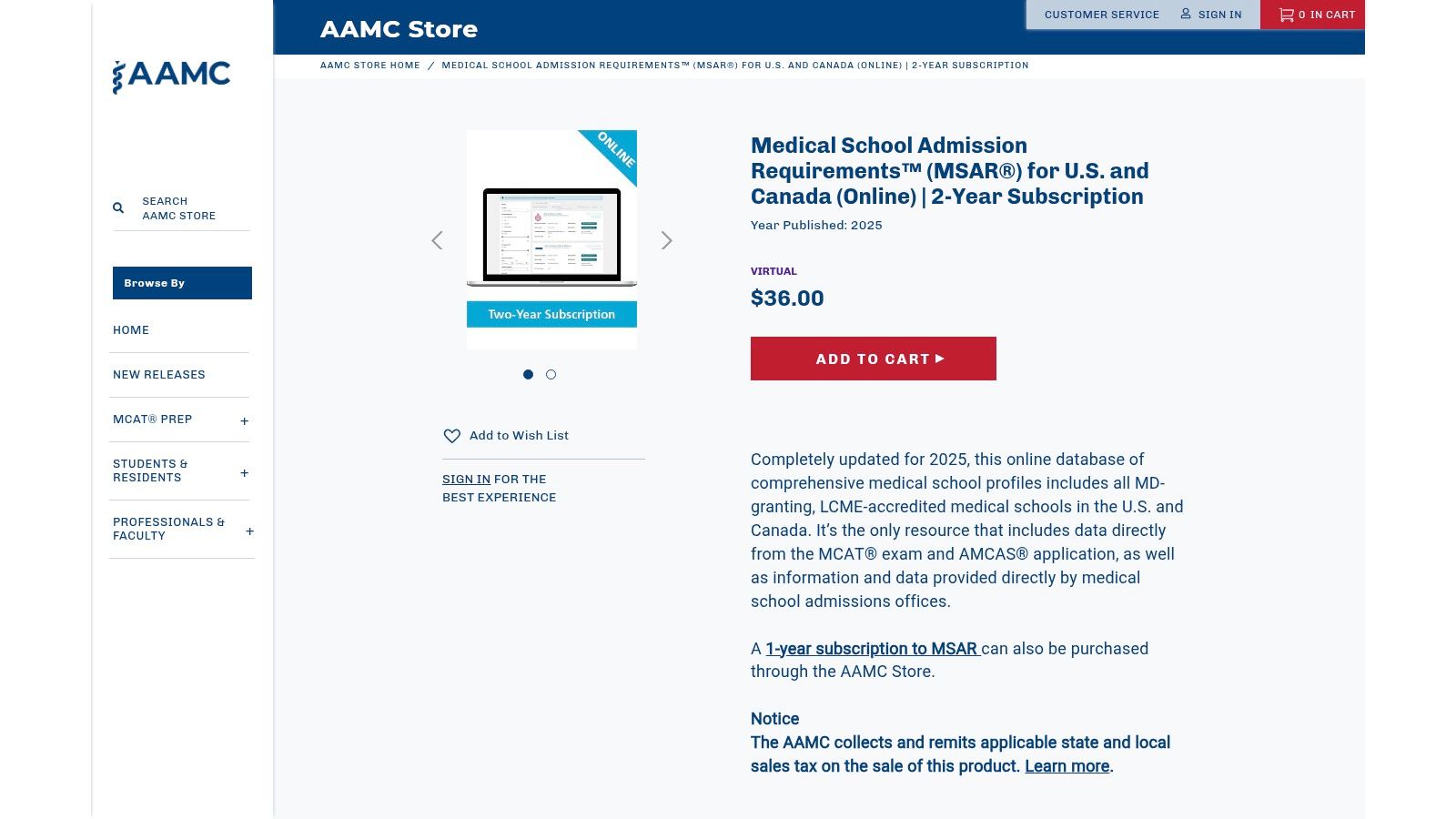
The AAMC’s power lies in its official, data-driven resources. The Premed Navigator is free, while the comprehensive MSAR database requires a subscription (currently $28 for one year, $36 for two years).
- MSAR Online Database: This is the core tool. The MSAR database provides profiles for every accredited M.D. program in the U.S. and Canada. Use it to find median GPA and MCAT scores for matriculants, required undergraduate coursework, and data on research and clinical experiences.
- Premed Navigator Articles: This free resource provides a month-by-month timeline and guidance for pre-meds. It covers everything from choosing extracurriculars as a freshman to preparing your primary application as a junior.
- Applicant Data Sourced from AMCAS: All the admissions information in MSAR comes directly from the American Medical College Application Service (AMCAS) and the medical schools themselves, making it the most reliable data available.
Pro Tip: Use MSAR to create a tiered list of "reach," "target," and "safety" medical schools based on your current stats. Then, investigate the undergraduate institutions that have a strong track record of sending graduates to those specific medical schools. This data is often found on a college's pre-health advising website.
Why It Stands Out
What makes the AAMC unique is its authority. While other sites estimate or aggregate data, the AAMC is the source. By starting with the end requirements from MSAR, you can critically assess undergraduate programs based on their ability to deliver the necessary coursework, research opportunities, and advising support to meet those benchmarks. It shifts your focus from a generic "pre-med" label to building a specific, data-informed profile for medical school success.
Understanding these downstream requirements is also crucial when you begin to think about the MCAT. Knowing the academic profiles of successful applicants can inform your study plan as you learn how to prepare for the MCAT and aim for a competitive score.
| Pros | Cons |
|---|---|
| Most Authoritative Source: Data comes directly from AMCAS and med schools. | Focus on Med Schools: Does not directly rank undergraduate colleges. |
| Aligns Undergrad Planning: Helps match your plan to real admissions data. | MSAR is Paid: The most detailed data requires a subscription. |
| Free Practical Guidance: The Premed Navigator offers a clear timeline. | Data-Heavy UX: The MSAR interface can feel overwhelming and less modern. |
5. College Factual
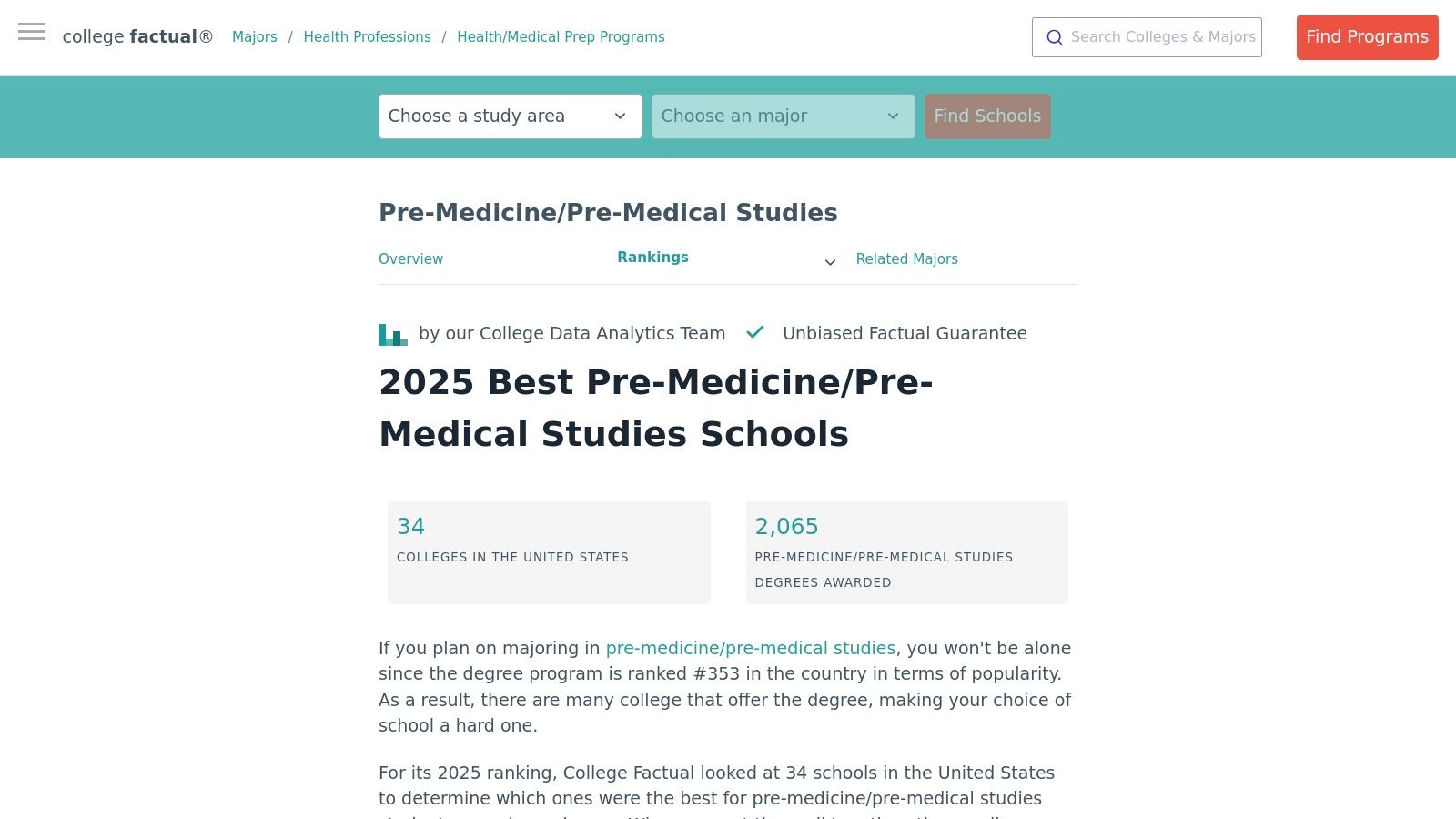
College Factual offers a purely data-driven approach to finding the best pre med schools, focusing specifically on institutions that grant degrees in "Pre-Medicine/Pre-Medical Studies." If you want to identify colleges with a formally structured pre-med major, this platform provides a clear, ranked list based on program-specific outcomes and quality metrics.
Its methodology is useful for students who prefer a defined academic path and want to see which schools are most popular or well-regarded for that specific degree. The platform's direct focus on this major makes it a unique tool for a specific kind of search.
Key Features and How to Use Them
College Factual’s value is its simplicity and directness. The platform is entirely free, presenting its data in an accessible format without requiring an account.
- Top-Ranked Pre-Medicine List: Navigate directly to the Top Ranked Colleges for Pre-Medicine/Pre-Medical Studies. The list is presented clearly, allowing for quick scanning and comparison.
- Program Popularity Metrics: Each school profile often includes data on how many students graduated with that specific degree. This can indicate the size and scale of the pre-med program, which may correlate with available resources.
- Focus on Degree-Awarding Institutions: Unlike other platforms, College Factual’s ranking is built around schools that explicitly award a pre-med degree. This helps you identify institutions that have committed to a structured curriculum for this field.
Pro Tip: Use College Factual's list as a starting point to identify schools with formal programs, then cross-reference those schools on other platforms like Niche or the AAMC's MSAR to get a more complete picture of their pre-med support, research opportunities, and overall student experience.
Why It Stands Out
College Factual distinguishes itself with its narrow, specific focus. While most pre-med students major in a core science like biology or chemistry, some applicants prefer the structure of a formal "Pre-Medicine" major. This platform is the best resource for identifying and comparing those specific programs, cutting through the noise of general university rankings. It quantifies a school’s commitment to this exact academic track.
Of course, a strong major is only one component. Medical schools place immense value on a well-rounded application, so understanding the importance of extracurricular activities for medical school is crucial for building a competitive profile.
| Pros | Cons |
|---|---|
| Narrow Program Focus: Helps find schools with formal pre-med degrees. | Excludes Strong Feeders: Many top pre-med schools without a formal major are omitted. |
| Free and Accessible: All rankings and data are available without a paywall. | Opaque Methodology: Ranking factor weights may not suit every student's priorities. |
| Easy-to-Scan Layout: Simple list format makes for quick comparisons. | Data-Only Approach: Lacks the qualitative student reviews found on other sites. |
6. College Raptor
College Raptor offers a narrative-driven approach to college discovery, focusing on editorial roundups that describe the qualitative aspects of pre-med programs. Rather than relying solely on rankings, this platform provides descriptive context on what makes certain pre-med tracks successful, such as unique research opportunities, strong advising systems, and hospital partnerships.
This website is best for students who want to understand the story behind a school's pre-med program. It's a great tool for supplementing data-heavy research with insights into program structure and student experiences, helping you find schools that offer a supportive environment for your journey to medical school.
Key Features and How to Use Them
College Raptor is completely free to use and excels at connecting qualitative program details with broader college search tools. Its strength is in providing context that helps you identify supportive pre-med environments.
- Editorial Lists: Start with their dedicated article, "Schools With the Best Pre-Med Programs." This roundup highlights specific features like advising quality, clinical exposure, and research capstones, giving you a feel for each program's focus.
- Planning and Comparison Tools: After reading the editorial content, use the platform’s general college search tools to compare your shortlisted schools on metrics like cost, acceptance rates, and graduation outcomes.
- Rankings Hub: Cross-reference schools you find interesting with College Raptor’s broader institutional rankings. This allows you to evaluate a school’s overall strength in science and academics beyond its specific pre-med offerings.
Pro Tip: Use the editorial descriptions to generate a list of questions to ask during college tours or information sessions. For example, if a school is praised for its "strong advising," you can ask admissions representatives to elaborate on what that support looks like in practice for pre-meds.
Why It Stands Out
College Raptor’s unique value lies in its editorial focus on program features over pure statistics. While other sites rank the best pre med schools based on admissions data, College Raptor explains why a program is effective, detailing the specific resources and structures in place to help students succeed. This narrative approach helps you find a school that not only looks good on paper but also provides the right kind of supportive ecosystem.
This qualitative insight is critical, as a school's culture and advising can have a huge impact on your application. Understanding the nuances of how to get into medical school involves more than just a high GPA; it requires mentorship and opportunities, which College Raptor helps uncover.
| Pros | Cons |
|---|---|
| Provides Qualitative Detail: Explains what makes programs supportive for pre-meds. | Editorial, Not Data-Driven: Some inclusions are subjective and not part of a formal ranking. |
| Free to Use: Editorial content and discovery tools are accessible without cost. | Fewer Pre-Med Filters: Less specific filtering options compared to platforms like Niche. |
| Integrates with Search Tools: Connects narrative articles with broader college comparison features. | Not a Comprehensive List: The editorial roundups are selective rather than exhaustive. |
7. NCES College Navigator
The NCES College Navigator is the U.S. Department of Education’s free, authoritative database for postsecondary institutions. While it lacks the curated rankings of other platforms, it serves a critical role in your search for the best pre med schools: verification and due diligence. It allows you to find and confirm which accredited schools officially report having a pre-med program, backed by consistent federal data.
This platform is best for the detailed, data-driven stage of your research. Once you have a preliminary list of schools, you can use College Navigator to verify official program offerings and compare objective metrics like tuition, financial aid statistics, and graduation rates without any editorial bias or sponsored content.
Key Features and How to Use Them
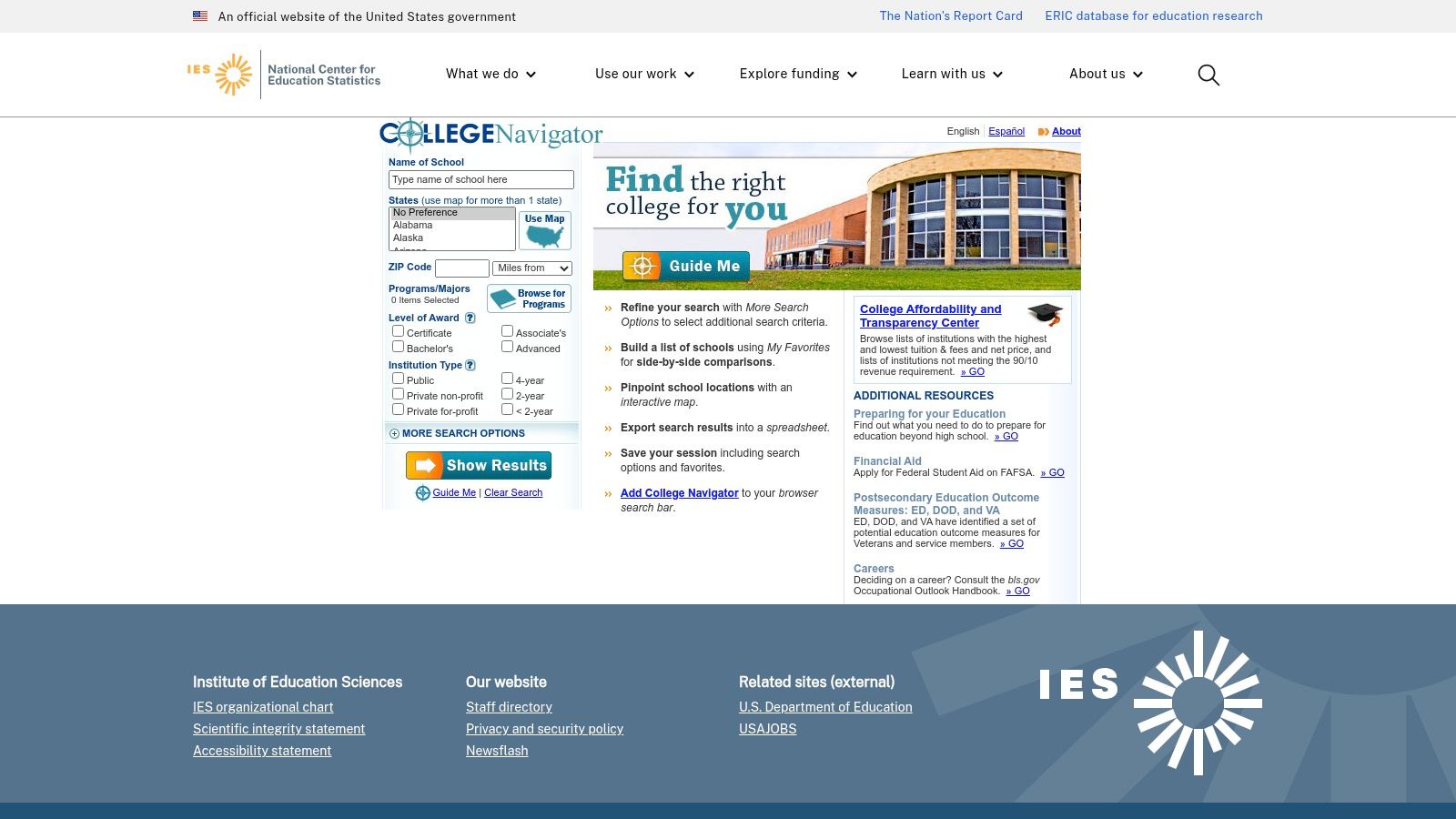
College Navigator’s power is in its raw, unfiltered data. The interface is utilitarian rather than flashy, but it provides an unparalleled level of detail for those willing to explore it. It is completely free to use and requires no account.
- Program/Major Search: Use the search function on the NCES College Navigator homepage and type "Pre-Medicine/Pre-Medical Studies" into the "Browse for a Program" field. This will generate a comprehensive list of every accredited U.S. institution that reports offering this specific program.
- Data Verification: Click on any school to access a wealth of government-sourced data. You can find official information on admissions requirements, tuition and fees, available financial aid, enrollment statistics, and, importantly, graduation and retention rates.
- Filtering by Fundamentals: While less granular than other sites, you can filter your program search results by state, institution type (public, private), and degree level. This is useful for building an initial list based on non-negotiable criteria before diving deeper on other platforms.
Pro Tip: Use the "Add to Compare" feature to select several schools from your search results. The comparison tool will create a side-by-side table of key institutional characteristics, making it easy to contrast objective data points like net price, acceptance rates, and student-to-faculty ratios.
Why It Stands Out
What makes the NCES College Navigator indispensable is its authority and objectivity. It is not a ranking site; it is a data repository. There are no sponsored placements or subjective user reviews influencing the results. The information comes directly from the institutions themselves as reported to the federal government, making it the ultimate source of truth for verifying a school’s official program offerings and statistics.
This is the platform you use to cut through the marketing and confirm the facts. It ensures the schools on your list are not only accredited but also transparent about their costs and student outcomes, which are foundational elements in making an informed decision about your pre-med journey.
| Pros | Cons |
|---|---|
| Authoritative Data: Information is sourced directly from federal reporting. | Utilitarian Interface: Not as user-friendly or visually appealing as commercial sites. |
| Completely Free: No fees, subscriptions, or sponsored content. | Manual Discovery: Lacks "best of" lists or editorial rankings; research is data-first. |
| Comprehensive Listings: Includes all accredited U.S. institutions reporting the program. | Learning Curve: Navigating the site and finding specific data can take time to master. |
Top 7 Pre-Med Resources Compared
| Tool | Interface & complexity 🔄 | Resources & access ⚡ | Expected outcome 📊 | Ideal use cases 💡 | Key advantage ⭐ |
|---|---|---|---|---|---|
| Niche | Low — intuitive filters and map; easy discovery. | Free; web/JS required; sponsored placements possible. | Quick, targeted shortlists with student-perspective context. | Early-stage discovery focused on pre‑med program labels and campus fit. | Broad, filter-rich listings + student reviews for qualitative insight. |
| CollegeVine | Moderate — interactive tools need account/JS. | Free tier with interactive tools; some paid features. | Balanced reach/target/safety lists and admissions probability estimates. | Building application strategy and personalized school lists. | Actionable planning tools tied to curated “best for pre‑med” lists. |
| College Board BigFuture | Low — filter-driven search; manual comparisons. | Free and authoritative; no subscription. | Accurate program availability and curricular expectations. | Verifying program offerings and understanding major coursework. | Authoritative academic guidance across U.S. institutions. |
| AAMC (MSAR + Premed Navigator) | Moderate–High — MSAR is data‑heavy; Navigator is user-friendly. | Premed Navigator free; MSAR has paid subscription for full access. | Aligns undergrad planning with medical‑school requirements and fit. | Deep med‑school fit research and undergraduate curriculum planning. | Most authoritative source for medical‑school admissions data. |
| College Factual | Low — scannable, program-specific rankings. | Free; data-driven but may omit schools without formal majors. | Program-focused ranked shortlists for formal pre‑medicine majors. | Identifying colleges that explicitly award Pre‑Medicine degrees. | Narrow focus on program rankings and scale metrics. |
| College Raptor | Low–Moderate — editorial lists plus comparison tools. | Free editorial content and planning tools. | Qualitative sense of program supports (advising, research, exposure). | Assessing program culture and support structures for pre‑meds. | Narrative detail on what makes programs supportive for pre‑med students. |
| NCES College Navigator | Moderate — data-rich, utilitarian interface with a learning curve. | Free, government-sourced comprehensive data. | Verified program listings and federal stats for due diligence. | Regulatory verification, cost/aid analysis, and completion metrics. | Comprehensive, authoritative federal data for verification. |
From Shortlist to Application: Your Next Steps to Medical School
Navigating the path to medical school begins long before you submit your AMCAS application. It starts with a foundational decision: choosing the right undergraduate institution. This guide has equipped you with a powerful toolkit, moving beyond simple rankings to provide a structured approach for identifying the best pre med schools for your unique academic profile, personal needs, and career aspirations. We've explored a variety of platforms, from the data-rich AAMC MSAR and College Board BigFuture to the user-friendly interfaces of Niche and CollegeVine, each offering a distinct lens through which to view potential programs.
The central takeaway is that there is no single "best" school; there is only the best fit. Your mission is to use these tools strategically to build a balanced, well-researched college list that maximizes your chances of success not just in gaining admission, but in thriving once you're there.
Your Action Plan: Transforming Research into Results
With your newfound knowledge of these powerful research tools, it's time to transition from exploration to execution. Here are the critical, actionable steps to take next on your journey to becoming a physician.
1. Synthesize Your Findings and Define Your "Fit"
Don't let your research live in separate browser tabs. Consolidate the data you've gathered from tools like College Factual and NCES College Navigator into a master spreadsheet. Create columns for the criteria that matter most to you, such as:
- Medical School Acceptance Rate: The most direct indicator of pre-med success.
- Research Opportunities: Note specific labs, institutes, or programs (e.g., UROP) mentioned.
- Clinical Exposure: Proximity to a university hospital or affiliated medical centers.
- Advising Strength: Look for dedicated pre-health advising offices.
- Financial Aid: Use College Raptor to compare net price estimates.
- Culture and Environment: Glean insights from student reviews on Niche.
By seeing all the data side-by-side, you can move beyond a school's brand name and make an objective comparison based on what truly supports a pre-med track.
2. Build a Tiered and Realistic College List
A strong application strategy relies on a balanced list of schools. Using your synthesized data, categorize your top choices into three distinct groups:
- Reach Schools (2-3): These are your dream institutions. Your stats may be slightly below their average admitted student profile, but your compelling story, essays, and experiences could make you a competitive applicant.
- Target Schools (4-6): These are the core of your list. Your GPA and standardized test scores align well with their average range for admitted students. These schools represent a strong fit academically and offer the pre-med resources you need.
- Likely Schools (2-3): You can be reasonably confident in your admission to these schools, as your academic profile exceeds their typical averages. Ensure these are still places you would be genuinely excited to attend and that have robust pre-med programs.
Key Insight: A well-balanced list is your best insurance policy. It respects the highly competitive nature of college admissions while ensuring you have excellent options, no matter the outcome.
3. Focus on Pre-Application Excellence
While you finalize your college list, the most critical work is happening right now. Your performance in high school and your early college years sets the stage for a strong medical school application. Focus intensely on three key areas:
- Academic Rigor: Excel in your science and math coursework. This is non-negotiable.
- Meaningful Experiences: Seek out opportunities that demonstrate your commitment to medicine. This includes shadowing, volunteering, and gaining hands-on patient care experience. Many students find that becoming a Certified Nursing Assistant (CNA) is an invaluable way to gain this exposure; you can find suitable CNA programs that can accommodate a busy student's schedule.
- Develop Your Narrative: Start thinking about your "why." What drives you toward medicine? Keep a journal of impactful experiences that you can later draw upon for your personal statements and interviews.
Choosing from the best pre med schools is a monumental first step, but it's just that: the first step. The journey is a marathon, requiring diligence, strategy, and unwavering focus. By using the tools and strategies outlined here, you are not just finding a college; you are architecting the launchpad for your future medical career.
Ready to take your medical school ambitions to the next level? The journey from pre-med to physician requires excelling at every stage, from the MCAT to your final board exams. Ace Med Boards offers elite tutoring and admissions consulting to give you a competitive edge, ensuring you not only get into one of the best pre med schools but also thrive on your way to residency. Visit Ace Med Boards to see how our expert guidance can shape your future in medicine.

